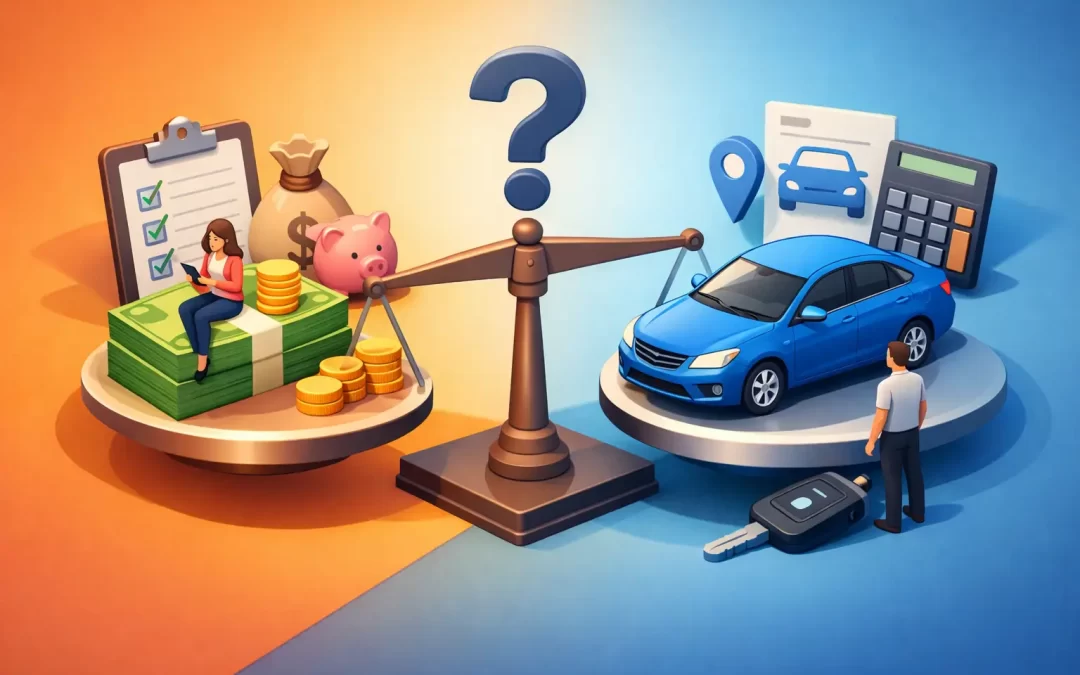
A car may be the biggest purchase you make after a home, so the way you finance it deserves more thought than simply accepting the first approval. When weighing up a personal loan vs car loan, the right choice comes down to the vehicle, your budget, how quickly you need funds and whether you are comfortable using the car as security.
Both options can help you get behind the wheel, but they are structured differently. Understanding those differences before you apply can help you choose repayments that feel manageable now and remain workable over the life of the loan.
Personal loan vs car loan: the key difference
A personal loan is usually an unsecured loan. You borrow an agreed amount and repay it, plus interest and any applicable fees, over a set term. Because there is generally no asset securing the loan, the funds can often be used more flexibly. That can be useful if your purchase includes more than the vehicle itself, such as insurance, registration, repairs or accessories.
A car loan is commonly a secured loan. The vehicle being purchased acts as security for the finance. If repayments are not met, the lender may have the right to repossess and sell the vehicle to recover the debt. That security can reduce the lender’s risk, which may mean a lower interest rate than an unsecured personal loan for an eligible borrower.
The lower rate is not automatic, and the cheapest-looking option is not always the best fit. Your credit profile, income, expenses, the car’s age and value, the loan term and lender policy can all affect the rate and conditions you are offered.
When a car loan may make more sense
A secured car loan is often suited to someone buying a vehicle that meets lender requirements and who wants finance designed specifically for that purchase. Newer used cars and new vehicles are commonly easier to finance than very old, heavily modified or unusually valued vehicles, although lender criteria vary.
The main benefit is the potential for a more competitive rate. On a sizeable vehicle purchase, even a modest rate difference can affect the total amount repaid. Car finance can also offer terms built around vehicle ownership, including options for a deposit, trade-in value or, where appropriate, a balloon payment.
A balloon payment is a larger amount due at the end of the loan term. It can reduce regular repayments, which may help cash flow, but it does not make the debt disappear. You need a realistic plan to pay, refinance or sell the vehicle at the end of the term. It is best considered carefully, especially if vehicle values could change.
A secured car loan may also suit self-employed borrowers or small business owners purchasing a work vehicle. Depending on the buyer and intended use, structures such as a chattel mortgage or finance lease may be worth discussing with an accountant and finance specialist. The right structure is not just about the repayment amount – it can affect ownership, cash flow and potential tax treatment.
When a personal loan may be the better fit
A personal loan can be a practical choice when flexibility matters more than securing a lower rate. Perhaps you are buying an older car that does not meet secured vehicle-finance criteria, purchasing privately, or need to cover related costs as part of one borrowing amount.
Because an unsecured personal loan does not generally use the car as security, there may be fewer restrictions around the type of vehicle you purchase. You may also have more freedom to sell or replace the car without needing to arrange a payout or release of security first. That said, you still owe the remaining loan balance after selling the vehicle.
The trade-off is that unsecured loans can carry higher interest rates than secured options. They may also have lower maximum borrowing limits or shorter available terms. For borrowers with a more complex credit history, the available rate and loan amount may differ significantly between lenders, so comparing a single advertised rate is rarely enough.
Compare the total cost, not just the repayment
It is easy to focus on the weekly or monthly repayment because it is the figure you will see most often. However, a lower repayment can result from stretching the loan over a longer term, and that can mean paying more interest overall.
Before deciding, compare the interest rate, comparison rate, establishment fees, monthly or annual fees, early repayment conditions and the total amount payable across the full term. Ask whether the rate is fixed or variable, whether extra repayments are allowed and whether there is a fee for paying the loan out early.
A longer term may reduce pressure on your regular budget, but the vehicle may depreciate faster than the loan balance falls. This can leave you owing more than the car is worth, particularly in the early years. A sensible deposit, a shorter affordable term and repayments above the minimum where permitted can all help reduce that risk.
It is also worth considering the vehicle’s ongoing costs. Fuel, servicing, tyres, registration, insurance and unexpected repairs should sit alongside the loan repayment in your budget. The aim is not simply to qualify for finance. It is to choose finance you can comfortably maintain.
Approval factors to consider
Whether you apply for a personal loan or car loan, lenders usually assess your capacity to repay. They may review your income, regular expenses, existing debts, credit history and the details of the vehicle where the loan is secured.
For salaried applicants, recent payslips and bank statements are commonly requested. Self-employed applicants may need to provide business financials, tax returns or bank statements, depending on the lender and the age of the business. Having clear, current documents ready can make the process more straightforward.
Past credit issues do not always mean finance is out of reach. They can affect the rate, deposit requirement, loan amount or lender options available. A specialist broker can help assess the situation realistically and identify lenders whose criteria may better suit your circumstances, rather than encouraging applications that are unlikely to proceed.
Questions to ask before choosing your loan
Start with the vehicle itself. Is it new, used, private sale or purchased through a dealer? Does its age, condition and value meet secured-loan requirements? Then consider how long you expect to keep it and whether you may want the freedom to sell it before the loan ends.
Next, look closely at your cash flow. Could you manage the repayments if fuel, insurance or business expenses rise? Would a deposit reduce your repayment to a more comfortable level? If a balloon is being considered, how will you deal with it at the end of the agreement?
Finally, make sure you are comparing like for like. A quote with a low rate may include fees, restrictive conditions or a longer term that changes the overall cost. A personalised comparison should account for the asset, your financial position and what you need the vehicle to do for you.
Getting support with the right structure
Choosing between a personal loan and car loan should not feel like a guess. The strongest option is often the one that balances an affordable repayment with a sensible total cost and terms that suit your plans for the vehicle.
Auto Link Finance can help eligible borrowers compare tailored vehicle-finance options across a broad lender network, including solutions for complex credit situations and self-employed applicants. With the right guidance, you can move forward knowing your finance is built around your circumstances, not a one-size-fits-all offer.
Before you commit, take the time to review the full loan terms and ask questions about anything unclear. A vehicle should give you more freedom, and the finance behind it should support that goal.
A strong income does not always look straightforward on a tax return. If you run your own business, work as a contractor or operate through a company or trust, finding the best lenders for self-employed borrowers is less about ticking a generic box and more about dealing with lenders that understand how your income is earned, documented and sustained.
That matters when you are financing a car, ute, truck, caravan, motorbike, boat or business equipment. The right lender can assess the full picture and offer a structure that suits the asset and your cash flow. The wrong one may focus narrowly on one document, request information that does not reflect your current position, or simply be a poor fit for the type of purchase you are making.
What makes a lender suitable for self-employed borrowers?
There is no single lender that is best for every self-employed applicant. A sole trader buying a work ute has different priorities from an established company financing a truck, while a contractor purchasing a family car may need a different assessment approach again.
Suitable lenders tend to be flexible in how they verify income, provided the application remains responsible and properly supported. Depending on the lender and loan type, this may include personal and business tax returns, notices of assessment, business activity statements, bank statements, accountant-prepared financials or evidence of current contracts and trading history.
The best fit also depends on the asset. A lender experienced in vehicle and equipment finance will often assess the value, age and purpose of the asset alongside your financial position. This can be particularly useful where the vehicle or equipment will directly support the business that is generating your income.
Rate is important, but it is not the only measure of a good deal. A lower advertised rate may come with a restrictive policy, larger deposit requirement, limited asset eligibility or repayment terms that do not work for your business. Approval certainty, fees, loan term, repayment frequency and flexibility all deserve a proper look.
Best lenders for self-employed borrowers: what to compare
Rather than starting with a long list of lender names, start with the features that will have the greatest effect on your outcome. This creates a more useful comparison and reduces the chance of applying with a lender whose policy does not match your circumstances.
Income verification options
Lenders vary widely in the documents they accept and how much history they require. Some prefer full financials over two years, while others may consider more recent trading evidence for established applicants with clear income patterns. If your latest tax return does not capture a recent lift in income, current bank statements, business activity statements and accountant support may help demonstrate your position, subject to lender criteria.
Be accurate from the outset. A lender will assess whether the repayments are affordable, and complete information helps avoid delays later in the process.
Loan structure for the asset
The right finance structure can be just as valuable as lender selection. For business-use vehicles and equipment, a chattel mortgage, finance lease or hire purchase arrangement may be worth considering, depending on your business structure, tax advice and intended use.
For personal purchases, a secured car loan or other secured asset finance option may provide a practical pathway. Security over the asset can reduce lender risk, which may support sharper pricing or broader approval options compared with an unsecured loan. The structure should always suit your circumstances, not just the asset you have chosen.
Credit profile and application history
A past credit issue does not automatically rule out finance, but it may affect which lenders are realistic, the interest rate offered and the documentation required. Specialist lenders can sometimes consider applications that mainstream lenders decline, especially where there is a clear explanation, stable current income and evidence that financial commitments are now being managed well.
It is usually better to target appropriate options than to submit multiple applications without a plan. Too many credit enquiries in a short period can complicate your profile and create unnecessary pressure when a lender reviews your application.
Deposit, trade-in and asset value
A deposit or trade-in can strengthen an application by reducing the amount financed. It may also open up more lender options, particularly for older vehicles, specialised equipment or assets with a value that is harder to assess.
That said, using every available dollar as a deposit is not always wise for a business owner. Retaining working capital for stock, wages, repairs or seasonal quiet periods can be more valuable than making the largest possible upfront contribution. The balance depends on your cash flow and the total cost of finance.
How self-employed borrowers can prepare a stronger application
Preparation makes the lender’s assessment easier and gives you a clearer view of what you can comfortably repay. Before applying, ensure your identification, income documents and details of the asset are ready. If you operate a business, it also helps to have your ABN, business registration details and recent financial information organised.
Keep personal and business finances as clear as possible. Regular unexplained transfers, missed direct debits or overdrawn accounts can prompt additional questions, even where the business is performing well. A clean record of income arriving into your account and commitments being paid on time makes it easier to demonstrate stability.
It is also worth checking the purchase details early. Lenders may have different rules around private sales, dealer purchases, vehicle age, kilometres, equipment type and whether an asset is for business or personal use. Knowing these requirements before you commit can prevent a promising purchase from becoming a financing hurdle.
If income fluctuates through the year, choose a repayment that remains manageable during quieter months. Some borrowers focus only on the maximum amount available, but a finance arrangement should support the business rather than strain it. A slightly smaller loan or longer term can sometimes create a more comfortable position, although a longer term may increase the total interest paid.
When a broker can add value
Approaching lenders one at a time can be time-consuming, especially when each has different policies for self-employed income, credit history and asset types. A finance broker can assess your circumstances, identify lenders that are more likely to suit, and help present the application in a clear and responsible way.
This is particularly useful when the purchase is not standard. Perhaps you are financing a commercial truck, a caravan for a lifestyle purchase, specialised plant and equipment, or a vehicle with both work and personal use. The lender, structure and supporting documents can look very different in each case.
Auto Link Finance works with a broad network of accredited lenders and can help compare tailored finance options for eligible self-employed applicants. With guidance from enquiry through to settlement, you can spend less time interpreting lender policy and more time focusing on the asset and repayment arrangement that suits your plans.
Questions to ask before choosing a lender
Before moving ahead, ask how the lender will verify your income, whether the loan is secured against the asset, and what documents are required before formal approval. Confirm the interest rate, comparison rate where applicable, establishment fees, monthly charges and any costs that apply if you pay the loan out early.
You should also ask whether repayments can be weekly, fortnightly or monthly, and whether those dates can align with your income cycle. For business assets, clarify whether a balloon payment is available and understand what it means for the amount owing at the end of the term.
A balloon can reduce regular repayments, which may assist cash flow. However, it leaves a larger final amount to pay, refinance or clear when the agreement ends. It can be useful in the right situation, but it should be planned for rather than treated as an afterthought.
Make the finance fit the way you work
Self-employment should not mean settling for a loan that ignores the reality of your income or the purpose of the asset. The most suitable lender is one whose policy, pricing and repayment structure align with your full financial position.
Take the time to prepare your documents, compare realistic options and seek guidance when the application is more complex. The right finance can help put the vehicle or equipment to work without placing unnecessary pressure on the business you have built.
Buying a vehicle for work should not come to a standstill simply because your income does not arrive in neat, regular payslips. For many sole traders, contractors and small business owners, low doc vehicle finance can provide a practical path to purchasing the car, ute, truck or equipment they need without a lengthy full-document application.
That does not mean skipping the lender’s checks. Low doc finance is reduced-documentation finance, not no-document finance. Lenders still need confidence that the repayments are affordable and that the loan suits your circumstances. The difference is in how your financial position is demonstrated.
What is low doc vehicle finance?
Low doc vehicle finance is designed mainly for self-employed borrowers and business owners whose income may be variable, recently established or difficult to show through standard payslips. Rather than requesting the same level of financial paperwork as a traditional application, a lender may accept alternative evidence of income and business activity.
Depending on the lender and the asset being financed, this can include an Australian Business Number, GST registration, business bank statements, recent business activity statements, accountant confirmation, invoices or a declaration of income. Requirements vary considerably, particularly where the loan amount is higher, the business is newer or the applicant has a more complex credit history.
The vehicle or asset usually acts as security for the loan. This can make low doc options available for a wide range of work and business purposes, including passenger vehicles, utes, vans, trucks, trailers and commercial equipment. Some lenders may also consider particular personal-use assets, but eligibility and documentation requirements will differ.
Who may benefit from low doc vehicle finance?
Low doc finance can suit borrowers who have a genuine capacity to repay but do not fit a standard salaried lending profile. A plumber replacing a work ute, a rideshare operator purchasing a newer vehicle, or a business owner expanding their delivery fleet may all have sound reasons to seek a flexible application pathway.
It can be particularly useful when you have been trading long enough to show stable activity but your most recent tax returns do not fully reflect your current income. This may happen after a period of business growth, a change in contracts or an investment in the business that affected taxable income.
That said, low doc finance is not automatically the best choice just because you are self-employed. If you have complete financials available and a strong application, a full-doc loan may provide access to a broader range of lenders or sharper pricing. The right option depends on the strength of your documents, the asset, the amount you need to borrow and how quickly you need to settle.
What lenders still look at
A reduced-document application is still assessed carefully. Lenders may consider the time your business has been operating, the consistency of money flowing through your bank account, the type and value of the vehicle, your deposit or trade-in, and your overall credit conduct.
They will also look at whether the proposed repayment makes sense alongside your existing commitments. A lower-document pathway should never mean taking on a repayment that puts pressure on your business cash flow. Being realistic about what you can comfortably repay is one of the most useful steps you can take before choosing a vehicle.
Credit history can also influence the lender options available. A past credit issue does not always rule out finance, particularly where there is a clear explanation and more recent evidence of improved financial management. However, it may affect the interest rate, deposit required, loan term or the level of documentation requested.
Documents that can strengthen your application
Each lender has its own policy, so there is no single checklist that applies to every low doc application. Still, having clear and current information ready can make the process faster and help present your position properly.
Useful documents often include recent business bank statements showing regular turnover, BAS statements, proof of ABN and GST status, supplier or customer invoices, identification, details of existing liabilities and a quote or invoice for the vehicle. If you are offering a trade-in or deposit, evidence of those funds and the vehicle’s value can also help.
For established businesses, accountant-prepared information may strengthen the application. For newer operations, lenders may focus more closely on the nature of your work, recent contracts, bank activity and the amount of cash you are contributing. Providing accurate information from the outset matters. It helps the lender assess the loan on a sound basis and avoids delays later in the process.
Choosing the right finance structure
The lowest advertised rate is not always the most suitable outcome. The structure of the loan can have a meaningful impact on your monthly cash flow, tax treatment and total cost over time.
A chattel mortgage may suit eligible business purchasers who want ownership of the vehicle from the beginning and may be able to claim relevant business expenses. A finance lease or hire purchase arrangement can suit other business circumstances. For personal or mixed use, a secured car loan may be more appropriate. The right structure depends on how the vehicle will be used, whether your business is registered for GST and advice from your accountant about your individual tax position.
You may also be offered a balloon payment at the end of the loan. This can reduce regular repayments, which can be useful for managing cash flow, but it leaves a larger final amount to pay, refinance or cover through the sale of the vehicle. A balloon should be set at a level that is realistic for the likely value of the asset at the end of the term.
Loan terms also deserve attention. Extending the term can reduce the repayment amount, yet you may pay more interest overall. A shorter term can reduce total interest but place greater pressure on monthly cash flow. There is no one-size-fits-all answer, especially for businesses with seasonal income.
The trade-offs to understand before applying
Low doc vehicle finance can save time and reduce the paperwork burden, but the convenience may come with different lending conditions. Some lenders may charge a higher rate than they would for a comparable full-doc application. Others may require a larger deposit, restrict the age of the vehicle or set a lower maximum loan amount.
It is also worth checking establishment fees, monthly account fees, early payout conditions and whether additional security or a personal guarantee is required. These details can change the real cost of the loan. Looking only at the repayment figure can hide important differences between two offers.
The asset itself matters too. Late-model vehicles with clear value and broad resale appeal are often easier to finance than specialised, older or heavily modified assets. If you are buying privately rather than from a dealer, extra checks may be needed to confirm ownership, condition and registration details before settlement.
How a broker can make the process simpler
Approaching lenders one at a time can be time-consuming, especially when you are trying to keep a business moving. A finance broker can review your situation, explain the documents likely to be required and compare suitable finance structures across an accredited lender panel.
The value is not simply in finding an approval pathway. It is in matching the application to lenders that are more likely to understand your income type, business purpose and asset choice. That can reduce unnecessary applications and give you clearer expectations around rate, term, deposit and repayment options.
Auto Link Finance takes a hands-on approach to vehicle and equipment finance, helping clients present their circumstances clearly and consider options that align with both their immediate purchase and longer-term cash flow. Whether you are purchasing a work vehicle in Melbourne, expanding a fleet in Sydney or replacing equipment for a growing business, tailored guidance can make a complex decision feel far more manageable.
Before you commit to a vehicle, gather your current business information, set a realistic repayment range and consider how the asset will support your income. A well-structured low doc application is not about cutting corners – it is about giving the right lender a clear view of the business you have built and the vehicle you need to keep it moving.
A $35,000 car can produce very different finance outcomes depending on whether it is fresh from the dealership or has already had a few owners. That is why new vs used car finance is not simply a choice between a lower sticker price and a newer set of keys. The vehicle’s age, condition, value, warranty and likely resale value can all affect the lender options available, your interest rate and how comfortably the repayments fit your budget.
The right choice is the one that meets your needs without putting unnecessary pressure on your cash flow. For some buyers, a new vehicle’s sharper rate and warranty support make sense. For others, a well-chosen used vehicle delivers better overall value, even if the loan rate is a little higher.
New vs Used Car Finance: What Changes?
Car loans are often secured by the vehicle being purchased. Because the lender is using the car as security, it considers the asset as well as your income, expenses, credit profile and deposit. Newer cars generally present less risk to a lender because their value is easier to assess, they are less likely to need major repairs immediately, and they usually have a stronger resale market.
This can mean new-car buyers are offered more competitive rates, longer loan terms or a wider choice of lenders. A used car can still be straightforward to finance, particularly when it is in good condition and within a lender’s age limits. However, the options can narrow as the vehicle gets older or has higher kilometres.
The key point is that a lower rate does not automatically make a new car the cheaper decision. A new vehicle usually costs more upfront and depreciates quickly in its early years. A used vehicle may cost less to buy, leaving room for a larger deposit, a shorter term or lower repayments.
Interest rates and lender appetite
New vehicles may qualify for lower advertised rates because they are generally viewed as lower-security risk. Manufacturers can also run finance campaigns on selected new models, although it is worth checking the full comparison rate, fees, loan term and any conditions attached to the offer.
Used-car loan rates can be slightly higher, especially where the car is older. That does not mean the loan is poor value. If the purchase price is substantially lower, the total interest paid over the life of the loan may still be less than financing a more expensive new vehicle.
Rather than focusing only on the rate, compare the total amount repayable, regular repayment, fees, loan length and whether you can make extra repayments without a penalty. These details show how the loan will work in real life.
Vehicle age, kilometres and loan terms
Every lender has its own criteria around the age of a used vehicle at the end of the loan term. For example, a lender may be comfortable financing a five-year-old car over five years, while another may prefer a shorter term. High kilometres, imported vehicles, modified cars and unusual models can also affect lender appetite.
This matters because extending a loan term can reduce the weekly or monthly repayment, but it usually increases the total interest paid. It can also leave you owing more than the vehicle is worth for longer, particularly with a rapidly depreciating model.
A newer car may give you more flexibility to choose a term that suits your cash flow. With an older car, it can be smarter to keep the term conservative and avoid financing it for longer than its expected reliable working life.
The Real Cost of a New Car
The appeal of a new car is easy to understand. You know its history, it has the latest safety features, and it is likely covered by a manufacturer’s warranty. For a family relying on one vehicle or a business that needs dependable transport, that certainty can be valuable.
New vehicles also tend to have lower servicing and repair costs in the first few years. If you are buying an electric or hybrid vehicle, a new model may offer technology, range and warranty protections that are harder to find in the used market.
The trade-off is depreciation. A new car can lose a meaningful portion of its value as soon as it is registered and continues to decline fastest in its first few years. If you finance most of the purchase price with a small deposit, you may have limited equity in the car early in the loan.
A larger deposit can reduce this risk. So can choosing a vehicle with a strong resale reputation, keeping the loan term sensible and avoiding unnecessary extras rolled into the finance amount.
When Used Car Finance Can Be the Better Value
A used vehicle has already absorbed much of its earliest depreciation. That can make it an attractive option for buyers who want to keep the loan amount lower while still purchasing a reliable, well-equipped car.
The strongest used-car opportunities are often late-model vehicles with a documented service history, reasonable kilometres and remaining manufacturer warranty. You may be able to afford a higher-specification vehicle for the same budget as a basic new model, without taking on as much debt.
There are risks to manage. An inexpensive used car is not necessarily economical if it needs repairs, tyres, brakes or major servicing soon after settlement. Before committing, arrange a pre-purchase inspection where appropriate, check the service records, confirm the vehicle identification details, and understand whether it has been written off or carries money owing.
Insurance can also differ between models and ages, so obtain a quote before you sign a contract. Add registration, fuel, servicing and likely maintenance to your repayment estimate. A finance decision should work for the whole cost of owning the car, not only the purchase price.
Your Deposit, Trade-In and Repayment Comfort
Whether you buy new or used, the amount you contribute upfront has a major influence on the finance structure. A deposit or trade-in can lower the amount borrowed, reduce repayments and potentially improve the options available to you.
It is not always necessary to have a large deposit, but borrowing the full drive-away price plus accessories and insurance can make a loan more expensive. A deposit can provide a useful buffer against early depreciation, particularly on a new car.
Be realistic about the repayment you can sustain. Look beyond the best month of your finances and allow for regular household costs, seasonal business fluctuations, insurance renewals and servicing. Choosing a repayment that leaves breathing room is often more valuable than stretching for a vehicle that is just outside your comfortable range.
A balloon payment may also be available on some loans. This reduces regular repayments by leaving an agreed amount due at the end of the term. It can suit buyers who understand the final obligation and have a clear plan to pay, refinance or sell the vehicle. It is not a shortcut to affordability, as the balloon still needs to be managed at the end.
Finance Options for Work Vehicles and Business Buyers
If the vehicle will be used substantially for work, the best structure may depend on how you operate and what you need from the asset. A sole trader or business may consider options such as a chattel mortgage, finance lease or hire purchase, while a personal car loan may be more suitable for private use.
The right structure can affect ownership, GST treatment, deductions and end-of-term arrangements. These considerations are individual, so it is sensible to speak with your accountant alongside your finance broker before deciding. The vehicle type also matters: a ute, van or truck may be assessed differently from a passenger car.
Self-employed applicants can still access vehicle finance, but lenders may request different supporting documents depending on the application. Clear financial information and an accurate picture of how the vehicle will be used can help the process move more smoothly.
How to Choose Between New and Used
Start with the role the car needs to play. A new vehicle may suit you when reliability, warranty coverage, safety technology and predictable running costs are priorities. It can also suit buyers who intend to keep the car for many years and can comfortably manage the higher purchase price.
A used vehicle may be the stronger choice when your priority is reducing debt, avoiding the steepest depreciation or accessing more features within a fixed budget. It is particularly compelling when you find a late-model car with a clean history, solid condition and a sensible finance term.
Before applying, have these four figures clear: the maximum purchase price, your available deposit or trade-in value, a repayment you can comfortably afford, and how long you expect to keep the vehicle. Those answers make it easier to compare loan options on more than an interest rate alone.
For buyers with a complex credit history or income that does not fit a standard application, tailored guidance can make a practical difference. Auto Link Finance can assess your circumstances, explain suitable vehicle finance structures and seek options from its lender network, so you can approach the purchase with clearer expectations.
The best car finance decision is rarely about chasing the newest vehicle or the lowest advertised price. It is about choosing a vehicle and loan that support where you are now, leave room for what is ahead, and let you enjoy the drive without second-guessing every repayment.
The right car loan should make buying your next vehicle feel achievable, not leave you second-guessing every repayment. Whether you are upgrading the family car, buying a ute for work or replacing a vehicle that has become costly to run, the finance structure matters just as much as the vehicle itself.
A lower advertised rate can look appealing, but it is only one part of the decision. The loan term, fees, repayment frequency, deposit, vehicle age and your wider financial circumstances can all affect what you pay and how comfortably the loan fits into your life. A considered approach gives you a clearer path from choosing a car to getting behind the wheel.
Start with the car loan repayment you can sustain
It is tempting to begin with the maximum amount you may be able to borrow. A more useful starting point is the repayment you can manage consistently while still meeting your regular living costs, savings goals and other commitments.
Look at your actual spending over the past few months rather than relying on a rough estimate. Account for housing, food, utilities, insurance, school costs, fuel, subscriptions and any existing credit commitments. Then allow some breathing room. A car may be essential, but the loan should not make every unexpected bill a source of pressure.
Loan term is one of the biggest levers. Extending the term can reduce each repayment, which may improve cash flow. The trade-off is that you will generally pay more interest over the life of the loan. A shorter term can reduce the total interest cost, but the repayments will be higher. Neither option is automatically better – the right balance depends on your budget, the vehicle and how long you intend to keep it.
It is also worth considering repayment frequency. Weekly or fortnightly repayments can suit people whose income arrives that way and may make budgeting feel more natural. Monthly repayments may be simpler for others. The key is choosing a schedule you can maintain without scrambling before every due date.
Choose a car loan structure that suits the vehicle
Most vehicle finance is secured by the car being purchased. Because the lender has security over the asset, a secured car loan will often offer more competitive pricing than unsecured borrowing. The lender may also consider the vehicle’s make, model, age, value and condition when assessing the application.
Newer vehicles usually provide lenders with clearer security, while older cars, high-kilometre vehicles or private-sale purchases can require a different approach. This does not mean finance is out of reach. It means the lender and loan product need to suit the asset as well as the borrower.
For a personal vehicle, a standard secured loan with fixed repayments is often straightforward. You know what you are scheduled to pay and when the loan is due to finish, provided the agreed terms remain unchanged. Fixed repayments can be particularly helpful when you want certainty around household budgeting.
If the vehicle will be used substantially for business, the structure may be different. A chattel mortgage, finance lease or hire purchase arrangement can be relevant depending on who is purchasing the vehicle, how it will be used and the advice you receive from your accountant. The finance choice can affect cash flow and tax treatment, so it is sensible to look beyond the monthly repayment alone.
A balloon payment may also be available on some finance arrangements. This is a larger amount left to pay at the end of the term, which can reduce regular repayments. It can be useful where preserving monthly cash flow is a priority, but it needs a clear end-of-term plan. You may need to pay the balloon, refinance it or sell or trade the vehicle, subject to its value and the finance terms. A balloon is not a saving – it shifts part of the cost to later.
Look beyond the interest rate
A competitive rate matters, but the cheapest-looking offer is not always the most suitable one. Compare the full loan picture, including establishment fees, account fees, early repayment conditions and any charges that may apply if your circumstances change.
Ask whether extra repayments are allowed and whether they reduce the loan term or future repayment amounts. If you expect a bonus, seasonal income or proceeds from selling another asset, flexibility to pay the loan down sooner may be valuable. On the other hand, a loan with more flexible features may not be the best fit if those features come with a higher rate or fees you are unlikely to use.
The comparison rate can provide a helpful indication of the cost of a loan once certain fees are included. However, it is based on a set example and may not reflect your exact loan amount, term or vehicle. Use it as a comparison tool, then review the actual loan proposal carefully.
Do not overlook the costs of owning the car. Registration, comprehensive insurance, servicing, tyres, fuel or charging, parking and repairs all sit alongside the repayment. A vehicle that is comfortably within your loan budget but expensive to insure or maintain can still stretch your finances.
Prepare a stronger finance application
A well-prepared application can make the process smoother and help a broker or lender assess your position accurately. Having clear information ready reduces back-and-forth and gives you a better view of realistic options.
You will generally need identification, evidence of income, details of your regular financial commitments and information about the vehicle you want to buy. For self-employed borrowers, current financial records, business activity information and bank statements can help demonstrate the strength and consistency of the business. Requirements vary between lenders, so it pays to clarify what is needed early.
Your credit history is another part of the assessment. A past credit issue does not automatically prevent you from obtaining car finance, but it may affect the lenders available, the rate offered, the deposit required or the loan conditions. Being open about your circumstances from the start allows for more realistic recommendations and avoids wasting time on options that are unlikely to suit.
It can also help to avoid making multiple finance applications without a plan. Each lender has its own credit policy, and an application that makes sense with one lender may not suit another. Working through your circumstances first can help target lenders and products that are more aligned with your profile.
Why broker guidance can make a practical difference
Searching for finance on your own can mean comparing unfamiliar terms, interpreting lender criteria and trying to work out whether an approval is likely before you have even chosen the vehicle. A finance broker can assess your needs, explain the available structures in plain language and seek suitable options from an accredited lender network.
This is particularly useful if your income is structured differently from a standard salary, you are buying through a business, the vehicle is older, or you have had credit challenges in the past. The aim is not to force every borrower into one product. It is to find a finance solution that reflects the vehicle, your budget and your capacity to repay.
With 35 years of industry experience, Auto Link Finance provides hands-on support across personal and business vehicle finance, helping clients understand the choices in front of them before moving towards approval and settlement.
Questions worth asking before you commit
Before signing a loan contract, make sure you can answer a few practical questions with confidence. What will the repayment be and how often will it be due? What is the total amount payable over the term? Are there any upfront or ongoing fees? Can you make extra repayments? Is there a balloon payment, and how will you handle it at the end of the term?
Also ask what happens if the vehicle purchase changes. Dealer stock can move quickly, private sellers can withdraw a car, and a mechanical inspection may reveal an issue. Knowing how finance approval, settlement timing and vehicle conditions work can save unnecessary stress.
Buying a vehicle is a significant decision, but it does not need to be a confusing one. A clear view of your budget, the right loan structure and honest guidance can put you in a stronger position to choose a car loan that supports where you are heading next.
Websites store cookies to enhance functionality and personalise your experience. You can manage your preferences, but blocking some cookies may impact site performance and services.
Essential cookies enable basic functions and are necessary for the proper function of the website.
Name
Description
Duration
Cookie Preferences
This cookie is used to store the user's cookie consent preferences.
30 days
Statistics cookies collect information anonymously. This information helps us understand how visitors use our website.
Google Analytics is a powerful tool that tracks and analyzes website traffic for informed marketing decisions.
Contains information related to marketing campaigns of the user. These are shared with Google AdWords / Google Ads when the Google Ads and Google Analytics accounts are linked together.
90 days
_gat
Used to monitor number of Google Analytics server requests when using Google Tag Manager
1 minute
_gid
ID used to identify users for 24 hours after last activity
24 hours
_ga_
ID used to identify users
2 years
_gali
Used by Google Analytics to determine which links on a page are being clicked
30 seconds
_ga
ID used to identify users
2 years
__utmx
Used to determine whether a user is included in an A / B or Multivariate test.
18 months
__utmv
Contains custom information set by the web developer via the _setCustomVar method in Google Analytics. This cookie is updated every time new data is sent to the Google Analytics server.
2 years after last activity
__utmz
Contains information about the traffic source or campaign that directed user to the website. The cookie is set when the GA.js javascript is loaded and updated when data is sent to the Google Anaytics server
6 months after last activity
__utmc
Used only with old Urchin versions of Google Analytics and not with GA.js. Was used to distinguish between new sessions and visits at the end of a session.
End of session (browser)
__utmb
Used to distinguish new sessions and visits. This cookie is set when the GA.js javascript library is loaded and there is no existing __utmb cookie. The cookie is updated every time data is sent to the Google Analytics server.
30 minutes after last activity
__utmt
Used to monitor number of Google Analytics server requests
10 minutes
__utma
ID used to identify users and sessions
2 years after last activity
Marketing cookies are used to follow visitors to websites. The intention is to show ads that are relevant and engaging to the individual user.
Facebook Pixel is a web analytics service that tracks and reports website traffic.