
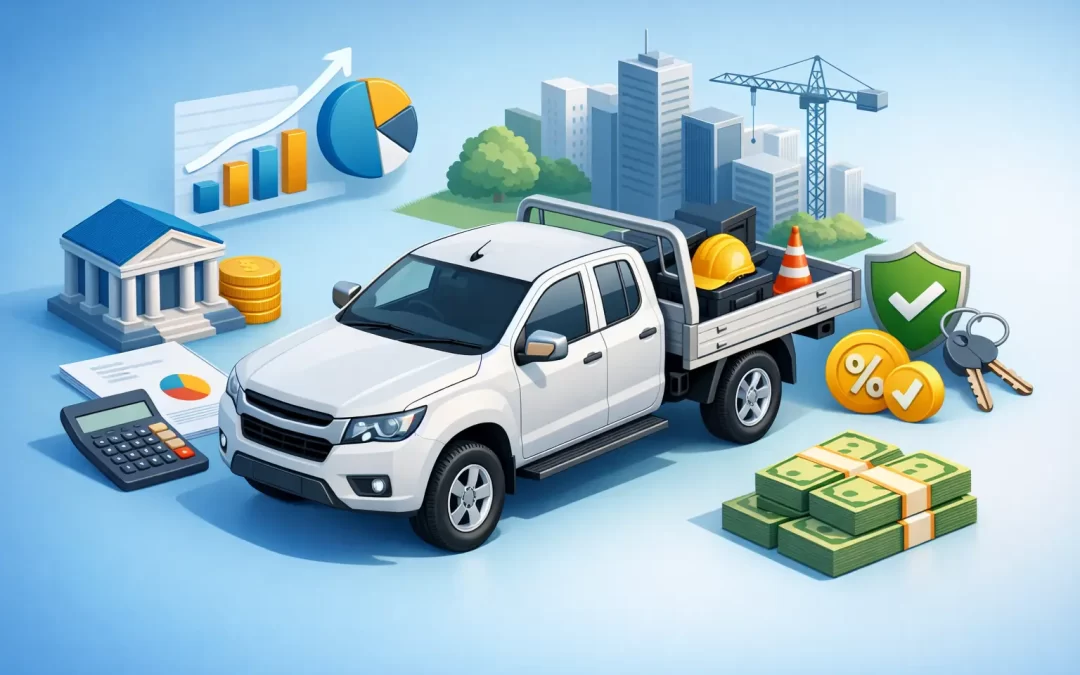
A work ute often starts as a practical purchase and quickly becomes a revenue tool. If it is carrying tools, towing gear, getting your team to site or helping you service clients faster, the way you finance it matters just as much as the vehicle itself. The right commercial loan for a work ute can help protect cash flow, keep repayments manageable and make the purchase fit the way you actually run your business.
For many Australian borrowers, the challenge is not whether finance exists. It is choosing a structure that suits their income, tax position, trading history and credit profile. That is where good guidance can save time and expensive trial and error.
When a commercial loan for a work ute makes sense
If your ute is being bought mainly for business use, a consumer car loan is not always the best fit. Commercial vehicle finance is generally designed for business borrowers, sole traders and self-employed applicants who need the asset for work purposes. That usually means the lender will look not only at the vehicle, but also at the strength and structure of the business behind the application.
A commercial loan can make sense when preserving working capital is important. Rather than paying a large lump sum upfront, you spread the cost over time while keeping funds available for stock, wages, equipment or unexpected expenses. That trade-off can be especially useful for growing businesses where cash flow flexibility matters more than owning the ute outright on day one.
It also makes sense when the finance structure may offer accounting or tax advantages, depending on your circumstances. That is not universal and it depends on how your business is set up, how the vehicle will be used and what advice you receive from your accountant. The finance product should support the business, not complicate it.
The main loan structures to consider
Not every work ute loan is built the same, and the best option depends on how simple or strategic you need the arrangement to be.
Chattel mortgage
A chattel mortgage is one of the most common options for business-use vehicles. Your business owns the ute from the start, while the lender takes a mortgage over the asset as security. This option often suits borrowers who want fixed repayments and clear ownership, particularly if the vehicle is primarily for business use.
For many self-employed borrowers and established small businesses, this structure is attractive because it is familiar, practical and relatively straightforward. It can also work well if you want to finance a new or used ute without overcomplicating the paperwork.
Finance lease
With a finance lease, the lender buys the ute and leases it to your business for an agreed term. At the end of the lease, you may have options around upgrading, paying a residual or refinancing, depending on the agreement. This can suit businesses that like to replace vehicles regularly and keep pace with operational demands.
The flip side is that a lease is not always the simplest option for every borrower. If your priority is immediate ownership and long-term retention of the vehicle, another structure may be more suitable.
Hire purchase and other commercial options
Some borrowers may also consider hire purchase or similar commercial asset finance products, depending on lender availability and the business setup. These can still be useful in the right situation, especially where repayment flexibility or a specific ownership pathway is needed.
The key point is that the cheapest-looking rate is not always the best outcome. Loan term, fees, balloon payment, asset age rules and approval conditions can all change the real cost and usability of the finance.
What lenders look at before approving a work ute loan
Lenders are usually assessing two things at once – the asset and the borrower. The ute needs to meet the lender’s policy around age, condition, value and intended use. At the same time, the applicant needs to show a reasonable capacity to service the debt.
If you are applying as a sole trader or self-employed borrower, lenders may review business income, bank statements, ABN history and sometimes BAS or tax returns. If you are buying through a company or trust, they may want additional business documents and details about directors or guarantors.
Credit history also plays a role, but it is not always a simple pass-or-fail exercise. Some lenders are more flexible than others, especially where the issues are older, explained properly or balanced by stronger current income and conduct. Borrowers with previous credit problems often assume they have no path forward, when in reality they may just need a lender with the right policy fit.
Deposit size can also affect approval. A larger deposit may reduce lender risk, improve borrowing terms or make an older vehicle easier to finance. That said, plenty of borrowers still secure finance without a large upfront contribution, provided the overall application is strong.
Choosing a ute loan that fits your cash flow
A work ute should help your business move, not squeeze it. That is why repayment structure matters.
A shorter term generally means higher repayments but less interest over time. A longer term can reduce monthly pressure, although it may increase the total amount paid across the life of the loan. Neither option is automatically better. If your income is stable and you want to minimise long-term cost, a shorter term may be attractive. If you need breathing room while managing other business expenses, a longer term may be the smarter choice.
Some borrowers also consider a balloon payment. This can lower regular repayments by leaving a lump sum to the end of the term. It can help with cash flow, especially in businesses with strong expected future income or planned asset turnover. But it also creates a future obligation, so it should be chosen carefully rather than simply used to make the monthly figure look smaller.
New ute versus used ute finance
Both can be financed, but the lender’s appetite may differ. New utes often attract broader lender interest because they present less asset risk and usually hold value more predictably in the early years. Used utes can still be financed competitively, although age, kilometres and condition become more important.
If you are buying second-hand, it helps to know the lender’s asset limits early. Some lenders are comfortable with older commercial vehicles, while others have tighter rules. This is one of the areas where broker support can save time, because there is no point applying with a lender whose policy does not fit the vehicle from the outset.
Broker support can make the process easier
Applying for a commercial loan for a work ute can look simple online, but many borrowers find the real challenge is matching their circumstances to the right lender and loan structure. That is particularly true if your income is not straightforward, you need a quick turnaround, or your credit file needs context rather than a computer says no response.
A broker can help assess the likely fit before you apply, which may reduce unnecessary credit enquiries and improve efficiency. Instead of comparing rates in isolation, the focus shifts to the full picture – approval odds, suitable structure, document requirements and realistic repayment options.
For borrowers who want a practical path rather than generic finance advertising, that support can make a real difference. Auto Link Finance works with a broad lender panel and helps clients navigate those choices with a more tailored approach.
How to improve your chances of approval
The strongest applications are usually the clearest ones. If your income is consistent, your business activity is easy to verify and the vehicle details are complete, the assessment is generally smoother.
It helps to have your ABN details, identification, business financials or recent bank statements ready if required, along with the ute invoice or dealer quote. If there have been credit issues in the past, be upfront. Lenders are often more comfortable with a well-explained situation than with missing pieces or surprises during assessment.
It is also worth being realistic about budget. Borrowing at the edge of what looks possible on paper can create pressure later, especially in businesses with seasonal variation. A better finance outcome is one that still feels manageable when work slows down or costs rise.
The right loan is the one that supports the job
A ute is not just another vehicle when your livelihood depends on it. The finance behind it should match the way you earn, spend and plan ahead, whether that means simple fixed repayments, a tax-effective structure or a solution that works around a more complex credit history.
If the loan fits properly, your ute gets on the road faster and your business keeps moving with less strain. That is usually the smartest place to start.