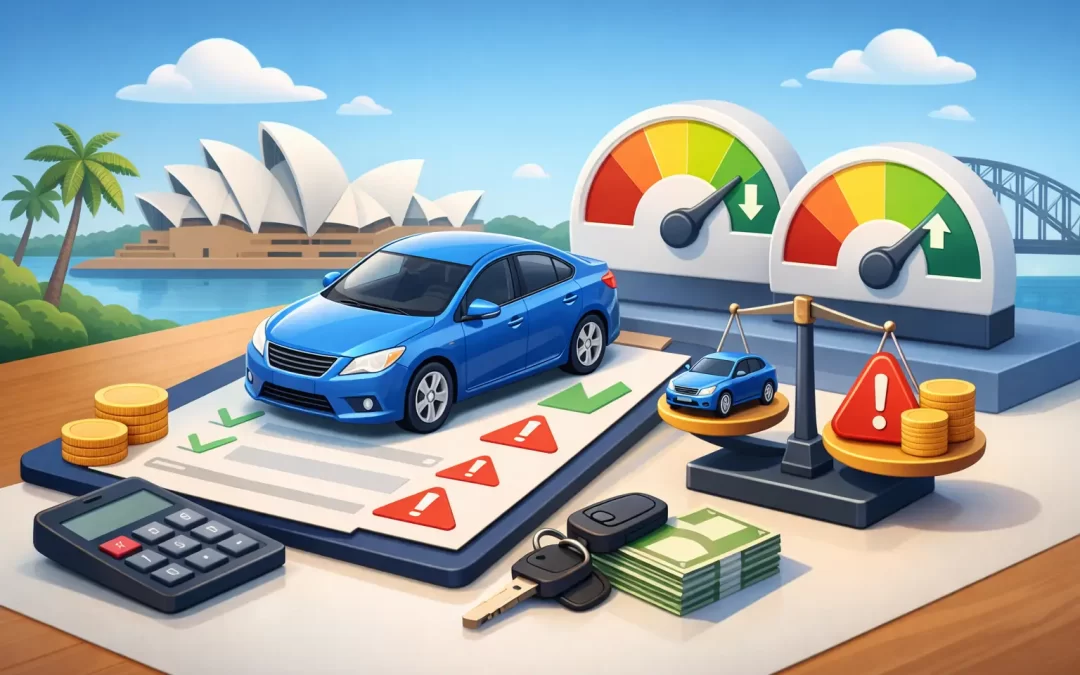
A car can be the difference between getting to work on time, managing family commitments, or keeping a small business moving. If you are searching for bad credit car financing near me, past credit issues do not automatically mean you are out of options. What matters is finding finance that reflects your current circumstances, the vehicle you are buying and what you can reasonably afford to repay.
Bad credit car finance is not a one-size-fits-all product. Lenders assess applications differently, and the right pathway can depend on far more than a credit score. A finance broker can help make sense of those differences, present your application clearly and identify suitable lending options without leaving you to approach lender after lender on your own.
What bad credit car financing actually means
Bad credit car finance is generally designed for borrowers whose credit report contains issues that may make a standard car loan harder to obtain. This might include missed repayments, defaults, a history of multiple credit enquiries or a previous financial setback. Lenders will consider the nature of the issue, how long ago it occurred and whether your financial position has improved since then.
The important point is that a credit report is one part of the picture, not the whole story. Stable income, a realistic budget, a deposit or trade-in, and the quality and value of the car can all influence an assessment. For self-employed borrowers, up-to-date business financials, bank statements and evidence of regular income may help demonstrate repayment capacity.
Because the loan is commonly secured against the vehicle, the car itself provides the lender with security. This can make secured car finance more accessible than some unsecured borrowing options. However, it also means the lender may repossess the vehicle if repayments are not met, so choosing an affordable repayment is essential.
Bad credit car financing near me: why local support still matters
Searching locally often means you want someone who understands Australian lending requirements and can provide real guidance when the process feels uncertain. While much of the application process can be completed by phone or online, personal broker support means you can ask direct questions, provide documents securely and understand what is happening at each stage.
For borrowers in Melbourne, Werribee, Hoppers Crossing and across Australia, the benefit is not simply proximity. It is having an experienced finance professional assess your circumstances and match them with lenders whose criteria may be more suitable. Rather than relying on a generic online quote, you can receive guidance on loan structure, vehicle eligibility, deposit requirements and repayment terms before committing.
Auto Link Finance works with a broad lender network and brings more than 35 years of industry experience to the process. That breadth can be valuable when your application needs a more considered approach than a standard online form can provide.
What lenders may look at besides your credit report
A lender needs confidence that the proposed loan is sustainable. This is part of responsible lending, and it protects both the borrower and the lender from a loan that is unlikely to work over the long term. Credit history matters, but it is assessed alongside your present financial position.
Lenders may review your income and employment or business circumstances, regular living expenses, existing debts and recent repayment conduct. They may also consider the amount you want to borrow, the term of the loan, your deposit, and the age, condition and purchase price of the car.
A newer vehicle from a reputable dealer can sometimes be easier to finance than an older private-sale vehicle, although this depends on the lender. Some lenders have restrictions around the vehicle’s age, kilometres or minimum loan amount. If you have a particular car in mind, it is worth checking its eligibility early rather than assuming every vehicle will suit every loan product.
The trade-offs to understand before applying
Bad credit finance can provide a practical path to vehicle ownership, but it is important to weigh up the cost as well as the approval opportunity. Depending on your circumstances, the interest rate may be higher than a loan offered to someone with a stronger credit history. Fees, the loan term and any optional products can also affect the total amount you repay.
Extending the loan term may lower your weekly or monthly repayment, which can assist with cash flow. The trade-off is that you may pay more interest over the life of the loan. A shorter term can reduce total interest, but only if the higher repayments remain comfortably within your budget.
Do not focus on the repayment figure alone. Ask for a clear explanation of the interest rate, comparison rate where applicable, establishment fees, monthly or account fees, early payout conditions and the total amount repayable. A transparent conversation upfront gives you a better basis for deciding whether the finance suits your needs.
How to strengthen your application
You do not need to have every detail perfect before speaking with a broker, but preparation can make the process faster and more accurate. Start with a realistic idea of what you can spend on the car and what repayment you can manage after your regular commitments are covered.
It also helps to have identification, recent income evidence, bank statements and details of existing finance available. If you are self-employed, your ABN, tax returns, business activity statements or accountant-prepared financials may be relevant, depending on the lender and loan type.
Be open about your credit history from the beginning. Trying to hide a default or missed repayment rarely helps because lenders generally review credit information as part of their assessment. A broker can better position an application when they understand the full story, including whether the issue was a one-off event and what has changed since then.
A deposit or trade-in may improve the loan-to-value ratio, reducing the amount you need to borrow. It is not always required, and it should not leave you without a sensible cash buffer, but it can be worth discussing. Likewise, avoiding unnecessary credit applications before you are ready may help keep new enquiries from accumulating on your file.
A practical path from enquiry to settlement
The best starting point is a conversation about the vehicle you need and the financial position you are in now. A broker can review the broad details, explain likely options and identify the documents required for a formal assessment. This early step can save time by steering you towards loan structures and lenders that are more aligned with your circumstances.
Once an application is prepared, the lender will assess the information provided and may request further documents. If approved, review the loan contract carefully before signing. Check the repayment amount and frequency, loan term, interest and fees, security over the vehicle, and any conditions that must be met before settlement.
For a dealer purchase, funds are generally arranged for settlement once all conditions are satisfied. Private sales can involve additional steps, as the lender may need to verify vehicle ownership and details. Your broker should keep you informed so you know what is required and when.
Choose finance that supports the next step
The right car loan should help you move forward without creating pressure that is difficult to sustain. Approval is only one part of a good outcome. The stronger result is a vehicle that suits your needs, paired with repayments and terms you understand and can manage with confidence.
If you are concerned about past credit issues, start with an honest assessment rather than ruling yourself out. Clear information, a realistic budget and experienced guidance can turn a frustrating search into a practical plan for your next car.
A past default, late payment or credit enquiry does not automatically rule out vehicle finance. Bad credit auto lenders look beyond a single number to understand your current position, the asset you are buying and whether the repayments are realistic for your budget. The right approach is not about chasing a quick yes from every lender. It is about presenting a clear application to lenders whose criteria suit your circumstances.
For many Australians, a reliable car, ute, truck or piece of equipment is essential for work, family commitments or running a business. If your credit history has made finance feel out of reach, specialist broker support can make the process more straightforward and help you avoid applying for loans that were never likely to fit.
What bad credit auto lenders look for
Credit history matters, but it is only one part of a lender’s assessment. Lenders want to see how you manage money now, not just what happened at a difficult point in the past. A recent and isolated late payment will usually be viewed differently from ongoing missed commitments or a large unpaid debt.
They will generally assess your income, regular living costs, existing repayments and the proposed loan repayment. The key question is whether the finance is affordable after your normal commitments are covered. Stable income and a demonstrated ability to manage repayments can strengthen an application, including for self-employed borrowers whose income may not fit a standard payslip model.
The vehicle or asset also plays a role. A newer, well-priced car with a clear value can be easier to finance than an older vehicle with high kilometres or a purchase price well above market value. This is because the vehicle is commonly used as security for a secured car loan. For commercial vehicles and equipment, lenders may consider the asset’s purpose, condition and resale value as part of their decision.
Your credit report needs context
A credit report can contain defaults, missed repayments, court information, multiple credit enquiries and other details that influence a lender’s view of risk. It does not tell the whole story on its own.
For example, a past default that has been paid may be assessed more favourably than a current unpaid default. Likewise, a period of financial pressure followed by consistent repayment conduct can show that your position has improved. Being upfront about the circumstances allows your broker to identify lenders that may be more suitable and to explain the application accurately.
Trying to hide credit issues is rarely helpful. Lenders complete their own checks, and inconsistencies can slow an application or result in a decline. A clear explanation, supported by the right documents, is a far better starting point.
Why rates and terms can differ so much
Bad credit vehicle finance is not one standard product. Interest rates, fees, loan terms, deposit requirements and approval conditions can vary substantially between lenders. The rate offered reflects the lender’s assessment of risk, but it is not the only figure that matters.
A lower repayment can look attractive because the loan term is longer, yet paying over more years may increase the total interest paid. On the other hand, a shorter term can reduce overall interest but place more pressure on your weekly, fortnightly or monthly budget. The right option depends on your cash flow, the age of the vehicle and how long you plan to keep it.
It is also worth checking whether the loan includes an establishment fee, monthly account fee, early payout costs or conditions around extra repayments. Looking at the total amount payable, not simply the advertised rate, gives you a more useful comparison.
A deposit or trade-in can sometimes improve the application by reducing the amount borrowed relative to the vehicle’s value. However, it should not leave you short of funds for registration, insurance, servicing or other essential costs. A practical finance structure is one you can maintain comfortably, not one that only works on paper.
Preparing a stronger vehicle finance application
Preparation can save time and reduce uncertainty. Before applying, work out a realistic purchase budget that includes the on-road costs, not just the vehicle’s sticker price. Consider what repayment amount fits your regular income after rent or mortgage payments, household expenses, existing finance and business costs are accounted for.
Having current documents ready will also help. Depending on your circumstances, a lender may request identification, recent bank statements, income evidence, details of existing liabilities and information about the vehicle or asset you intend to buy. Self-employed applicants may be asked for business financials, tax returns, BAS statements or other evidence that shows trading income.
Avoid making a string of finance applications while you are still deciding. Multiple credit enquiries in a short period can raise questions and may affect how some lenders assess your application. A finance broker can review your position first, then direct your application towards appropriate lender options rather than taking a scattergun approach.
Choose the loan structure that matches the asset
The finance structure should suit both the asset and how you will use it. A secured car loan may suit a personal vehicle purchase, while a chattel mortgage, finance lease or hire purchase arrangement could be more appropriate for eligible business assets. Trucks, machinery and other commercial equipment often need a lender that understands the asset and its role in generating income.
This is especially relevant when the purchase is not a standard passenger car. Motorbikes, caravans, boats, JetSkis and specialist work equipment can have different lending criteria. Choosing a lender that regularly considers that asset type may provide more realistic options than relying on a one-size-fits-all application.
Common mistakes that can make finance harder
The biggest mistake is focusing only on getting approved. Finance should help you buy the vehicle or equipment you need without creating repayment pressure that affects the rest of your finances. Borrowing the maximum available amount may not be the best outcome if a lower-priced asset delivers the same purpose with a more manageable repayment.
Another common issue is accepting dealer-arranged finance without comparing the full terms. Convenience has value, particularly when you need a vehicle quickly, but it is still sensible to understand the interest rate, fees, loan length and total cost before signing. The same applies to offers that promote very low repayments without clearly explaining the term or any final payment.
Finally, do not assume that one decline means every lender will say no. Different lenders have different policies, asset preferences and levels of flexibility around credit history. The goal is to find an option that is responsible and suitable, rather than repeatedly applying in the hope that an approval appears.
How broker guidance can help
A specialist broker can assess your goals, budget and credit position before recommending finance pathways. That guidance is valuable when your circumstances are more complex, such as recent credit issues, self-employed income, a commercial vehicle purchase or an unusual asset category.
With access to a range of accredited lenders, Auto Link Finance can help identify loan structures and lending options aligned with the purchase you are making. The process should remain transparent: you should understand the repayment, loan term, fees, security requirements and conditions before moving ahead.
No responsible broker or lender should guarantee approval. What they can do is help you submit a well-prepared application, explain the available choices in plain language and support you through approval and settlement.
A vehicle purchase can be a fresh practical step forward. Start with an honest view of your budget and credit position, then seek finance that gives you room to meet your repayments with confidence while getting on with the work, travel or plans that matter to you.
A reliable car can make a genuine difference when you are rebuilding after bankruptcy. It may help you get to work, manage family commitments or keep a small business moving. While a car loan after bankruptcy is not automatic, past financial difficulty does not necessarily mean finance is out of reach. The right option depends on where you are in the process, your current financial position and the vehicle you intend to buy.
The most useful starting point is an honest assessment rather than a rushed application. Lenders want to see that your circumstances have changed, your repayments are manageable and the proposed loan makes practical sense. With preparation and the right guidance, many borrowers can explore realistic vehicle finance options with greater confidence.
Can You Get a Car Loan After Bankruptcy?
It may be possible to apply for car finance after bankruptcy, particularly once the bankruptcy has been discharged. However, every lender has its own credit policy, and approval will depend on much more than the bankruptcy itself.
A lender will generally consider your current capacity to repay the loan, the stability of your income, your recent account conduct, your household expenses and the value of the car. They may also look at the age and condition of the vehicle, as this affects how readily it can be used as security for the loan.
A bankruptcy can remain visible on relevant public records and may affect your credit profile for a period of time. That does not mean every lender will make the same decision. Some mainstream lenders have stricter criteria, while specialist lenders may assess applications more individually. The trade-off is that loans for borrowers with impaired credit can sometimes involve higher interest rates, fees or more limited loan terms.
The aim is not simply to obtain approval. It is to secure a repayment arrangement that supports your financial recovery rather than placing pressure on it.
What Lenders Look For After Bankruptcy
Your current financial position
Lenders are interested in what is happening now. Consistent income, a clear budget and evidence that you can meet regular commitments can all strengthen an application. Salaried borrowers may provide recent payslips and bank statements, while self-employed applicants may need business financials, tax returns or other documents that demonstrate sustainable income.
Recent payment behaviour also matters. Keeping rent, utilities, mobile bills and existing credit commitments up to date can help show that you have established more reliable financial habits since the bankruptcy.
Whether the bankruptcy is discharged
The stage of your bankruptcy is relevant. A discharged bankruptcy may give lenders more confidence than an active one, although it is still assessed alongside your overall circumstances. Be upfront about the dates and provide accurate information when asked. Trying to leave out a credit event can cause more problems than the event itself.
The vehicle and loan amount
The car you choose has a direct impact on the application. A reasonably priced, well-maintained vehicle that suits your needs is often easier to finance than an expensive vehicle or one that is too old for a lender’s security requirements.
Borrowing less can also improve affordability. A deposit, trade-in or lower purchase price may reduce the lender’s risk and your regular repayment. It can be tempting to focus on the maximum amount available, but a modest vehicle can be a smarter first step when rebuilding credit.
Your expenses and existing commitments
Lenders assess whether there is enough room in your budget for the new repayment after essential living costs and current liabilities. This is why a realistic budget matters. It should account for registration, insurance, fuel, servicing and tyres as well as the loan repayment itself.
How to Prepare for a Car Loan After Bankruptcy
Preparation can make the process clearer and may reduce unnecessary applications. Before applying, review your finances and gather the information a lender is likely to request. Depending on your circumstances, this may include:
recent payslips or evidence of self-employed income
bank statements showing income and regular expenses
photo identification and proof of address
details of the car, including purchase price, year, make and model
information about current loans, credit cards or other financial commitments
It is also wise to check your credit report for accuracy. If information is incorrect or outdated, seek to have it investigated before submitting a finance application. A report will not improve overnight, but knowing what a lender is likely to see helps you have an informed conversation about your options.
Avoid making several applications with different lenders in a short period. Multiple credit enquiries can make your profile look more pressured and may complicate the assessment. A more considered approach is to understand which lenders and loan structures are likely to suit your situation before applying.
Choosing the Right Loan Structure
For many vehicle purchases, a secured car loan is worth considering. With a secured loan, the vehicle is used as security for the finance. This can give lenders more confidence than unsecured borrowing and may create more options, even where credit history is impaired.
The interest rate is important, but it should not be the only comparison point. Look at the comparison rate, establishment and monthly fees, loan term, early repayment conditions and the total amount payable. A longer term can lower the weekly or monthly repayment, but it usually means paying more interest across the life of the loan.
If you are buying a vehicle primarily for work, the appropriate finance structure may be different. Self-employed operators and business owners may need to consider whether a chattel mortgage, hire purchase arrangement or finance lease better suits their tax, cash flow and ownership requirements. Professional tax advice may be appropriate before making that decision.
A guarantor can sometimes support an application, but it is a serious commitment for everyone involved. The guarantor may become responsible for the debt if repayments are not met. It should only be considered where all parties understand the obligations and are comfortable with the risk.
Common Mistakes to Avoid
One common mistake is applying for finance before working out a realistic repayment limit. A lender may offer an amount that is technically available, but that does not mean it is the right amount for your budget. Start with what you can comfortably afford after all vehicle and household costs.
Another is focusing only on a low advertised rate. Borrowers with complex credit histories may not qualify for the headline rate, so it is better to assess the actual offer and total loan cost. Clear information about fees, repayments and the consequences of missed payments is essential.
Finally, do not feel pressured to buy the first car you see. Taking time to check the vehicle’s condition, history and suitability can prevent costly problems later. Finance is only one part of a sound vehicle purchase.
How a Finance Broker Can Help
A broker can help you avoid the confusion of approaching lenders one by one. Rather than treating every application the same, an experienced broker can review your income, expenses, credit history and vehicle plans, then identify finance options that may be appropriate for your circumstances.
At Auto Link Finance, the focus is on tailored vehicle finance and practical guidance through the application process. This can be particularly valuable after bankruptcy, when the goal is to present your current position clearly and seek a loan structure that is both realistic and sustainable.
A broker cannot guarantee approval or remove a bankruptcy from your record. What they can do is help you understand the likely requirements, prepare a stronger application and compare suitable options from a broader lender network.
Is It Better to Wait Before Applying?
Sometimes waiting can improve your position. If you have only recently returned to stable income, have not yet built a record of on-time payments or are still managing high existing expenses, a few months of careful budgeting may make a difference. Saving a larger deposit can also reduce the amount you need to borrow.
However, waiting is not always necessary. If you have stable income, manageable expenses and a clear need for a vehicle, it may be worth discussing your options now. The right timing depends on your individual circumstances, not a one-size-fits-all rule.
Rebuilding after bankruptcy is usually a series of measured decisions. A car loan should be one that gives you dependable transport, manageable repayments and room to keep moving forward.
A default on your credit file can make a car purchase feel out of reach, particularly when you need reliable transport for work, family or everyday life. But car finance with defaults is not automatically off the table. The key is understanding what lenders see, what has changed since the default, and which loan structure genuinely suits your current position.
A default is a signal to a lender, not the whole story of your finances. Some lenders have strict credit policies, while others assess applications more broadly, including your recent repayment conduct, income, expenses, the vehicle you are buying and the amount you can contribute upfront. This is where tailored broker support can save time and reduce the uncertainty of applying on your own.
What a default means for a car loan application
A credit default usually appears on your credit report when an overdue debt of $150 or more remains unpaid for at least 60 days, after the required notices have been issued. It can remain on your report for up to five years, even once it has been paid. A paid default is generally viewed more favourably than an unpaid one, but lenders will still want to understand the circumstances.
They may consider when the default was listed, its value, whether it has been settled, and whether there are other credit issues on file. A single, older default caused by a short-term setback can be assessed very differently from multiple recent defaults, ongoing arrears or frequent loan enquiries.
For car finance, lenders also look beyond the credit report. They need confidence that the proposed repayments are affordable and that the car provides suitable security for the loan. A well-priced, reliable vehicle and a realistic loan amount can strengthen an application compared with seeking finance at the top end of your budget.
Can you get car finance with defaults?
In many cases, yes, although approval, rates and terms will depend on your individual circumstances. There is no responsible lender or broker who can promise approval before reviewing your situation. What can be done is to identify realistic options and present your application clearly to lenders whose policies are more likely to fit.
A secured car loan is often the most relevant option because the vehicle acts as security for the finance. This can reduce the lender’s risk compared with an unsecured personal loan. Depending on the vehicle, its age and value, the deposit available and your profile, this may open up lending pathways that would otherwise be limited.
The trade-off is that finance for borrowers with impaired credit can cost more. The interest rate may be higher, fees may apply, and some lenders may require a larger deposit or a shorter loan term. It is worth looking at the total amount repayable, not only the weekly or fortnightly figure. A lower repayment spread over too many years can still be an expensive choice overall.
What lenders are likely to assess
Lenders want evidence that the loan is manageable now, rather than relying only on what happened in the past. Stable income, sensible living expenses and recent accounts paid on time can all matter. For self-employed borrowers and small business owners, current business trading figures, bank statements and tax information may help demonstrate capacity to repay.
The purpose of the vehicle also affects the assessment. A car used to travel to worksites, carry tools or support a business can have a practical value beyond personal transport. Where appropriate, lenders may consider asset finance structures such as a chattel mortgage or finance lease for eligible business use. The right structure depends on how the vehicle will be owned and used, so it should be considered carefully rather than selected simply because it appears cheaper.
A lender may also assess the vehicle itself. Late-model cars purchased through a dealer are commonly easier to finance than very old vehicles or private-sale cars with limited value. That does not mean other vehicles are impossible to fund, but the available lender options can narrow.
Steps that can improve your application
Before applying, obtain a copy of your credit report and check it carefully. Confirm that listed defaults are accurate, identify whether they are paid or unpaid, and query any information you believe is incorrect. Knowing what is on your file prevents unpleasant surprises after an application has been submitted.
If possible, settle outstanding defaults or arrange a documented payment plan before seeking finance. This will not erase the listing straight away, but it can show a lender that the issue has been addressed. Avoid taking on new credit commitments in the meantime and keep bills, rent or mortgage payments and existing finance repayments up to date.
It also helps to set a clear vehicle budget before shopping. Include insurance, registration, fuel, servicing and tyres alongside the loan repayment. A car that looks affordable at the dealership can place pressure on your budget once all running costs are included.
A deposit or trade-in can make a meaningful difference. It lowers the amount borrowed and may improve the loan-to-value ratio, which is the percentage of the car’s value being financed. However, do not drain all of your savings to create a deposit. Keeping a reasonable buffer for unexpected expenses is often the more sustainable decision.
Finally, be measured with loan applications. Multiple applications made in a short period can create additional credit enquiries on your report. Rather than applying with several lenders at random, it is usually better to have your circumstances assessed first and approach suitable lenders strategically.
Why tailored broker guidance matters
Finding car finance with defaults is not just about locating a lender willing to say yes. It is about finding an option with repayments you can maintain, appropriate loan terms and a vehicle that suits your needs. A finance broker can review your credit position, income and vehicle plans, then compare suitable products from accredited lenders.
This can be particularly helpful if your circumstances do not fit a standard application form. Perhaps you are self-employed, purchasing a work vehicle, have recently improved your financial position, or need clarity on whether a secured loan is the right path. A broker can explain the practical differences in plain language and help prepare the documents a lender is likely to request.
At Auto Link Finance, the focus is on matching borrowers with suitable vehicle finance structures rather than taking a one-size-fits-all approach. With access to a broad lender network and decades of industry experience, the process is designed to give you a realistic view of your options before you commit to a car or a repayment.
Questions to ask before accepting an offer
An approval is only the beginning. Before signing, ask whether the interest rate is fixed or variable, what establishment and monthly fees apply, and whether there are charges for paying the loan out early. Check the loan term, repayment frequency and total amount payable over the full term.
You should also understand the security requirements and insurance conditions. With a secured car loan, the lender generally has an interest in the vehicle until the balance is repaid. Missing repayments can lead to further credit damage and, in serious circumstances, repossession of the car. If the repayment feels tight before you sign, it is worth reassessing the loan amount, term or vehicle choice.
Be cautious of offers that focus solely on fast approval while providing little detail about cost. Speed can be valuable when you need a vehicle promptly, but clear terms and affordability matter more over the life of the loan.
A past default does not have to dictate every financial decision you make next. With an honest application, a sensible budget and the right guidance, you can explore car finance options with greater confidence and choose a repayment plan that supports the road ahead.
A declined car loan does not always mean the end of the road. For many Australians, second chance car loans provide a practical way to finance a reliable vehicle after past credit issues, provided the loan is affordable and structured around their current circumstances.
The key word is current. Lenders will consider your credit history, but many also look closely at what has changed since the issue occurred: your income, repayment conduct, savings, existing commitments and the vehicle you want to buy. A well-presented application can make a meaningful difference.
What are second chance car loans?
Second chance car loans are vehicle finance options designed for borrowers who may not fit the strictest lending criteria of a mainstream bank. They can suit people with defaults, late repayments, debt collection listings, discharged bankruptcy or a limited credit history.
They are not a separate loan type with one fixed set of rules. Rather, they describe finance arranged through lenders prepared to assess an application more broadly than a standard credit score alone. Each lender has its own criteria, which is why the right option for one borrower may not be right for another.
Most second chance car finance is secured by the vehicle being purchased. That security can reduce lender risk compared with an unsecured personal loan, which may make approval more achievable. It also means the vehicle matters. Its age, value, condition and whether it is being bought from a dealer or private seller can all affect the available options.
What lenders look at beyond your credit score
A credit report is part of the assessment, not the whole story. A lender needs confidence that the proposed repayments can be met without putting unnecessary pressure on your household or business cash flow.
Your current income and stability
Lenders generally want to see a clear, consistent source of income and enough remaining funds after regular living costs and debts are considered. Salaried applicants may provide recent payslips and bank statements. Self-employed borrowers may be asked for business activity statements, tax returns, accountant-prepared financials or transaction history, depending on the lender and the loan amount.
For self-employed operators, a broker can help identify lenders that understand genuine business expenses and variable income patterns. That can be particularly valuable when a vehicle is essential for getting to jobs, visiting clients or carrying equipment.
The reason for the credit issue
A past financial setback is viewed differently from a problem that is still continuing. Lenders may consider when the issue happened, how large it was, whether it has been paid or settled, and whether your recent repayment history shows improvement.
Being open is usually the better approach. Trying to hide a listing rarely helps, as lenders conduct their own checks. A short, honest explanation supported by the right documents can give useful context to an application.
Existing debts and living expenses
Even with a good income, high credit card limits, personal loans or buy now, pay later commitments can reduce borrowing capacity. Lenders assess whether the proposed car loan repayment remains manageable after these obligations and normal living costs are allowed for.
Before applying, it can help to reduce unused credit limits where practical and avoid taking on new finance. Small changes will not erase a credit event, but they can improve the overall picture a lender sees.
The car and loan structure
A newer, well-priced vehicle from a reputable dealer may be easier to finance than an older vehicle with uncertain value. Loan size, term, deposit and any trade-in can also influence the assessment.
A longer term can lower the regular repayment, which may assist serviceability. The trade-off is that you may pay more interest over the life of the loan. A shorter term can reduce total interest but raises the repayment amount. The best choice is the one that fits comfortably within your budget, not simply the one with the lowest fortnightly figure.
Why the cheapest advertised rate may not be the right answer
Borrowers rebuilding their credit should expect that interest rates and fees may be higher than those offered to applicants with a very strong credit profile. That is the lender pricing for added risk. However, a higher rate should never mean accepting unclear terms or a repayment that leaves no room for normal expenses.
Look at the full cost of the loan, including the comparison rate where available, establishment fees, monthly fees, early payout conditions and any charges attached to missed repayments. Also check whether a balloon payment is involved. A balloon can reduce ongoing repayments, but it leaves a lump sum owing at the end of the term. It may suit some business or asset-finance situations, but it should be planned for from the outset.
Second chance finance can be a useful stepping stone, not necessarily a permanent arrangement. Making repayments on time may help strengthen your credit profile over time. Depending on your circumstances, you may later be able to refinance to a more competitive option. There is no guarantee, and refinancing has costs to consider, but it can be worth reviewing once your financial position has improved.
How to prepare for a stronger application
Preparation can save time and avoid unnecessary applications. Multiple credit enquiries in a short period can concern some lenders, so it is generally better to understand your likely options before submitting applications widely.
Start by checking your budget honestly. Include the car repayment, insurance, registration, fuel, servicing, tyres and any work-related running costs. A vehicle that is affordable on settlement day should also be affordable when an unexpected bill arrives.
Gather your paperwork before you apply. This commonly includes identification, proof of address, income documents, recent bank statements, details of existing finance and information about the car. If you have had a credit issue, evidence that a debt has been settled or a simple explanation of the circumstances may also be helpful.
A deposit or trade-in can strengthen an application by reducing the amount borrowed. It is not required in every case, and using every dollar of savings is not always wise. Keeping a sensible cash buffer can be more important than stretching to make the biggest possible deposit.
The value of broker support for second chance car loans
Applying directly to one lender can be straightforward when your situation is simple and your credit file is strong. When there are past credit concerns, self-employment income or a more specialised vehicle purchase, the process can be less clear.
A finance broker can assess your circumstances, explain the available structures and approach lenders whose criteria are more aligned with your application. This is not about promising approval. Responsible lending means the lender must still assess suitability, verify information and make its own decision. It is about reducing guesswork and presenting your application in the strongest, most accurate way.
At Auto Link Finance, the focus is on helping clients understand realistic finance options across personal and work vehicles. That may include a family car, ute, truck or another asset that supports day-to-day life or business operations. The right recommendation considers more than approval alone: it should take account of the vehicle, repayment amount, loan term and your longer-term financial goals.
Questions worth asking before you sign
Before accepting any loan offer, make sure you understand the repayment amount and frequency, total amount payable, interest rate and fees. Ask what happens if you want to pay the loan out early, whether repayments can be made extra or more frequently, and what protections or insurance products are optional rather than required.
If the lender approves less than you hoped to borrow, resist the urge to bridge the gap with costly short-term credit. A more modest vehicle or a longer saving period may put you in a stronger position. The purpose of a second chance loan is to move forward sustainably, not to create another difficult repayment cycle.
Past credit problems can feel personal, but lenders are ultimately assessing risk and affordability. With clear information, a realistic budget and the right finance structure, a reliable vehicle may still be within reach. Take the time to choose a loan that supports your next step rather than making the next few years harder.
A bankruptcy discharge can feel like the point at which you are ready to move forward, yet buying a reliable car may still seem out of reach. The reality is that car loans for discharged bankrupts can be possible in Australia, particularly where you can show stable income, sensible spending habits and a vehicle choice that suits your budget. The key is approaching the application with clear expectations and the right support.
A past bankruptcy does not automatically mean every lender will decline you. It does mean lenders are likely to look more closely at your current position, the time since your discharge and whether the proposed repayments are genuinely affordable. A tailored car loan can help you get back on the road without taking on a commitment that creates fresh financial pressure.
Can You Get Car Loans for Discharged Bankrupts?
Yes, some lenders consider applications from people who have been discharged from bankruptcy. Approval is never guaranteed, and lender policies vary considerably, but a discharge is different from being currently bankrupt. Once discharged, you are generally able to apply for credit again, subject to each lender’s assessment criteria.
Your credit report may still show the bankruptcy for a period after discharge. In Australia, a bankruptcy listing can generally remain on a credit report for five years from the date of bankruptcy or two years from discharge, whichever is later. The National Personal Insolvency Index is also a public record. These records give lenders context, but they are not the whole story.
A lender will usually want to understand what has changed since the bankruptcy. Perhaps you now have consistent employment, have reduced other commitments, have established a stable household budget or need a vehicle to travel to work and meet family responsibilities. Clear evidence of a more sustainable financial position can strengthen an application.
What Lenders May Assess
With any vehicle finance application, the lender needs to be satisfied that the loan is suitable and that you can meet the repayments without hardship. For discharged applicants, that assessment may be more detailed. It is less about finding a single perfect credit score and more about presenting an accurate, complete picture of where you are now.
Lenders commonly consider your income and how regularly it is received, your essential living costs, existing debts, recent repayment conduct and the amount you want to borrow. They will also look at the car itself. A newer, reliable vehicle with a realistic purchase price can be easier to finance than an older vehicle with high kilometres or uncertain resale value.
The length of time since discharge may matter too. Some lenders have minimum periods following discharge, while others may assess applications sooner where the overall circumstances are strong. This is why a one-size-fits-all online application can be frustrating. A finance broker can identify lenders whose policy is more aligned with your situation before you spend time applying.
Your deposit can make a difference
A deposit is not always required, but it can improve the shape of your application. Putting money towards the purchase reduces the amount borrowed and lowers the lender’s risk. It may also reduce repayments and the total interest paid over the term.
That said, it is not wise to empty your savings simply to create a larger deposit. Keeping a reasonable buffer for registration, insurance, servicing and unexpected expenses is often the more responsible choice. The right deposit amount depends on your overall budget, not just what might look favourable on an application.
A guarantor is not the only path
Some borrowers assume they must have a guarantor after bankruptcy. That is not always the case. A guarantor may assist in certain circumstances, but it also places a serious legal and financial responsibility on another person. They should receive independent advice and fully understand what they are agreeing to.
Many applications are assessed on the applicant’s own capacity to repay. A suitable vehicle, stable income, manageable expenses and a well-structured loan can all be relevant without involving someone else.
Choosing a Loan That Supports a Fresh Start
The cheapest advertised rate is not necessarily the best outcome if the loan structure does not fit your needs. For borrowers rebuilding their finances, predictability and affordability matter just as much as the interest rate.
A secured car loan is a common option because the vehicle acts as security for the finance. This can be more accessible than unsecured borrowing and may offer more competitive pricing, depending on the lender, vehicle and application. However, the car can be repossessed if repayments are not met, so it remains essential to borrow conservatively.
The loan term also deserves careful thought. A longer term can reduce the regular repayment, which may make your weekly or monthly budget easier to manage. The trade-off is that you will usually pay more interest overall. A shorter term can cost less in total but may create repayments that are too tight. The best term is one that leaves room for ordinary life expenses rather than relying on every dollar going exactly to plan.
It is also worth checking the full cost of the loan, including establishment fees, monthly account fees, early repayment conditions and any balloon payment. A balloon can lower regular repayments by leaving an agreed amount due at the end of the loan. It may suit some borrowers, but only if there is a realistic plan to pay, refinance or sell the vehicle at that time.
How to Prepare Before You Apply
Preparation can make the process clearer and help avoid applying for a loan that does not suit your circumstances. Start by setting a comfortable repayment limit based on your actual income and regular outgoings. Include the cost of car insurance, fuel, maintenance, registration and tyres, not simply the loan repayment.
Gather documents that show your current financial position. Depending on the lender, this may include recent payslips, bank statements, identification, proof of address and details of existing credit commitments. If you are self-employed, lenders may request business bank statements, tax returns or other evidence of income. Providing complete information from the outset can reduce unnecessary delays.
Be upfront about the bankruptcy and discharge date. Trying to leave out relevant credit history is unlikely to help, as lenders conduct their own checks. A straightforward explanation of your circumstances, combined with evidence of financial stability since discharge, is far more constructive.
Avoid making several finance applications at once. Multiple credit enquiries in a short period can make your file look rushed or unsettled. Instead, seek guidance first, understand the likely options and submit a well-matched application.
A Practical Path to Buying Your Car
Begin with the car you need rather than the maximum amount you might be approved to borrow. If the vehicle is for commuting, school runs or work travel, reliability, running costs and resale value should carry more weight than extras. A realistic purchase price gives you a stronger foundation for rebuilding your credit profile.
Next, compare the repayment against your budget under slightly tougher conditions. Consider what happens if fuel costs rise, an insurance excess is needed or a household bill arrives unexpectedly. If the repayment only works in a perfect month, it may not be the right loan.
Then work with a specialist who can assess the full picture. Auto Link Finance can review your circumstances, explain suitable vehicle finance structures and approach accredited lenders that may consider discharged bankruptcy applications. The aim is not to push you into the first approval available, but to find an option that is appropriate for your income, vehicle and longer-term financial goals.
Questions Worth Asking Before You Sign
Before accepting any offer, ask what the comparison rate is and which fees are included. Confirm the repayment frequency, total loan term and whether there are charges for paying the loan out early. If there is a balloon payment, ask exactly how much will be due and what your options will be at the end of the agreement.
You should also understand what happens if you miss a payment. Life can change quickly, and contacting the lender early is generally better than allowing arrears to build. Responsible lending is not only about getting approved – it is about having a repayment arrangement you can maintain.
A discharged bankruptcy is part of your financial history, but it does not have to define every decision that follows. Choose a vehicle and loan that give you room to breathe, make repayments consistently, and let each good financial decision help build the next one.
Websites store cookies to enhance functionality and personalise your experience. You can manage your preferences, but blocking some cookies may impact site performance and services.
Essential cookies enable basic functions and are necessary for the proper function of the website.
Name
Description
Duration
Cookie Preferences
This cookie is used to store the user's cookie consent preferences.
30 days
Statistics cookies collect information anonymously. This information helps us understand how visitors use our website.
Google Analytics is a powerful tool that tracks and analyzes website traffic for informed marketing decisions.
Contains information related to marketing campaigns of the user. These are shared with Google AdWords / Google Ads when the Google Ads and Google Analytics accounts are linked together.
90 days
_gat
Used to monitor number of Google Analytics server requests when using Google Tag Manager
1 minute
_gid
ID used to identify users for 24 hours after last activity
24 hours
_ga_
ID used to identify users
2 years
_gali
Used by Google Analytics to determine which links on a page are being clicked
30 seconds
_ga
ID used to identify users
2 years
__utmx
Used to determine whether a user is included in an A / B or Multivariate test.
18 months
__utmv
Contains custom information set by the web developer via the _setCustomVar method in Google Analytics. This cookie is updated every time new data is sent to the Google Analytics server.
2 years after last activity
__utmz
Contains information about the traffic source or campaign that directed user to the website. The cookie is set when the GA.js javascript is loaded and updated when data is sent to the Google Anaytics server
6 months after last activity
__utmc
Used only with old Urchin versions of Google Analytics and not with GA.js. Was used to distinguish between new sessions and visits at the end of a session.
End of session (browser)
__utmb
Used to distinguish new sessions and visits. This cookie is set when the GA.js javascript library is loaded and there is no existing __utmb cookie. The cookie is updated every time data is sent to the Google Analytics server.
30 minutes after last activity
__utmt
Used to monitor number of Google Analytics server requests
10 minutes
__utma
ID used to identify users and sessions
2 years after last activity
Marketing cookies are used to follow visitors to websites. The intention is to show ads that are relevant and engaging to the individual user.
Facebook Pixel is a web analytics service that tracks and reports website traffic.