That dream boat can start to feel a lot more real the moment you put actual numbers around it. A boat loan repayment calculator helps you move past rough guesses and see what your purchase could look like as a weekly, fortnightly or monthly commitment. If you are weighing up a fishing boat, family cruiser or something for weekends on the water, getting clear on repayments early can save time, reduce stress and help you borrow with confidence.
For many buyers, the question is not simply, “Can I afford the boat price?” It is whether the repayment fits comfortably alongside the mortgage or rent, fuel, insurance, maintenance and everyday living costs. That is exactly where a calculator becomes useful. It gives you a practical starting point before you compare lenders or speak with a broker.
What a boat loan repayment calculator actually tells you
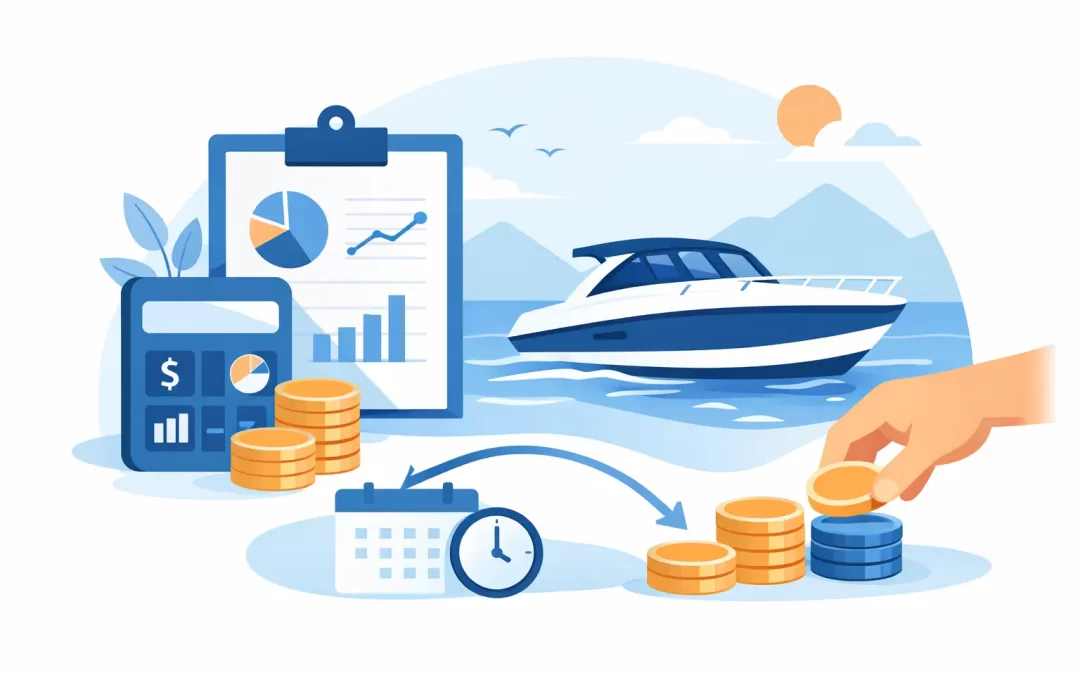
At its core, a boat loan repayment calculator estimates how much you may repay over a chosen loan term based on the amount borrowed, the interest rate and the repayment frequency. Some calculators also show total interest payable, which can be eye-opening if you are deciding between a shorter term and lower regular repayments over a longer one.
It is worth remembering that a calculator provides an estimate, not a final approval outcome. Your actual rate, fees, loan structure and eligibility will depend on your circumstances. That includes your income, employment type, credit history, deposit size and the kind of boat you are buying.
Still, even with that limitation, the calculator is one of the most useful planning tools available. It helps you test scenarios quickly. You can see what happens if you borrow less, contribute a larger deposit or reduce the term by a year or two. Those small changes can make a meaningful difference.
How to use a boat loan repayment calculator well
The biggest mistake people make is treating the first figure they see as the answer. A better approach is to use the calculator in stages.
Start with the expected purchase price of the boat. If you are trading in an asset or putting in savings, subtract that amount to get a more realistic loan figure. Then test a few different interest rates rather than assuming the lowest advertised rate will apply to your application.
Next, compare terms. A five-year term may look manageable, but a three-year term might save a substantial amount in interest if the repayments still sit within your budget. On the other hand, stretching the term may improve cash flow if you are self-employed or need more breathing room each month.
Finally, match the repayment frequency to how you are paid. If your wages come in fortnightly, a fortnightly estimate may help you budget more accurately than a monthly one. The right setup is not always the one with the lowest headline figure. It is the one that fits the way your finances actually work.
The numbers you should have ready
To get useful results, you will usually need the loan amount, estimated interest rate, loan term and repayment frequency. If the calculator allows for fees, include them. Some borrowers forget establishment or ongoing loan fees, and that can make the estimate look better than the real cost.
If you are unsure about rate ranges, that is where broker guidance becomes valuable. A calculator works best when the inputs are realistic.
Why repayment estimates matter before you apply
Boat finance is often an emotional purchase. That is understandable. You are thinking about weekends away, fishing trips, family time and freedom on the water. But lenders will assess the application through a very practical lens. They want to know whether the debt is affordable and whether the asset and borrower suit the loan policy.
Using a boat loan repayment calculator before applying puts you in a stronger position. It helps you set a sensible price range and avoid applying for a loan that may place too much pressure on your budget. That matters for approval chances, but it also matters after settlement. A loan should support your lifestyle, not strain it.
For self-employed borrowers and small business owners, this planning step can be even more important. Income may vary across the year, so a repayment that looks fine in a strong month may feel very different in a quieter period. Testing the numbers conservatively is often the smarter path.
What changes your boat loan repayments
Several factors influence what you will pay, and this is where online estimates can shift quite a bit.
The first is the loan amount. Borrowing more obviously increases repayments, but the relationship is not always as straightforward as buyers expect once interest and term are factored in.
The second is the interest rate. Even a modest change in rate can affect both the regular repayment and the total cost over the life of the loan. Borrowers with strong credit and stable financials may qualify for sharper pricing, while those with past credit issues may face higher rates or a more limited choice of lenders.
The third is the term. A longer term usually reduces the regular repayment, which can make the loan feel easier to manage in the short term. The trade-off is that you will generally pay more interest overall. A shorter term can save money, but only if the higher repayments are sustainable.
Then there is the deposit. Putting money down upfront can reduce the amount borrowed and may improve the overall structure of the loan. That does not mean everyone should empty their savings to lower repayments. Keeping a buffer for registration, insurance, servicing and emergency expenses is often just as important.
A calculator cannot tell you everything
This is the part many lenders gloss over. A calculator is useful, but it does not replace tailored advice.
It cannot fully account for your credit profile, employment setup, existing liabilities or the type and age of the boat. It also cannot tell you which lenders are more flexible with self-employed income, which options may suit borrowers with bad credit, or whether a different loan structure could work better for your circumstances.
That is why the most useful process is often a combination of both tools and guidance. Use the calculator to establish your comfort zone, then speak with an experienced broker to test what is realistic in the current lending market.
For borrowers who have had defaults, missed payments or previous credit issues, that conversation can be particularly valuable. A calculator might estimate a repayment, but it will not show the lenders most likely to consider your application or the documentation you may need to strengthen it.
When the cheapest repayment is not the best option
Low repayments can be appealing, especially when you are juggling other commitments. But the cheapest-looking option is not always the best finance outcome.
A very long term may reduce immediate pressure while increasing total interest significantly. A product with a low rate but high fees may not be as competitive as it first appears. And if a repayment only works because it leaves no room for fuel, servicing, mooring, safety gear and insurance, it is probably not a comfortable fit.
The best loan is usually the one that balances affordability, flexibility and total cost. That balance looks different for each borrower. A salaried employee with stable income may choose a shorter term to minimise interest. A business owner may prefer repayments that protect cash flow. Someone rebuilding credit may focus first on securing an approval with terms they can manage well.
Getting from estimate to application
Once you have used a boat loan repayment calculator and narrowed your budget, the next step is turning that estimate into a lending strategy. This is where the process becomes less about guessing and more about matching your circumstances with suitable lenders and loan structures.
That might involve checking how much deposit makes sense, reviewing your credit position, confirming what documents will be needed and understanding whether your chosen boat fits lender policy. It can also involve comparing secured finance options and looking at terms that support your budget without creating unnecessary long-term cost.
This is where broker support makes a real difference. Rather than approaching lenders one by one, you can start with a clear repayment target and work backwards to suitable options. For many Australians, especially those short on time or dealing with complex income or credit history, that guidance can make the process far more straightforward. Auto Link Finance works with borrowers across a wide range of finance situations, helping match clients with loan options that suit both the asset and the person behind the application.
A boat should be something you enjoy, not a purchase you second-guess every month. Use the calculator to get clear on the numbers, stay realistic about the full cost of ownership, and back your plans with advice that fits your circumstances.
That dream bike can start to feel a lot less exciting when you hit the finance part. For many riders, motorbike finance Australia options look simple on the surface, but the right loan structure, rate and lender can make a real difference to what you pay and how comfortable the repayments feel over time.
If you’re buying your first bike, upgrading to a newer model or replacing a workhorse you rely on every week, it helps to know what lenders actually look for. It also helps to know that not every borrower fits a neat box. Income type, credit history, deposit size and even the kind of bike you’re buying can all affect the outcome.
How motorbike finance works in Australia
At its core, motorbike finance is a loan used to purchase a new or used motorcycle. In most cases, the bike itself acts as security for the loan, which can help deliver a more competitive rate than an unsecured option. You borrow an agreed amount, repay it over a fixed term and, depending on the product, may have the flexibility to tailor repayments to suit your budget.
That sounds straightforward, but the detail matters. A loan with a lower rate may still cost more overall if it comes with fees or a term that stretches longer than necessary. A fast approval pathway can be helpful, but only if the structure also fits your circumstances. Good finance is not just about getting approved. It is about being matched to a solution that works now and still makes sense in 12 or 24 months.
Choosing the right motorbike finance Australia option
There is no single best loan for every rider. The most suitable option depends on whether the bike is for personal use, business use or a mix of both, and whether your income is straightforward or a bit more complex.
A standard secured motorbike loan is often the most common path for personal buyers. You borrow against the value of the bike and repay the loan in regular instalments. For many salaried borrowers, this is the simplest option and can offer predictable budgeting.
If you are self-employed or using the bike mainly for business purposes, other asset finance structures may be worth considering. Depending on your setup, some borrowers look at options that better align with cash flow or tax treatment. The best structure is not always the one with the flashiest rate. It is the one that suits how you earn, how you use the asset and how much flexibility you need.
This is where broker guidance can save time. Instead of trying to compare lender policies one by one, you can focus on the practical question – which option gives you a realistic chance of approval and a repayment plan you can live with?
What lenders usually assess
Lenders are not just looking at the bike. They are assessing the full picture around the loan.
Your income is a major factor, whether that comes from wages, self-employment, contracting or business drawings. Stable income helps, but it does not always have to look identical from month to month. Some lenders are more comfortable with non-standard income than others, which matters if you are a tradie, sole trader or small business owner.
Your credit history also plays a role. A strong record can open up more competitive options, but past issues do not always mean the door is shut. If you have defaults, missed payments or a previous rough patch on your file, some lenders may decline straight away while others may take a more practical view if the issue is older, explained or now resolved.
The bike itself matters too. Lenders may consider the age of the motorcycle, whether it is being bought through a dealer or private sale, and how easily the asset can be valued. A near-new road bike may be treated differently from an older specialised model. That does not mean older bikes cannot be financed, only that the lender pool may narrow.
Then there is your deposit. While a deposit is not always required, contributing some of the purchase price can improve the application in a few ways. It reduces the amount borrowed, may improve the loan-to-value ratio and can reassure lenders that you have financial commitment to the purchase.
New bike versus used bike finance
New bikes tend to be simpler from a finance perspective. They are easier to value, often come from a dealer and usually fit more neatly within lender policy. That can lead to more choice and, in some cases, sharper pricing.
Used bike finance can still be a very good option, especially if you are buying smart and avoiding the steepest depreciation. But lenders may take a closer look at age, condition and seller details. Some place limits on the age of the bike at the end of the loan term, which can affect how long you are allowed to borrow for.
This is one of those areas where cheap can become expensive if you are not careful. A bargain-priced older bike may look attractive, but if finance options are limited or the repayment term is shorter than expected, the weekly cost can be higher than buying a newer model.
Can you get approved with bad credit?
Yes, in some cases you can. Bad credit does not automatically mean no motorbike finance Australia lenders will consider your application. It does mean the strategy matters more.
If you have a less-than-perfect credit history, the focus usually shifts to the story behind the file and the strength of your position today. Lenders may want to see that income is stable, recent conduct is cleaner and the loan amount is sensible. A deposit can help, and so can choosing a bike that fits comfortably within your budget rather than stretching for the maximum.
The trade-off is that rates and terms may not be as sharp as those offered to prime borrowers. That is normal. The key is to avoid wasting time on lenders whose policy clearly does not fit your situation. A well-placed application is generally better than multiple unsuccessful attempts that add more pressure to the process.
Why self-employed borrowers often need a different approach
Self-employed riders can absolutely access motorbike finance, but they often need a lender that understands real-world income patterns. Business owners do not always show income in the same way as PAYG applicants. Seasonal fluctuations, deductions and business expenses can make the picture look more complex on paper than it is in practice.
That is where loan structuring becomes important. Some lenders are more flexible with documentation, while others want a very traditional set of financials. The right fit depends on how long you have been trading, how your accounts are prepared and whether the bike is primarily for business or personal use.
Working with a broker can be particularly useful here because policy differences between lenders are not always obvious from the outside. One lender may see complexity. Another may see a solid borrower with a strong business.
Common mistakes that cost borrowers money
One of the biggest mistakes is focusing only on the advertised rate. Rate matters, but fees, term length and repayment frequency matter as well. A loan that looks cheaper at first glance can end up costing more if the structure does not suit how you manage cash flow.
Another common issue is applying before checking affordability properly. Just because you can scrape together a repayment does not mean it is the right level. You still need room in the budget for registration, insurance, riding gear, servicing and the unexpected.
Borrowers also get caught out by rushing into the first approval they receive. Fast finance can be useful, especially if you have found the right bike, but speed should not replace fit. The right lender is the one that matches your circumstances, not just the one that answers first.
What to prepare before you apply
A smoother application usually starts with a bit of preparation. Basic identification, proof of income, bank statements and details of the motorcycle are commonly required. If you are self-employed, you may also need business financials or tax returns, depending on the lender and the structure.
It also helps to have a clear purchase budget before you start shopping. That way, you are looking at bikes that align with your likely borrowing capacity rather than falling for something that pushes the numbers too far.
If your credit history has a few marks on it, be ready to explain them honestly. Lenders and brokers deal with real-life situations every day. A clear explanation backed by stronger recent conduct is usually more helpful than trying to ignore the issue.
Getting the right support matters
Motorbike finance should feel practical, not stressful. The process is easier when someone is looking at your full situation, comparing lender appetite and helping you choose a structure that fits the way you earn and spend.
That is the value of a brokerage approach. Businesses such as Auto Link Finance work with a broad lender network, which gives borrowers more than one narrow path to approval. For straightforward applications, that can mean a faster route to settlement. For borrowers with self-employed income or past credit issues, it can mean finding an option that might otherwise be missed.
The right bike should give you freedom, not financial strain. If you take the time to match the loan to your circumstances, you put yourself in a better position to enjoy the ride from day one.
If you have been knocked back before, it is normal to ask, can I get a car loan with defaults? The short answer is yes, often you can. The better answer is that it depends on the type of default, how old it is, whether it has been paid, and how strong the rest of your application looks today.
That distinction matters because many borrowers assume a default means an automatic no. In practice, plenty of lenders look at the full picture. A past credit issue can make finance harder, and it can affect your rate, deposit requirement or lender choice, but it does not always shut the door.
Can I get a car loan with defaults if my credit is bad?
Yes, but expectations need to be realistic. If your credit file shows one or more defaults, lenders will want to understand whether the issue was a one-off event or part of a broader pattern. They will also look closely at your current income, living expenses, employment stability and whether you can comfortably meet repayments.
For some borrowers, approval may come through a specialist lender rather than a major bank. That is common in bad credit vehicle finance. Specialist lenders tend to assess applications more flexibly, especially when there is a clear reason for the past problem and your recent conduct shows improvement.
Because a car loan is usually secured against the vehicle, that can also help. Secured lending gives the lender extra comfort compared with an unsecured personal loan, which can improve your chances even if your credit history is not perfect.
What lenders actually look at
A default on your file is only one part of the assessment. Lenders generally look at the amount owing, when it was listed, who listed it, and whether it has been paid or remains outstanding. A small paid telecommunications default from a few years ago is viewed very differently from multiple recent unpaid defaults.
They also look at your repayment capacity right now. If you are in stable employment, have managed your rent and utility payments well, and can show genuine savings or a sensible deposit, that can strengthen the application. Self-employed borrowers can still be considered too, although they may need to provide clearer proof of income through bank statements, BAS, tax returns or accountant documents, depending on the lender.
Another factor is the asset itself. A lender is usually more comfortable financing a reliable, reasonably priced vehicle than a high-risk or heavily modified car. The age, condition and value of the vehicle can influence both approval and loan structure.
Paid and unpaid defaults are not treated the same
One of the biggest differences in bad credit car finance is whether your defaults have been paid. If a default is paid, some lenders see that as a sign the issue has been resolved. It will still appear on your credit file for a period, but it may carry less weight than an unpaid debt.
Unpaid defaults can be more challenging. They suggest the debt remains unresolved, which can increase the lender’s concern about future repayments. That does not always mean a decline, but it can narrow your options and lead to stricter conditions.
If you have unpaid defaults, it may still be worth applying, especially if the default is small, old, or clearly linked to a past hardship period that has now passed. The key is presenting the application properly and matching it to lenders whose policy fits your situation.
What can improve your approval chances?
When borrowers ask can I get a car loan with defaults, they often focus only on the credit file. In reality, lenders are looking for reasons to say yes as well as risks that may lead to no.
A genuine deposit can help because it reduces the amount financed and shows commitment. Even a modest deposit may improve the application. Choosing a more affordable vehicle also matters. Borrowing within your means is one of the clearest ways to improve approval odds and avoid unnecessary stress after settlement.
Stable employment is another strong positive. If you have been in the same role for a reasonable period, or you have consistent self-employed income, that can offset some concern about historical credit problems. Keeping your bank statements clean in the lead-up to an application also helps. Frequent dishonours, gambling transactions or unmanaged overdrafts can hurt even if the defaults are old.
Where possible, avoid making multiple applications with different lenders at the same time. Too many credit enquiries in a short period can make your file look rushed or distressed. A more targeted approach is usually the smarter path.
When getting approved may be harder
There are situations where finance becomes more difficult. Recent defaults, multiple unpaid debts, current arrears on existing loans, or a very high debt-to-income position can all reduce your options. So can unstable employment or an inability to verify income.
If you are under a Part IX debt agreement, recently discharged from bankruptcy, or still in serious financial hardship, lender appetite may be more limited. That does not always mean impossible, but it does mean the application needs to be handled carefully and with clear expectations around lender policy, pricing and loan amount.
This is where many borrowers benefit from expert guidance rather than applying blindly. Different lenders have very different rules. One may decline based on a recent unpaid default, while another may consider the deal if the rest of the file is strong.
How to apply for a car loan with defaults
The strongest applications are clear, accurate and realistic. Start by understanding your current position. Know what defaults are on your file, whether they are paid, and what your monthly budget looks like. If there are errors on your credit report, deal with those before applying.
Next, think carefully about the vehicle and loan amount. A practical, sensibly priced car is usually easier to finance than stretching for the top end of your budget. Lenders want to see that the loan suits your income and living costs.
Then prepare your documents properly. Most lenders will want identification, proof of income and bank statements, and in some cases proof of address or evidence that defaults have been paid. If you are self-employed, the exact documents vary, but being organised can make the process much faster.
A short explanation of your past credit issue can also help. If the default happened during illness, a relationship breakdown, loss of work or another temporary event, that context may matter. Lenders do not ignore risk, but many will listen when there is a credible story backed by stronger current financial behaviour.
Why lender choice matters so much
Not all lenders assess bad credit the same way. Some have very strict scorecard-based systems. Others take a more common-sense approach and place greater weight on your current affordability and the security offered by the vehicle.
That is why borrower matching matters. A tailored finance approach can save time, reduce unnecessary credit enquiries and improve the chance of finding a lender that fits your circumstances. For borrowers with defaults, this is often the difference between a frustrating experience and a workable solution.
At Auto Link Finance, this is where broker support can add real value. Instead of sending the same application everywhere, the focus is on understanding your position first, then identifying lenders and loan structures that make sense for you.
The trade-off to be aware of
Getting approved is only part of the decision. If you have defaults, the loan you qualify for may come with a higher interest rate, a shorter loan term, or a deposit requirement. That can still be worthwhile if you need reliable transport for work, family or business, but the repayments must be sustainable.
It is worth thinking beyond approval day. A car loan should help you move forward, not create another financial problem. Borrowing less, choosing a suitable vehicle and keeping a repayment buffer can put you in a stronger position over the life of the loan.
So, can I get a car loan with defaults?
In many cases, yes. Defaults do not automatically rule you out, especially if they are older, paid, low in value, or linked to circumstances that have now improved. What matters most is how your full profile looks today and whether the loan is genuinely affordable.
If you are unsure where you stand, the best next step is not guesswork. It is getting clear advice based on your actual credit position, income and goals. The right finance solution is not always the easiest one to find on your own, but with the right guidance, a past default does not have to define your next move.
A missed payment from two years ago should not automatically rule you out of owning a reliable car. Yet for many Australians, that is exactly how it feels when they start looking into bad credit car finance options. The good news is that a poor credit history does not always mean no. It usually means the lender will look more closely at your full financial picture, the type of vehicle, and how the loan is structured.
If you have been knocked back before, the issue is often not the car loan itself. It is the match between your circumstances and the lender’s policy. Some lenders are stricter on defaults, some are more open to self-employed income, and some place more weight on your recent repayment conduct than on older credit events. That is where good guidance can make a real difference.
What bad credit really means to a lender
Bad credit is not a single category. One lender might see a paid default from several years ago as manageable, while another may focus heavily on recent arrears, court writs, or an active debt agreement. Your score matters, but it is only one part of the assessment.
Lenders usually look at three things together. First, they consider your credit file and whether the issues are old, recent, paid, or still outstanding. Second, they assess affordability – your income, living expenses, existing debts, and whether the repayments are realistic. Third, they look at the security, which in this case is the vehicle itself.
That last point is often overlooked. A newer car in good condition can be easier to finance than an older high-kilometre vehicle because it presents less risk as security. So even if your credit is less than perfect, the right asset and loan structure can improve the picture.
The main bad credit car finance options
Not every loan product suits every borrower. The right option depends on whether you are buying for personal use or business use, how stable your income is, and what sort of credit issues you have had.
Secured car loans
For many borrowers, a secured car loan is the most practical starting point. The vehicle acts as security for the loan, which can make lenders more comfortable approving an application that would otherwise be borderline. Because the lender has security, rates can be more competitive than unsecured borrowing, although bad credit will still usually push pricing higher than prime loans.
This option often suits employed borrowers and self-employed applicants who can show consistent income. It can also work well when the borrower wants a clearer repayment schedule with fixed terms.
Low doc and self-employed vehicle finance
If your credit history is mixed and your income is harder to prove through standard payslips, low doc finance may be relevant. This is common for sole traders, contractors and small business owners whose taxable income does not always reflect their actual cash flow.
In these cases, lenders may use BAS statements, bank statements or accountant support instead of traditional income verification. It is not a shortcut around credit checks, but it can help where the main challenge is proving income in a way that fits lender policy.
Chattel mortgage and business-use structures
When the vehicle is mainly for business use, a chattel mortgage may be worth considering. This structure is commonly used by self-employed borrowers and businesses purchasing a work vehicle. Aside from possible tax advantages depending on your circumstances, it can give lenders a clearer commercial purpose for the loan.
That said, business-use lending still requires serviceability and suitable supporting documents. If your trading history is short or your business has only recently recovered, lender choice becomes especially important.
How lenders assess bad credit car finance options
A lot of applicants assume the answer is based on their credit score alone. In practice, lenders tend to ask a broader question: what is the chance this borrower can repay the loan from here?
Recent behaviour carries a lot of weight. If you had problems 24 months ago but have since paid everything on time, reduced debts and held steady employment, that tells a very different story from someone with ongoing arrears. Stability matters. So does honesty. If an application leaves out old credit problems and the lender finds them later, confidence in the file can drop quickly.
Deposit size can also influence the outcome. A genuine deposit reduces the lender’s exposure and shows commitment from the borrower. It may not be essential in every case, but it can help especially where the credit file is impaired or the vehicle sits outside standard policy.
What can improve your approval chances
There is no single trick that guarantees approval, but a few practical steps can strengthen your position.
Choosing the right vehicle is one of them. Lenders are usually more comfortable with vehicles that are not too old, not too specialised, and purchased through a reputable dealer or acceptable private sale process. If you are aiming for approval with bad credit, a modest, reliable vehicle often gives you a better chance than stretching for something expensive.
Cleaning up smaller debts can also help. If you can clear overdue accounts, pay out payday loans, or reduce credit card limits before applying, your file may present more favourably. Even when the credit issue remains visible, the fact that it has been addressed matters.
Timing is another factor. If you have just changed jobs, just started ABN trading, or have only recently caught up on arrears, waiting a little longer may open more lender options. Sometimes the best move is not applying immediately but applying when your file tells a stronger story.
Where borrowers often go wrong
One common mistake is making multiple direct applications in a short period. Each enquiry can leave a mark on your credit file, and too many enquiries can make lenders nervous. It can look like you are struggling to obtain finance, even if the real problem was simply applying to lenders that were never a good fit.
Another issue is focusing only on the advertised rate. With bad credit car finance options, approval policy usually matters more than headline pricing at the start. A loan with a realistic path to approval, manageable repayments and the right term can be far more valuable than chasing a low rate you were unlikely to qualify for in the first place.
Borrowers also sometimes underestimate their living expenses or overstate income in the hope of improving serviceability. That usually creates more problems than it solves. Lenders verify information, and inconsistencies can slow the process or lead to a decline.
Why broker support can make a difference
When your credit history is straightforward, applying direct can sometimes be simple enough. When it is not, experience matters. A broker can assess whether the obstacle is the credit event itself, the way income is documented, the age of the vehicle, or the lender selection.
That matters because bad credit lending is rarely one-size-fits-all. Some lenders are stronger with discharged defaults. Others are more flexible for self-employed clients. Some prefer cleaner recent bank conduct. Matching the file to the lender is often the part that saves time, reduces unnecessary enquiries and gives you a more realistic result.
For borrowers who feel judged or overwhelmed, that guidance can also take a lot of pressure out of the process. An experienced broker should tell you clearly what is possible, what may need improvement, and what structure is likely to suit your circumstances best. That practical support is a big part of why many Australians choose to work with a specialist rather than trying to compare policies on their own.
Auto Link Finance works with borrowers across a wide range of credit profiles, including clients who need a more tailored approach because their circumstances do not fit a standard application box.
Is bad credit car finance always expensive?
Sometimes it is, but not always to the degree people expect. Pricing depends on the severity of the credit issue, how recent it was, the loan amount, the vehicle, your income strength, and whether the deal fits cleanly within lender policy. A borrower with an old paid default and solid current conduct may receive much better terms than someone with fresh unpaid issues.
This is why broad assumptions can be misleading. Two people with similar credit scores can end up with very different outcomes. The details matter, and so does how well the application is presented.
What to do before you apply
Before you submit anything, check your budget properly. Work out what repayment level feels sustainable once fuel, rego, insurance and maintenance are included. A car loan needs to work in real life, not just on paper.
Then gather the documents lenders are most likely to want – identification, income evidence, recent bank statements, details of existing debts, and information about the vehicle. If there is a past credit issue, be ready to explain it briefly and honestly, especially if the cause was temporary and your situation has improved since.
A car can be essential for work, family life and day-to-day freedom. Past credit problems may narrow your choices, but they do not always close the door. With realistic expectations, the right structure and support that matches you to suitable lenders, the path forward is often much more achievable than it first appears.
The right self-employed car loan can save you more than a few dollars a month – it can save you weeks of back-and-forth, stress over paperwork, and the risk of choosing the wrong loan structure for how you actually earn. If your income comes through an ABN, company, trust or partnership, your finance application needs to reflect the way your business works, not the way a standard PAYG application is assessed.
That is where many self-employed borrowers get stuck. The issue is not always whether you can afford the vehicle. It is whether your income can be presented clearly enough for a lender to get comfortable with it. When that is handled properly, approval can be far more straightforward than many borrowers expect.
How a self-employed car loan works
A self-employed car loan is still a car loan at its core, but lenders usually assess it differently from a standard employee application. Rather than relying on regular payslips and a fixed salary, they look at business income, business stability, existing liabilities, and how the vehicle will be used.
That matters because self-employed income can vary from month to month. One quarter might be strong, the next might be quieter, and taxable income may not tell the whole story if your accountant has legitimately minimised profit through deductions. From a lender’s point of view, the key question is consistency – not just headline revenue.
Depending on your circumstances, the most suitable option might be a secured car loan, chattel mortgage, finance lease or another business-use structure. If the vehicle is mainly for work, the loan setup can affect cash flow, ownership, tax treatment and flexibility at the end of the term. There is no single best option for every borrower. The right fit depends on your business setup, deposit, credit profile and how the asset will be used.
Why self-employed borrowers are assessed differently
Lenders do not automatically see self-employment as high risk, but they do see it as more nuanced. A salaried applicant with stable employment and payslips is easier to assess because the income is simple and predictable. A business owner may earn more overall, but the paperwork often requires more interpretation.
For example, a sole trader with one strong year in business may be assessed differently from a company director with two years of trading history and retained profits. A contractor with regular invoices from long-term clients may present as lower risk than a new business owner whose income is still ramping up. Even within the same lender, policy can vary depending on loan size, asset type and credit history.
This is why a declined application with one lender does not always mean no finance is available. It can simply mean the file was not matched to the right credit policy.
What lenders usually want to see
For a self-employed car loan, most lenders will ask for documents that show your income and the health of the business. That often includes personal and business tax returns, notices of assessment, bank statements, BAS statements or accountant-prepared financials. Some lenders also want details of existing asset finance, business debts and living expenses.
If you have been trading for at least two years, your options are usually broader. If you have been self-employed for less than two years, it can still be possible to get approved, but lender choice may narrow and stronger supporting evidence becomes more important. That might include a larger deposit, clean conduct on bank statements, or evidence of prior industry experience.
Credit history also plays a role. A missed payment from years ago is not always a deal-breaker, but recent defaults, tax debt or arrears can change which lenders are realistic. The good news is that specialist lenders and non-bank options may assess these situations more flexibly than a major bank would.
Choosing the right loan structure
This is one of the most overlooked parts of the process. Many borrowers focus only on the interest rate, but the loan structure can be just as important.
A secured car loan may suit borrowers who want straightforward repayments over a set term. A chattel mortgage is commonly used when the vehicle is for business purposes and the business wants ownership from the start. A finance lease may suit businesses that prefer a different repayment setup, while some borrowers want balloon payment options to reduce monthly commitments.
Each structure has trade-offs. Lower monthly repayments can help cash flow, but they may increase the amount payable later if there is a balloon. A shorter term can reduce total interest, but it may put more pressure on monthly budget. A business-use structure may offer advantages for the right borrower, but only if it aligns with accounting advice and actual vehicle use.
That is why a broker-led approach can make a real difference. Instead of trying to force your application into one lender’s template, the focus is on matching your circumstances to lenders and products that fit.
How to improve your self-employed car loan approval chances
Preparation matters. A self-employed car loan application is much easier to assess when the numbers tell a consistent story.
Start with your documentation. Make sure tax returns, BAS and bank statements are current and easy to follow. If your income has grown recently, be ready to explain that growth with evidence rather than assumption. If there were one-off events that affected your last financial year, context can help.
It also helps to reduce avoidable red flags before applying. That may mean clearing smaller defaults, bringing accounts up to date, limiting unnecessary credit enquiries and avoiding overcommitting with multiple finance applications at once. Too many enquiries in a short period can make even a good file look rushed or distressed.
Your deposit can also change the picture. While some borrowers can qualify with little or no deposit, contributing funds upfront may lower the lender’s risk and improve the overall application. The same applies to choosing a vehicle that aligns with your financial position. Stretching too far on purchase price is one of the quickest ways to complicate approval.
If you have bad credit or patchy income
This is where many people assume they have no chance, but that is not always true. A self-employed borrower with bad credit is not assessed the same way by every lender. Some place heavier weight on your recent conduct than your older history. Others focus more on asset security, deposit size, or whether the issue that caused credit problems has now been resolved.
The key is realism. If your credit file shows recent unpaid defaults, tax debt and inconsistent banking conduct, the strongest path may not be the cheapest rate on the market. It may be a lender that is willing to consider the full story and offer a workable structure now, with a view to refinancing later when your profile improves.
That approach can be more practical than waiting indefinitely for the perfect application. For many business owners, reliable transport is not optional. It is part of earning income. The right finance solution should support that, not create additional pressure.
Why broker support matters for self-employed borrowers
Self-employed applications often live or die on how they are packaged. A lender seeing incomplete documents or unexplained fluctuations may decline quickly. The same file, presented properly with the right supporting information and sent to a lender that understands self-employed income, can have a very different outcome.
This is where experience matters. A broker with access to a wide lender panel can identify which lenders are more flexible on ABN length, which will consider alt-doc scenarios, and which may work with past credit issues. That can save time, reduce unnecessary credit enquiries and improve the chance of finding a suitable result sooner.
At Auto Link Finance, that guidance is built around the borrower rather than a one-size-fits-all loan. For self-employed Australians, that means help with the structure, the paperwork, the lender selection and the path from application through to settlement.
The best time to apply
There is no perfect month for every borrower, but timing can make a difference. If your latest financials are stronger than the previous year, it may be worth waiting until those documents are finalised. If you have recently paid out debts or cleaned up conduct on your accounts, allowing that improvement to show through in statements can help.
On the other hand, if the vehicle is needed now for work or business growth, waiting too long may cost more in lost productivity than you save by delaying. This is one of those situations where it depends. The right move is usually the one based on your current numbers, your urgency and the type of lenders available to you now.
A self-employed car loan does not need to be complicated, but it does need to be approached properly. When your income is presented clearly and the loan structure matches your real-world needs, the process becomes far more manageable. If you are unsure where your application stands, a clear review of your position is often the fastest way to turn uncertainty into a workable next step.
A car can be the difference between getting to work on time, growing a small business, or spending weekends chasing repairs on something unreliable. If you are weighing up finance options, a secured car loan arrangement in Australia is often one of the most practical ways to borrow – especially when you want competitive rates, flexible terms, and a loan built around the vehicle you are buying.
The catch is that not every secured loan is the same. The best option depends on your income, credit profile, the age of the vehicle, and whether you are buying for personal use or business use. That is where a bit of guidance can save time, stress, and sometimes a fair amount of money.
What is a secured car loan in Australia?
A secured car loan is a loan where the vehicle acts as security for the finance. In simple terms, the lender registers an interest in the car until the loan is paid out. Because the loan is backed by an asset, lenders often see it as lower risk than an unsecured loan.
That lower risk can translate into sharper interest rates and higher borrowing capacity for eligible applicants. It can also make approval more achievable for borrowers who do not fit the neat, straightforward profile some lenders prefer.
This structure is common across personal vehicle finance and many business lending arrangements. Depending on your circumstances, the loan may cover a new car, used car, ute, van, or other eligible vehicle.
Why many borrowers choose a secured car loan option in Australia
For most people, the decision comes down to cost and flexibility. An Australian secured car loan product will often offer lower rates than an unsecured personal loan, simply because the lender has the vehicle as security.
That can mean lower repayments over the life of the loan, although it is not automatic. The actual cost still depends on the rate, fees, loan term, and the vehicle you are purchasing. A lower monthly repayment can look attractive, but if the term is stretched too far, you may pay more overall.
Borrowers also like secured car finance because it is purpose-built. Instead of forcing a general personal loan into a vehicle purchase, the loan is structured around the asset itself. That tends to suit people who want a clearer path from application through to settlement.
For self-employed borrowers and small business owners, secured vehicle finance can also open up more tailored structures. That might include options aligned to business cash flow, BAS documentation, or asset use for work purposes.
How the approval process usually works
Most lenders will start with the same broad questions. Can you afford the repayments? Is the vehicle acceptable security? Does your credit history support the application? From there, the detail can vary.
Your income is a major factor, but lenders do not assess every borrower the same way. A PAYG employee with stable payslips may fit one lender well, while a self-employed tradie with variable income and strong bank statements may fit another better. This is why matching the application to the right lender matters.
The car itself also plays a role. Lenders usually look at the vehicle’s age, condition, purchase price, and whether it is being bought through a dealer or private sale. Some lenders are comfortable with older used vehicles. Others are stricter. If the car falls outside standard policy, it does not always mean a no – it may just mean a different lender is needed.
Credit history is part of the picture too. Strong credit can improve pricing and choice, but imperfect credit does not always shut the door. If you have defaults, late payments, or a past credit issue, your options may be narrower, and the rate may be higher. Still, specialist lenders exist for a reason.
Secured vs unsecured car finance
A lot of borrowers compare these two without getting a clear explanation of the trade-off.
With secured finance, the vehicle backs the loan. That often gives you a better rate and more lender options for vehicle-specific borrowing. With unsecured finance, there is no vehicle lodged as security, so the lender takes on more risk. That usually means a higher rate and, in some cases, lower borrowing limits.
The unsecured route can make sense if the car is too old for standard secured lending or if you need funds with fewer restrictions on how they are used. But if the vehicle qualifies and your goal is to finance that purchase as cost-effectively as possible, secured finance is often the stronger option.
The main trade-off is straightforward: if you fall behind seriously on repayments, the lender has rights over the secured asset. That is why the right repayment structure matters just as much as the rate.
What lenders look for before saying yes
While every lender has its own policy, there are a few factors that come up again and again.
Affordability matters first. Lenders want to see that your income comfortably supports the loan after existing debts and living expenses are taken into account. Stable employment helps, but so does a well-presented application that explains your position clearly.
Deposit size can also help. Not every secured car loan requires a deposit, but contributing upfront can reduce the amount borrowed and improve the lender’s comfort level. It may also help if your credit file is less than perfect.
Then there is the loan term. A longer term can reduce monthly repayments, which helps cash flow, but it may increase total interest. A shorter term usually costs less overall, though the repayments are higher. There is no one-size-fits-all answer here. A family budgeting around weekly expenses will approach this differently from a business owner managing seasonal revenue.
If you are self-employed or have bad credit
This is where many borrowers assume they have no chance and stop before they start. In reality, self-employed applicants and borrowers with credit issues can still access vehicle finance, but the pathway needs to be realistic.
Self-employed borrowers may need to provide bank statements, BAS, accountant letters, or tax returns depending on the lender and product. The key is not just proving income – it is presenting the right proof to the right lender.
If your credit history has taken a hit, lenders will usually want to know what happened and whether the issue is now under control. A paid default from years ago is different from recent missed repayments. Context matters. So does conduct since the problem occurred.
This is where broker support becomes valuable. An experienced broker can help identify which lenders are open to your profile rather than sending your application into channels that were unlikely to approve it in the first place. For borrowers who want a practical path forward, that can make the process faster and far less frustrating.
How to choose the right secured car loan
The cheapest advertised rate is not always the best loan. A strong finance solution should suit the vehicle, your budget, and the way you earn.
Start with the repayments. They need to be comfortable not only today, but if fuel, insurance, or business costs rise. Then look at the total loan cost, including fees and interest over the full term. After that, consider flexibility. Can you make extra repayments? Is there an early payout fee? Are there restrictions on the type of vehicle you can buy?
Timing matters as well. If you need the car quickly for work or family reasons, speed of approval may be just as important as shaving a small amount off the rate. A slower loan is not necessarily a better loan if it costs you time, income, or the chance to secure the right vehicle.
For many borrowers, the smartest move is to compare lender policy, not just lender pricing. That is often where the real difference sits.
Common mistakes to avoid
One of the biggest mistakes is choosing based only on the monthly repayment. Lower repayments can feel easier, but they often mean a longer term and more interest paid across the life of the loan.
Another is applying with multiple lenders without a plan. That can create unnecessary credit enquiries and make the process harder, not easier. A more targeted approach is usually better.
It is also worth being realistic about the vehicle. If you are buying an older car with high kilometres, some lenders may be cautious. Pushing ahead without checking eligibility can waste time.
And finally, do not underestimate paperwork. A fast approval usually depends on complete, accurate information from the start. Missing payslips, unclear bank statements, or inconsistent details can slow everything down.
When broker support makes a real difference
If your profile is straightforward, you may have several lending options. If it is not, expert guidance becomes even more useful. A broker can assess your position, explain which structure is likely to suit you, and help package the application properly.
That support matters whether you are a first-time borrower, self-employed, rebuilding credit, or simply too busy to compare lenders yourself. With access to a broad lender panel, a brokerage such as Auto Link Finance can focus on matching the loan to your circumstances rather than trying to fit you into a single lender’s policy.
The right car finance should make life easier, not add another layer of stress. If you take the time to choose a secured loan that fits your budget, your vehicle, and your wider plans, you give yourself a much better chance of driving away with confidence instead of second-guessing the deal later.
Websites store cookies to enhance functionality and personalise your experience. You can manage your preferences, but blocking some cookies may impact site performance and services.
Essential cookies enable basic functions and are necessary for the proper function of the website.
Name
Description
Duration
Cookie Preferences
This cookie is used to store the user's cookie consent preferences.
30 days
Statistics cookies collect information anonymously. This information helps us understand how visitors use our website.
Google Analytics is a powerful tool that tracks and analyzes website traffic for informed marketing decisions.
Contains information related to marketing campaigns of the user. These are shared with Google AdWords / Google Ads when the Google Ads and Google Analytics accounts are linked together.
90 days
_gat
Used to monitor number of Google Analytics server requests when using Google Tag Manager
1 minute
_gid
ID used to identify users for 24 hours after last activity
24 hours
_ga_
ID used to identify users
2 years
_gali
Used by Google Analytics to determine which links on a page are being clicked
30 seconds
_ga
ID used to identify users
2 years
__utmx
Used to determine whether a user is included in an A / B or Multivariate test.
18 months
__utmv
Contains custom information set by the web developer via the _setCustomVar method in Google Analytics. This cookie is updated every time new data is sent to the Google Analytics server.
2 years after last activity
__utmz
Contains information about the traffic source or campaign that directed user to the website. The cookie is set when the GA.js javascript is loaded and updated when data is sent to the Google Anaytics server
6 months after last activity
__utmc
Used only with old Urchin versions of Google Analytics and not with GA.js. Was used to distinguish between new sessions and visits at the end of a session.
End of session (browser)
__utmb
Used to distinguish new sessions and visits. This cookie is set when the GA.js javascript library is loaded and there is no existing __utmb cookie. The cookie is updated every time data is sent to the Google Analytics server.
30 minutes after last activity
__utmt
Used to monitor number of Google Analytics server requests
10 minutes
__utma
ID used to identify users and sessions
2 years after last activity
Marketing cookies are used to follow visitors to websites. The intention is to show ads that are relevant and engaging to the individual user.
Facebook Pixel is a web analytics service that tracks and reports website traffic.