
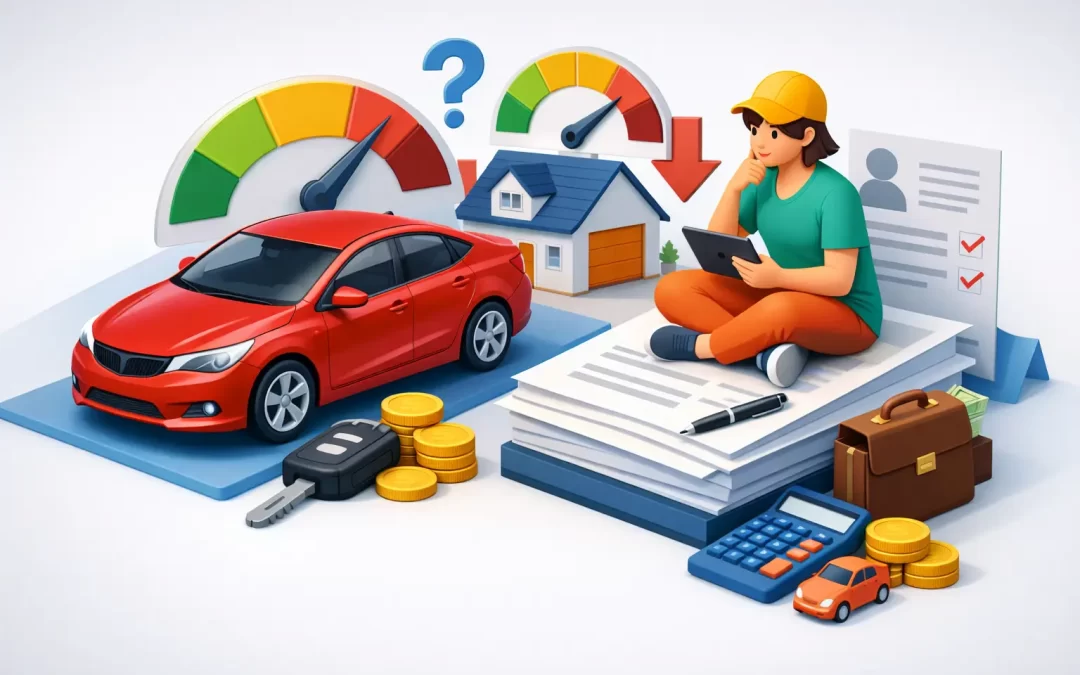
When you run your own business, a vehicle is rarely just a way to get from A to B. It may be how you reach clients, carry tools, make deliveries or keep your operations moving. Yet applying for car loans for bad credit self employed borrowers can feel harder than it should, particularly when a lender sees variable income and past credit issues before it sees the full picture.
The good news is that a credit setback or non-standard income does not automatically rule out vehicle finance. It does mean the application needs to be presented carefully, with the right evidence, a realistic budget and a loan structure that suits both the vehicle and your business circumstances.
Why self-employed bad credit car loans are assessed differently
Most lenders want confidence that the repayments are affordable and that the loan is secured by a suitable vehicle. For self-employed applicants, proving income can look different from providing a few recent payslips. Your income may fluctuate across seasons, contracts or projects, even when the business is trading well overall.
Bad credit can add another layer of assessment. A lender may look at the age and type of a credit issue, whether it has been paid or resolved, your current repayment conduct and the reason the issue arose. A missed bill several years ago is viewed differently from recent ongoing defaults. There is no single score or event that decides every outcome.
This is where tailored finance matters. Rather than treating every application the same, a finance broker can help identify lenders and products whose assessment approach is more suited to self-employed borrowers with complex credit histories.
What lenders may look at beyond your credit report
A credit report is only one part of the lending decision. Depending on the lender, the loan amount and how long you have been trading, they may also consider your broader financial position.
Your business income and trading history
Lenders commonly review business activity statements, tax returns, notices of assessment or business bank statements. Some may accept alternative income verification for suitable applicants, while others require more detailed financials. Consistent deposits, regular client payments and a stable trading history can all help demonstrate your capacity to meet repayments.
If your most recent financial year does not reflect your current position – perhaps you have won a new contract or reduced business expenses – recent bank statements may provide useful context. It is still essential that the information you supply is accurate and supportable.
Your existing commitments
Vehicle finance needs to fit around your current obligations. Lenders may consider credit cards, personal loans, mortgages, business lending, lease commitments and household expenses. Keeping your proposed repayment within a sensible budget is often more valuable than applying for the highest possible amount.
The vehicle you want to buy
The asset itself affects the application. A newer car with a clear value and acceptable condition can offer more security to a lender than an older, high-kilometre vehicle. The purchase price, vehicle age, dealer or private sale, and intended use can influence the finance options available.
For a work vehicle, a ute, van or passenger car that supports business operations may also be suited to a different finance structure than a purely personal vehicle. The right option depends on how the vehicle will be used, your tax position and the flexibility you need.
Your deposit or trade-in
A deposit is not always required, but it can strengthen an application. It reduces the amount borrowed and may improve the loan-to-value ratio. A trade-in can have a similar effect, provided its value is realistic and any existing finance is accounted for.
How to prepare before applying
Preparation does not erase a credit history, but it can make the finance process clearer and more efficient. Start by checking your budget honestly. Factor in not only the repayment, but also insurance, registration, fuel, servicing and any business running costs.
Next, gather the documents that show how your business operates. Depending on your circumstances, this may include your ABN details, recent business bank statements, BAS, tax returns, accountant-prepared financials and identification. Having these ready can reduce delays once a suitable lender is identified.
It is also worth reviewing your credit report before you apply. Look for errors, outdated information or accounts that should show as paid. If something is incorrect, take steps to have it investigated before submitting multiple applications. Avoid applying with several lenders at once just to test your chances, as repeated credit enquiries in a short period can complicate your profile.
Finally, be upfront about the circumstances behind past credit issues. A clear explanation of a one-off disruption, followed by evidence of improved payment conduct, can be more helpful than trying to avoid the conversation.
Choosing a loan structure that suits your circumstances
There is no universal best loan for a self-employed borrower. The most suitable structure depends on whether the vehicle is for business, personal or mixed use, as well as your cash flow, tax advice and plans for the vehicle at the end of the term.
A secured car loan is a common option, with the vehicle used as security for the finance. Because the lender has security over the asset, it may offer more competitive terms than unsecured borrowing, although approval and pricing still depend on the full application.
For business-use vehicles, a chattel mortgage may be worth considering. Under this structure, the business owns the vehicle while the lender takes a mortgage over it as security. It can suit operators who want ownership from the outset, but the tax and GST treatment should be discussed with a qualified accountant.
A finance lease or hire purchase arrangement may suit some businesses that prefer a different approach to cash flow and asset use. Each option has its own obligations, end-of-term arrangements and potential tax implications. The best choice is not necessarily the one with the lowest advertised repayment. A lower repayment can sometimes mean a longer term, a larger final payment or higher total interest paid.
Ways to improve the strength of your application
A stronger application is built on affordability and evidence, not optimism. If timing is flexible, paying down a credit card balance, resolving outstanding accounts or building a deposit can improve your position. Maintaining on-time repayments in the months before applying also helps show that your current financial habits are stable.
Choose a vehicle price that matches your demonstrated income rather than stretching for a higher-spec model. This can improve affordability and leave more room in your budget when business income is quieter. If the vehicle is essential for work, think about reliability, operating costs and resale value alongside the purchase price.
It can also help to work with a broker who understands asset finance and impaired-credit applications. A broker can assess the available information, explain the likely requirements and approach lenders that may be appropriate for your circumstances. That is different from promising approval – responsible finance should always be based on what you can reasonably afford.
Common mistakes to avoid with bad credit car finance
One common mistake is focusing only on the weekly repayment. A repayment that appears manageable may involve a long loan term or a substantial balloon payment. Ask for the total amount payable, the interest rate, fees, term and whether there is a final residual or balloon obligation.
Another is assuming every lender uses the same criteria. Mainstream banks, specialist lenders and non-bank financiers can assess self-employed income and credit history differently. Applying strategically can be more effective than sending incomplete applications everywhere.
It is also important not to use inaccurate income figures or hide debts. Lenders verify information, and discrepancies can stop an application or create problems later. Clear, complete information gives a broker more scope to find a realistic pathway.
Get guidance before committing to a vehicle
Buying a vehicle before understanding your borrowing position can put unnecessary pressure on the process. A pre-assessment can help establish a comfortable price range, likely document requirements and the type of finance that may fit your needs.
With 35 years of industry experience, Auto Link Finance helps self-employed Australians explore tailored vehicle finance options with practical, hands-on guidance. The aim is to make the process clearer, not to pressure you into a loan that does not suit your budget.
Past credit problems and self-employed income can make vehicle finance more detailed, but they do not define your options. Start with an honest picture of your finances, prepare the right documents and seek advice that considers the business behind the application as well as the credit report.