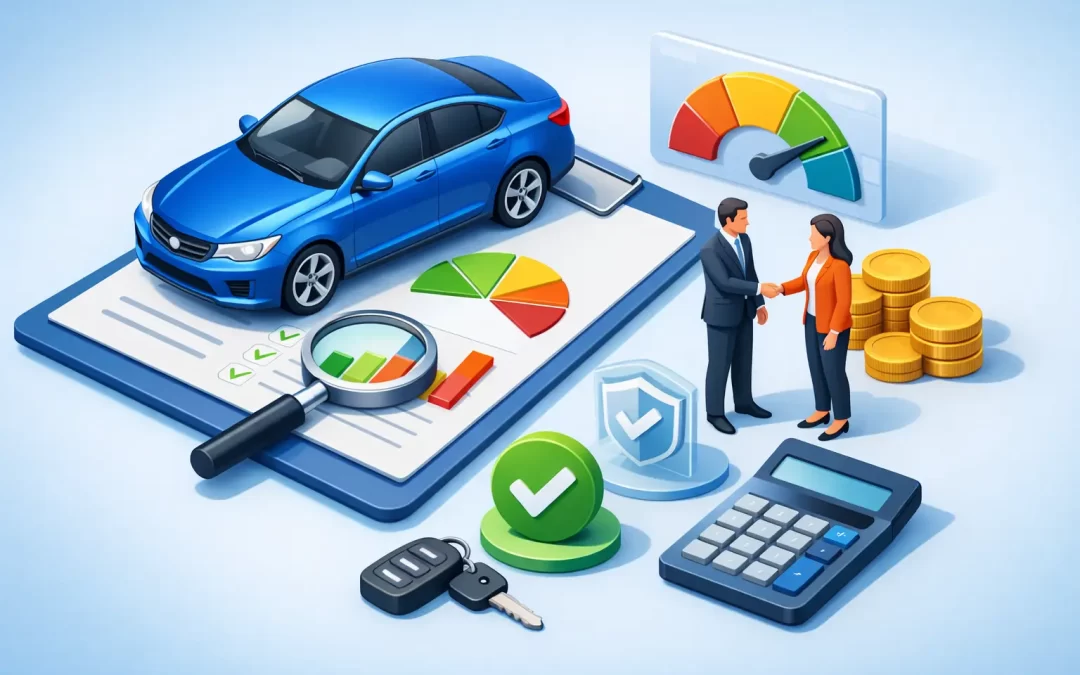
A bad credit file can make buying a car feel harder than it should be. The good news is that secured bad credit car loans can still be a realistic option when the loan is set up properly, the vehicle suits lender policy, and your current financial position supports the repayments.
For many borrowers, the biggest mistake is assuming every lender looks at bad credit the same way. They do not. Some place heavy weight on older defaults, while others care more about whether you are now stable in your income, your banking conduct, and the type of vehicle being financed. That difference matters, especially if you need a car for work, family commitments, or daily travel and do not have time to chase dead ends.
What secured bad credit car loans actually mean
A secured car loan uses the vehicle as security for the finance. In simple terms, the lender has an interest in the car until the loan is paid out. Because the loan is tied to an asset, the lender may be more flexible than they would be with an unsecured personal loan.
That does not mean approval is automatic. It means the lender has a form of protection, which can reduce risk and sometimes improve the rate, loan amount, or term available. For borrowers with impaired credit, that security can make a meaningful difference.
The vehicle itself matters here. Lenders usually look at its age, condition, purchase price, and whether it fits their policy. A late-model car bought through a licensed dealer is often easier to finance than an older private sale vehicle. If your credit history is already a concern, choosing a car that fits lender appetite can help your application rather than work against it.
Why bad credit does not always mean no
Bad credit is a broad label. It can include paid and unpaid defaults, missed repayments, arrears, court listings, or a past bankruptcy. But lenders rarely assess these issues in isolation. They usually ask a more practical question – what does your situation look like now?
If your credit issues were caused by a one-off disruption and you have since re-established stable income and better repayment conduct, some lenders will view that very differently from ongoing unpaid debt and fresh dishonours. Timing matters. So does the size of the issue, whether it has been cleared, and whether your recent statements show consistency.
This is where many borrowers benefit from broker support. A lender sees an application. A good broker sees the story behind it, the policies that may fit, and the small details that can change the result.
What lenders usually assess before approving the loan
Income is a major factor, but it is not the only one. Lenders want to see that the proposed repayment is affordable after your existing commitments are taken into account. If you are self-employed, they may assess your application differently from a PAYG borrower, and the documents required can vary.
They will also review your recent bank statements, your current debts, the deposit if any, and the vehicle details. In many cases, your recent conduct carries real weight. A credit file may show past problems, but clean bank statements over the past few months can help demonstrate that things are under control.
Deposit size can help, but it depends on the lender and the deal. A larger deposit lowers the amount borrowed and can improve the loan-to-value ratio. That may strengthen the application, especially where credit history is mixed. Still, some borrowers are approved with little or no deposit if the asset, income, and overall profile are suitable.
Secured bad credit car loans are not all the same
This is where borrowers often lose time. They compare loans only by interest rate, when the structure can be just as important. A low rate does not help much if the term is wrong, the fees are high, or the repayments do not match your cash flow.
Some borrowers need lower repayments over a longer term to keep the budget manageable. Others want to repay the loan faster to reduce total interest. If the vehicle is mainly for business use, the right structure may be different again. What works for a salaried employee buying a family car may not suit a tradesperson replacing a work ute.
There is also a trade-off between access and cost. Borrowers with stronger files usually get sharper pricing. Borrowers with credit impairment may have fewer options and slightly higher rates. That is not unusual. The better question is whether the loan is manageable, competitive for your profile, and structured to support you rather than strain you.
How to improve your approval chances
Start with the car, not just the loan amount. Choosing a vehicle that meets common lender policy can put you in a stronger position from the start. A reasonably priced car with sensible age and kilometres is usually easier to place than something old, highly modified, or outside market value.
Next, tighten up your bank conduct before applying. Recent dishonours, overdrawn accounts, and irregular spending can hurt an application even more than borrowers realise. Lenders use bank statements to judge repayment behaviour in real life, not just on paper.
It also helps to be realistic about the budget. If the repayment is stretching your finances, the deal may not hold up under assessment. A slightly cheaper vehicle can open up better lending options and reduce pressure month to month.
Finally, be upfront about your credit history. Surprises discovered by a lender late in the process can stall or derail an application. Clear information at the beginning gives a broker the best chance to match you with an appropriate lender the first time.
When a broker can make the process easier
If you apply directly to multiple lenders, you can waste a lot of time and potentially add unnecessary enquiries to your credit file. That can be frustrating when you are already dealing with past credit issues.
A broker works differently. Instead of pushing one product, they assess your circumstances, the asset, and the likely lender fit. That matters because lender policy is rarely one-size-fits-all. One lender might decline based on an old default, while another may consider the application if your statements are clean and the vehicle is suitable.
For borrowers with complex circumstances, guidance is often just as valuable as access. It helps to know whether a chattel mortgage, consumer car loan, or another structure is the better fit, what documents will be needed, and where there is a realistic path to approval. That practical support can take a lot of pressure out of the process.
Common mistakes to avoid with secured bad credit car loans
The first is focusing only on getting approved and ignoring whether the loan is sustainable. A fast yes is not always a good outcome if the repayments become difficult after settlement.
The second is buying the wrong vehicle before checking finance. People often commit to a car, pay a holding deposit, and only then learn that the vehicle falls outside lender policy. Pre-approval or at least an upfront assessment can save a lot of hassle.
The third is assuming all bad credit lenders are expensive or inflexible. Some are, and some are not. It depends on the age and severity of the credit issue, your current financial position, and the security being offered.
The fourth is hiding information. A broker can only structure the strongest application if they know what they are working with. Full disclosure usually leads to faster, more accurate guidance.
What a sensible next step looks like
If you are considering secured bad credit car loans, the aim should not be to chase any loan that says yes. It should be to find a loan that fits your current circumstances, gives you a realistic repayment, and supports the reason you need the vehicle in the first place.
For some borrowers, that means applying now with the right lender. For others, it means improving bank conduct for a short period, clearing a small debt, or adjusting the vehicle budget to strengthen the application. There is no single formula, and that is exactly why tailored guidance matters.
At Auto Link Finance, the value of broking is not just access to lenders. It is knowing how to present the deal properly, which structures make sense, and where a borrower with past credit issues still has genuine options. A practical conversation early can save you time, reduce stress, and help you move forward with more confidence.
The right car loan should make life easier, not harder – and with the right structure, bad credit does not have to be the end of the road.
A lot of vehicle finance applications are decided before the lender even finishes reading the full file. The reason is simple – the strength of the application often shows up straight away in the basics: stable income, clean bank statements, the right asset, and realistic repayments. If you want to improve vehicle finance approval chances, the goal is not to look perfect. It is to present a clear, affordable, well-structured application that matches the lender’s policy.
That matters whether you are buying a car for personal use, a ute for work, a truck for your business, or even a motorbike, caravan or boat. Different lenders have different appetites, and small details can make a big difference to the outcome. Knowing what they actually assess can save time, avoid unnecessary credit enquiries, and put you in a better position before you apply.
What lenders really look at
Most borrowers assume approval comes down to credit score alone. Credit history matters, but it is only one part of the picture. Lenders are usually weighing up three things at once: your ability to repay, your willingness to repay, and whether the asset suits their risk settings.
Your ability to repay is about income, expenses, current debts and whether the new repayment is affordable. Your willingness to repay is judged through your conduct – things like repayment history, defaults, missed payments, dishonours and how well your accounts are managed. The asset itself also matters because lenders look at the age, condition, type and value of the vehicle they are financing.
This is why someone with an average credit file can still be approved if the application is otherwise strong, while someone with a high income can still run into trouble if expenses are stretched or the vehicle does not fit the lender’s policy.
The strongest applications are usually the cleanest ones. That does not mean complicated. It means the information is accurate, the documents line up, and there are no obvious red flags.
Start with your income. If you are employed, lenders want to see that your income is consistent and well documented. If you are self-employed, they will usually want a clearer picture of business performance, and the finance structure may need to reflect how you earn. In either case, inconsistencies between payslips, bank statements and what is written on the application can slow things down or trigger more questions.
Your living expenses also matter more than many people expect. Understating them rarely helps because lenders compare what you declare against benchmarks and your actual bank statement conduct. If the numbers look unrealistic, the application can lose credibility quickly.
Then there is your existing debt position. Credit cards, personal loans, buy now pay later facilities and other vehicle loans all affect serviceability. Even a credit card with a zero balance can reduce borrowing power because lenders often assess the limit, not just the amount used.
Check your credit before a lender does
If you have not looked at your credit file recently, do that before lodging an application. It is one of the simplest ways to improve vehicle finance approval chances because it gives you the chance to fix errors, explain past issues properly, and avoid surprises.
A missed payment from years ago may not carry the same weight as a recent default, but timing matters. Lenders are generally more cautious about fresh arrears, unpaid defaults and multiple recent credit enquiries. If there has been a rough patch in the past, it helps to show that your position is now stable. A clean recent repayment pattern can count for a lot.
If there are credit issues, the solution is not always to wait. Sometimes the better move is to apply through a lender that is comfortable with impaired credit and structure the deal properly from the start. That is where broker guidance can make a real difference, because not every lender views the same profile the same way.
The vehicle you choose can affect approval
Borrowers often focus on the loan, but the vehicle itself can be part of the approval problem. Some lenders are comfortable with newer passenger vehicles but more conservative on older cars, high-kilometre vehicles, private sales, imports, or specialised assets. Others are more flexible, but usually with pricing or deposit trade-offs.
If the vehicle is unusually old or the purchase price does not stack up against market value, the lender may reduce the amount they are willing to fund. That can leave you short at settlement. In some cases, changing the asset, adjusting the loan term, or contributing a larger deposit can turn a weak application into an approvable one.
Work-related vehicles and commercial assets can also be assessed differently from personal vehicles. If the asset is tied to income generation, some lenders may view the application more favourably, especially when the borrower can show stable trading or a clear business purpose.
A deposit can strengthen an application because it lowers the lender’s risk and reduces the loan amount. It also shows genuine savings capacity or financial discipline. But a deposit is not a magic fix.
If the underlying affordability is weak, a larger deposit may not be enough. On the other hand, a borrower with strong income, stable conduct and a suitable asset may be approved with little or no deposit through the right lender. It depends on the full profile.
Where a deposit does help most is in borderline applications – for example, when the credit file is imperfect, the vehicle is older, or the requested amount is pushing policy limits. Even a modest contribution can improve the overall quality of the deal.
Avoid common mistakes before applying
One of the biggest mistakes is making multiple applications with different lenders in a short period. Every enquiry can leave a mark on your credit file, and too many can make it look as though other lenders have already said no. That can hurt approval odds even when the original issue was simply poor lender matching.
Another mistake is changing jobs, taking on new debt, or making large unexplained purchases just before applying. Lenders look for stability. If your statements suddenly show gambling transactions, frequent overdrawing, or recent cash flow pressure, those issues may attract more attention than your income.
It also helps to be realistic about the purchase. Stretching for a vehicle that does not fit your income can lead to declines or conditional approvals that are difficult to satisfy. In many cases, choosing a slightly lower-priced asset results in a smoother approval and a more comfortable repayment over time.
Improve vehicle finance approval chances with the right documents
Fast approvals usually happen when the file is complete. Missing documents slow the process and can make lenders more cautious because they are forced to keep coming back with questions.
What is needed varies by lender and borrower type, but the key is consistency. Identification, proof of income, bank statements, details of current liabilities, and information about the vehicle should all support the same story. If you are self-employed, the right mix of financials, BAS or business bank statements may depend on the lender and loan type.
This is one area where preparation really pays off. A well-packaged application does not just move faster – it can also be assessed more favourably because the lender can clearly see how the deal fits policy.
Why lender matching matters
Not all declines mean the borrower is unfinanceable. Sometimes the application has simply been sent to the wrong lender. One lender may be strict on recent credit events, another may be more flexible on self-employed income, and another may prefer certain asset types or industries.
That is why a tailored approach matters. A broker with broad lender access can often identify which policies are more suitable before an application is lodged, which helps reduce unnecessary enquiries and improve the odds of approval. For borrowers with straightforward profiles, that can mean speed. For borrowers with more complex histories, it can mean access to options they may not find on their own.
Auto Link Finance works with borrowers across a wide range of asset types and credit profiles, so the application can be structured around the person and the vehicle rather than forced into a one-size-fits-all process.
If you have had credit issues before
Past credit problems do not automatically rule you out. What lenders usually want to understand is whether the issue was isolated, how long ago it happened, and whether your current position is stable.
If there were missed payments or defaults, be ready to explain them honestly and briefly. A clear explanation paired with better recent conduct is far more useful than trying to gloss over the issue. If the debts have been paid, that also strengthens the file. Some lenders are willing to consider borrowers with impaired credit, but they still want evidence that the situation has improved.
There can be trade-offs. The rate may be higher, the deposit requirement may change, or the vehicle choice may need to be adjusted. Even so, getting the right structure now can be a practical stepping stone to stronger finance options later.
The best next move
If you are serious about buying, the smartest step is to get your position assessed before you lock in the vehicle or submit multiple applications. That gives you time to strengthen weak areas, choose a lender that suits your circumstances, and present the deal properly the first time.
Vehicle finance is not just about whether you qualify. It is about how your application is put together, how well it fits lender policy, and whether the repayments make sense for your life or business. Get those pieces right, and approval becomes a much more realistic outcome.
When you need a car for work by Friday, a ute to keep jobs moving, or equipment to replace something that has just failed, waiting around for finance is more than frustrating – it can cost you income. That is why fast asset finance approval matters so much. But speed is not just about hitting submit and hoping for the best. It usually comes down to how well the application fits the lender, how complete your documents are, and whether the finance structure suits your situation from the start.
A lot of borrowers assume fast approval simply means the lender is quick. In reality, the process is often faster when the groundwork is right. The strongest applications are not always the simplest ones, but they are usually the clearest. When your income, asset details and finance purpose line up properly, approvals can move much faster than people expect.
What fast asset finance approval actually means
Fast asset finance approval does not always mean same-day settlement, and it does not mean every borrower gets an instant yes. In most cases, it means reducing avoidable delays at each stage of the process – application, assessment, approval, document issue and settlement. That is a more useful way to think about it because it sets the right expectation.
For some borrowers, speed is realistic because their profile is straightforward. They may be buying a standard passenger vehicle, have stable income, a clean repayment history and all supporting documents ready to go. For others, the file needs a bit more care. Self-employed applicants, borrowers with older credit issues, or clients financing specialised equipment may still be approved quickly, but only if the application is structured properly and sent to a lender that understands that type of deal.
This is where many direct applications slow down. A borrower may apply with a lender that looks fast on paper but is not actually flexible for their credit profile, income type or asset category. The result is extra back-and-forth, requests for more paperwork, or a decline that could have been avoided.
Why some applications move quickly and others stall
The biggest factor is completeness. Missing bank statements, unclear payslips, no asset invoice, or inconsistent details between documents can push an otherwise strong application into a review queue. Lenders need enough information to verify affordability and assess the asset. If key pieces are missing, they cannot move forward confidently.
The second factor is lender fit. Not every lender has the same appetite for every deal. Some are comfortable with commercial vehicles, some prefer consumer car loans, and some are far more flexible around minor credit impairment or non-standard income. Fast outcomes often come from choosing the right lender first, rather than testing several one by one.
The third factor is the asset itself. A new or late-model vehicle purchased through a licensed dealer is often simpler to finance than an older private-sale asset, imported machinery, or equipment with limited resale value. That does not mean harder assets cannot be financed. It just means the approval pathway may need more detail and the lender may apply tighter conditions.
How to improve your chances of fast asset finance approval
If speed matters, preparation matters just as much. Before you apply, make sure your identification, income documents and asset details are current and consistent. If you are employed, that may be recent payslips and bank statements. If you are self-employed, it may involve business financials, BAS, accountant letters or trading statements, depending on the lender and the product.
It also helps to be clear about what you are buying and why. Lenders look more favourably on applications that present a complete picture. If the asset is for work, say that clearly. If it is replacing an existing vehicle, include that context. If the amount financed is higher because it includes on-road costs or business equipment, explain it upfront rather than leaving the assessor to guess.
Being realistic about your budget is another major advantage. Chasing the highest possible approval can slow things down if the proposed repayments are tight against your income. A more sensible loan amount, deposit contribution or loan term may improve both speed and approval strength.
The documents that usually make the biggest difference
Most delays happen because documents arrive in pieces. A lender might receive your application form today, payslips tomorrow and asset invoice two days later. That staggered approach can add time, especially when the file is waiting for review.
A cleaner pathway is to have the core documents ready together. In many cases that includes photo ID, proof of income, recent bank statements, and the asset details such as a tax invoice or purchase order. For business-use assets, ABN details and trading information may also be needed. If you have had past credit issues, being upfront early often helps more than trying to avoid the conversation. Many lenders will consider explanations when the rest of the file makes sense.
That is one reason broker support can make such a difference. An experienced broker knows what each lender is likely to ask for before the application goes in. Instead of reacting to document requests one by one, you can often prepare the file in the format the lender expects.
Fast approval for self-employed and credit-impaired borrowers
This is where the word fast needs a bit of context. If you are self-employed or have a less-than-perfect credit history, speed is still possible, but it usually depends on strategy rather than automation.
Self-employed borrowers often run into delays because their income is not as simple as salary credits and payslips. Some lenders assess tax returns heavily. Others place more value on recent trading conduct, BAS or business bank statements. The right lender choice matters a lot here. Sending a self-employed file to a lender with rigid document requirements can waste valuable time.
The same applies to impaired credit. A missed repayment from years ago is different from ongoing arrears, and lenders do not all treat those scenarios the same way. Fast asset finance approval for a borrower with previous credit issues usually comes from clear disclosure, realistic expectations and targeting lenders with suitable credit policies. It is not about pretending the issue is not there. It is about presenting the full picture properly.
What a broker does to speed things up
A good broker is not just forwarding your application. They are filtering lenders, shaping the file and removing friction before it becomes a problem. That includes checking serviceability, matching the deal to an appropriate product, and making sure the asset itself fits the lender’s policy.
This can be especially useful when time is tight. If you are buying a work ute, truck, caravan, boat, motorbike or commercial equipment, the finance structure can vary depending on whether the asset is for personal use, business use or a mix of both. The wrong structure can cause delays or produce repayments that do not suit your cash flow.
With broad lender access, a brokerage like Auto Link Finance can often identify where a deal is most likely to move efficiently. That does not guarantee approval, but it can reduce the guesswork that slows many borrowers down when they go directly from lender to lender.
Common mistakes that slow approval
One of the most common issues is applying before you have chosen the asset properly. If the vehicle price, seller details or asset specifications keep changing, the lender may need to reassess the file each time. Another is understating existing commitments. Lenders will generally identify them anyway, and inconsistencies can create avoidable concerns.
A third mistake is assuming all pre-approvals work the same way. Some are strong and credit-assessed. Others are only indicative, based on limited information. If timing is critical, ask what stage you are actually at and what still needs to happen before settlement.
Finally, borrowers sometimes focus only on speed and ignore suitability. The fastest offer is not always the best one if the rate is uncompetitive, the term is too short, or the structure does not suit the way you use the asset. Quick approval is valuable, but only when the finance still works for you after the excitement of purchase day has passed.
Speed matters, but the right setup matters more
If you need finance in a hurry, the best move is usually not rushing blindly. It is getting the application right the first time. Fast asset finance approval is most achievable when your documents are ready, the asset is clearly identified, and the lender has been chosen with your circumstances in mind.
Whether you are salaried, self-employed, buying for personal use or funding an asset that supports your business, the goal is the same: less friction, fewer surprises and a finance solution that fits. When the process is handled properly, speed stops feeling like luck and starts looking a lot more like preparation.
If you have found the right vehicle or equipment and the seller is ready to move, one question matters fast: how long does loan settlement take? The short answer is usually anywhere from 24 hours to several business days after formal approval, but the real answer depends on the lender, the asset, your documents, and how quickly everyone involved responds.
For most borrowers, the waiting is not the credit assessment itself. It is the final stretch between approval and funds being released. That is where small details can either keep things moving or slow them down.
How long does loan settlement take in Australia?
For straightforward car and asset finance, settlement can be very quick. In clean, well-prepared applications, some lenders can settle on the same day as document signing or within 24 to 48 hours. More commonly, settlement takes 2 to 5 business days once approval conditions have been met.
If the loan involves a private sale, a commercial asset, a self-employed borrower, or extra lender checks, it can take longer. A week is not unusual where there are missing documents, registration issues, valuation requirements, or delays with the seller. That does not always mean something is wrong. It often means the lender is still working through its settlement checklist.
The important thing to understand is that approval and settlement are not the same thing. Approval means the lender is willing to provide finance, subject to conditions. Settlement happens when those conditions are satisfied, documents are signed, and the lender releases funds.
What happens between approval and settlement?
This stage is where most timing differences show up. After approval, the lender usually prepares loan documents and confirms the details of the asset being financed. That can include the purchase price, seller details, invoice, registration information, and in some cases insurance or proof of deposit.
You then need to review and sign the finance documents. Some lenders offer digital signing, which can save a lot of time. Others still require manual forms or additional verification. Once the signed documents are returned, the lender checks that everything matches the approval terms and that no conditions are outstanding.
After that, the lender books settlement and pays the seller or dealer. If the lender pays by electronic transfer and everything is in order, the process can be quite fast. If there are cut-off times, bank processing delays, or missing details on the seller side, settlement may be pushed to the next business day.
The biggest factors that affect settlement time
The type of asset matters. A dealer sale is often quicker than a private sale because dealers usually provide invoices and compliance documents in the format lenders expect. Private sales can take longer because the lender may need to verify ownership, payout figures, or the condition and age of the asset.
Your borrower profile also plays a part. A salaried applicant with clear income documents and strong identification usually moves through settlement more smoothly than someone with a more complex financial structure. Self-employed borrowers can still settle quickly, but lenders may need extra business documents, BAS statements, or tax records depending on the product.
The lender itself matters too. Some lenders are set up for fast-turnaround vehicle finance and can move quickly when a file is complete. Others have more manual processes or stricter compliance steps. This is one reason broker support can make a real difference, especially when timing is important.
Credit history can also affect speed, although not always in the way people think. Past credit issues do not automatically mean settlement will drag out. What usually causes delays is the need for additional checks, extra supporting information, or a more specialised lender assessment.
How long does loan settlement take for a car loan?
Car loans are often among the quicker finance products to settle, especially when you are buying from a licensed dealer. If approval is in place and all documents are ready, many car loans settle within 1 to 3 business days.
For a used car bought privately, settlement may take longer because the lender may need to confirm registration details, vehicle identification numbers, payout figures if there is existing finance, and whether the vehicle meets age or condition requirements. None of that is unusual. It just adds a few more moving parts.
If you are buying urgently, such as needing a replacement work vehicle or securing a time-sensitive deal, it helps to tell your broker or lender early. Settlement teams can often prioritise urgent files when the documentation is complete.
Why loan settlement gets delayed
Most delays come down to one of three things: incomplete paperwork, asset-related issues, or slow communication. If your payslips, bank statements, ID, invoice, or business documents are missing or inconsistent, the lender cannot settle until that is cleared up.
Asset issues are also common. The invoice may have the wrong buyer name, the seller’s bank details may not match, the vehicle may still have finance owing, or the registration information may need verification. In equipment and commercial finance, lenders may also request extra information about the asset’s use or condition.
Communication delays can be surprisingly costly. If the lender asks a question at 10 am and does not get a reply until the following day, that can easily push settlement back. The same goes for dealers, private sellers, accountants, or anyone else involved in supplying documents.
How to help your loan settle faster
The best way to speed up settlement is to treat approval as only part of the job. Once approved, move quickly on every remaining requirement. Read your documents carefully, sign them promptly, and return anything requested without delay.
It also helps to have your supporting documents ready before you apply. For many borrowers, that means current ID, recent payslips or business income evidence, bank details, and the correct invoice for the asset. If you are buying privately, ask the seller early for the registration papers, payout details if applicable, and proof of ownership.
Working with a broker can save time here because a good broker checks the file before it reaches the lender. That reduces the chance of avoidable back-and-forth later. It also helps match you with lenders whose processes suit your timeframe and circumstances.
Different loan types, different timelines
Not every finance product settles at the same pace. A standard secured car loan can be relatively quick because lenders handle these every day and the asset is easy to identify and value. Commercial loans, truck finance, equipment finance, and specialist bad credit solutions can take longer because there may be more assessment layers.
Chattel mortgages and finance leases for business use may also involve additional checks around ABN status, GST treatment, and business financials. Again, that does not mean they are slow by default. It means the settlement process has more detail to get right.
If timing is critical, the structure of the loan should suit not just your repayments and tax position, but also your settlement needs. That is where experienced guidance matters.
What you can expect from a well-managed settlement process
A well-managed settlement should feel clear, not confusing. You should know what has been approved, what conditions remain, what documents are still needed, and when funds are likely to be released. If any issue comes up, it should be explained in plain language so you know what to do next.
That is especially valuable for borrowers juggling work, family, or business commitments. You do not need more finance jargon. You need a practical path from application to delivery or collection of the asset.
At Auto Link Finance, this is where broker support can take pressure off. Instead of trying to chase every lender request yourself, you have someone helping coordinate documents, manage expectations, and keep the process moving.
When to follow up and when to be patient
If you have signed everything and have not heard back within the timeframe given, it is reasonable to follow up. A quick check can confirm whether the lender is waiting on bank processing, a final verification, or seller details. That is often more useful than assuming the worst.
At the same time, some delays are normal. A settlement booked late in the day may not fund until the next business day. Public holidays, weekends, and bank cut-off times can all affect timing. The goal is not just speed, but accurate settlement with no last-minute surprises.
If you are planning a purchase, the smartest approach is to start the finance conversation before you are under pressure. That gives you time to prepare documents properly, choose a suitable lender, and avoid the kind of rushed application that tends to create delays later.
A loan can settle very quickly when the structure is right and the paperwork is ready. The fastest path is usually not luck. It is preparation, clear communication, and having the right support behind you.
Buying a car should feel exciting, not like a guessing game about whether a lender will say yes. A complimentary credit assessment for car loan applications gives you a clearer picture before you commit to the wrong lender, the wrong structure, or a loan that does not suit your budget.
For many borrowers, the stress is not just the vehicle itself. It is the uncertainty around approval, repayments, deposit expectations, and how past credit issues might affect the outcome. That is where an early assessment can make a real difference. Instead of applying blind, you can approach finance with a better understanding of what is realistic and what may need to be adjusted.
What a complimentary credit assessment for car loan applications actually means
A complimentary credit assessment is usually an upfront review of your financial position to gauge how a lender may view your application. It is designed to help identify suitable lending pathways before a formal application is lodged.
That assessment may look at your credit history, current commitments, income, employment or business details, living expenses, and the type of car you want to buy. If you are self-employed, it may also involve reviewing how your income is evidenced and whether a different loan structure would make more sense.
The key point is that it is not just about whether you have a perfect score. Car loan approval is typically based on a broader picture. Lenders want to know whether the loan is affordable, whether the asset suits their policy, and whether the overall application aligns with their risk settings.
Why borrowers ask for an assessment before applying
A lot of people start with the same question: can I actually get approved? That question matters, but it is only part of the story. Just as important is which lender is likely to suit you best, how much you can reasonably borrow, and what type of finance structure fits your circumstances.
A complimentary credit assessment helps reduce wasted applications. That matters because multiple unsuitable applications can create more frustration and, in some cases, make the process feel harder than it needs to be. When your position is reviewed first, there is a better chance of targeting lenders that are more aligned with your profile.
It also helps with expectations. If your income supports a certain repayment level, or your credit file points towards a specialist lender rather than a prime lender, it is better to know that early. Good guidance can save time, narrow your options sensibly, and stop you from shopping for a vehicle outside your practical finance range.
What gets reviewed in a credit assessment
While every lender has its own policy, most assessments look at the same core areas. Your repayment history is one of them, but so are your current debts, income stability, and general financial conduct.
If you are a PAYG borrower, documents such as payslips and bank statements may help show serviceability. If you run a business, the review may focus more on the way your income is structured, your ABN history, business activity, and whether a product such as a chattel mortgage or another commercial loan option is more suitable than a standard consumer car loan.
The car itself also plays a role. Age, condition, purchase source, and intended use can all influence lender appetite. A newer vehicle bought from a licensed dealer may fit one lender well, while an older private sale vehicle may need a different approach.
A credit assessment is helpful, but it is not a guarantee
This is where honest guidance matters. A complimentary assessment can be very useful, but it is not the same as formal approval. It gives an informed view based on the information available at the time.
Final approval still depends on the lender’s own checks, supporting documents, and confirmation that nothing material changes during the process. If your financial position shifts, the vehicle changes, or extra liabilities come to light later, the result may change as well.
That does not reduce the value of the assessment. It simply means it should be treated as a smart first step rather than a promise. In practice, that first step often leads to a smoother and more confident application.
How it helps if you have had credit issues before
Not every borrower has a clean credit file, and that does not automatically shut the door on car finance. Some people have defaults, missed payments, or a past financial setback that no longer reflects their current position. Others may have strong income now but are unsure how lenders will view older credit events.
This is one of the strongest reasons to seek a complimentary credit assessment for car loan options before applying. A broker or finance specialist can look at the full picture and identify which lenders may still consider the application, what evidence may strengthen it, and whether the amount or asset choice should be adjusted.
There is usually a trade-off involved. Borrowers with impaired credit may face higher rates, tighter loan terms, or larger deposit expectations depending on the lender and the severity of the history. Even so, getting the structure right from the beginning can make the difference between a workable option and a string of avoidable declines.
Why broker support can make the process easier
Going direct to one lender gives you one set of policies and one view of your application. That can work well if your circumstances are very straightforward. But if you are self-employed, buying through a business, managing prior credit issues, or comparing loan types, one lender rarely tells the full story.
A broker-led assessment is useful because it is based on lender matching, not just lender availability. The focus is on finding a realistic path based on your profile, your vehicle, and your goals. That might mean a secured car loan for a personal purchase, or a commercial structure for a work vehicle or equipment acquisition.
It can also make the paperwork feel more manageable. Instead of trying to interpret every lender requirement yourself, you get guidance on what documents are likely to matter and where there may be room to improve the application before it goes in.
What to prepare before requesting a complimentary credit assessment
The stronger the information you provide upfront, the more useful the assessment will be. Basic details such as your income, employment or ABN status, existing loan commitments, estimated living expenses, and the type of vehicle you want are a sensible starting point.
If you already know the purchase price, dealer or seller details, and how much deposit you have available, that helps sharpen the assessment further. If your credit history has any issues, being upfront is usually better than hoping it will be overlooked later.
Accuracy matters here. A proper assessment is only as good as the information behind it. Small omissions can create bigger problems when formal checks begin, so it pays to be clear from the start.
When a complimentary assessment is especially worth doing
Some borrowers should almost always get one before applying. That includes self-employed applicants, small business owners buying a work vehicle, people comparing personal and commercial loan structures, and anyone with a less-than-perfect credit history.
It is also valuable if you are short on time. If you need a car quickly for work, family, or day-to-day life, a targeted assessment can help avoid delays caused by going down unsuitable pathways first.
For borrowers in Melbourne, Sydney, Brisbane or other major markets where vehicle demand can move quickly, being financially prepared before you commit to a purchase can put you in a much stronger position. You can negotiate with more confidence when you already understand your likely borrowing range and loan options.
Choosing guidance that is practical, not pushy
A good assessment should leave you feeling informed, not pressured. You should come away with a clearer sense of what is possible, what documents are needed, and what type of lender or product may suit you best.
That is especially important when finance feels sensitive. If you are worried about approval, you do not need sales talk. You need realistic guidance, straight answers, and a plan that fits your circumstances.
With 35 years of industry experience, Auto Link Finance understands that the right car loan is not just about getting a yes. It is about getting a structure that works for the way you earn, spend, and use the vehicle over time.
A complimentary credit assessment will not change your financial history, but it can change the way you move forward. When you know where you stand, the next step is usually easier, faster, and far less stressful.
The difference between a manageable car loan and one that feels tight every month often comes down to the deposit. If you’re looking for a guide to car loan deposits, the key question is not just whether you need one – it’s how a deposit changes your approval chances, loan size and ongoing repayments.
For many Australian borrowers, a deposit is less about ticking a lender box and more about giving yourself better finance options. A larger deposit can reduce the amount you need to borrow, which may lower your repayments and the total interest paid over the life of the loan. It can also strengthen your application if your credit history is less than perfect, or if you’re self-employed and want to present a lower-risk borrowing profile.
That said, there isn’t one deposit amount that suits everyone. The right figure depends on the price of the vehicle, your income, your living expenses, your credit profile and how urgently you need the car.
What is a car loan deposit?
A car loan deposit is the upfront amount you contribute towards the purchase price before the lender finances the rest. If the car costs $30,000 and you put down $6,000, your loan would typically cover the remaining $24,000, plus any approved fees or charges rolled into the finance.
In simple terms, your deposit is your own stake in the purchase. Lenders generally view this positively because it shows savings history, reduces their exposure and can improve the overall loan-to-value ratio. For borrowers, it can be a practical way to keep repayments at a level that fits the household budget.
A deposit is different from a trade-in, although both can reduce the amount you need to finance. If you already own a vehicle, the trade-in value may act much like a deposit. In some cases, borrowers use both – part cash deposit, part trade-in – to bring the loan amount down further.
Do you always need a deposit?
Not always. Some car loans are available with no deposit, particularly if the applicant has strong income, stable employment and a solid credit profile. There are also situations where the car itself meets lender policy well enough that a deposit becomes less critical.
But no-deposit finance is not automatically the better option. Borrowing the full purchase price means a larger loan, and that usually means higher repayments and more interest over time. Depending on the vehicle and lender, it may also limit the range of finance options available to you.
This is where broker guidance can make a real difference. Rather than applying blindly and hoping for the best, you can assess whether a no-deposit option is realistic or whether even a modest deposit could open up a stronger result.
Guide to car loan deposits: how much is enough?
A useful guide to car loan deposits starts with affordability rather than chasing an arbitrary percentage. You may have heard that 10 per cent or 20 per cent is the ideal deposit. Those figures can be helpful as a rough benchmark, but they are not hard rules.
A 10 per cent deposit is often enough to make a meaningful difference. On a $40,000 vehicle, that means contributing $4,000 and financing $36,000 instead of the full amount. That may not sound dramatic at first glance, but over a multi-year loan term it can noticeably reduce your monthly commitment.
A 20 per cent deposit can put you in an even stronger position. It reduces the lender’s risk further and may support better approval outcomes, particularly for borrowers with prior credit issues or more complex income structures.
Even a smaller deposit can help. If you can only contribute $1,500 or $2,000, that still lowers the amount financed and shows commitment to the purchase. For some borrowers, getting into the right vehicle sooner matters more than waiting months to save a larger deposit.
The better question is this: how much can you contribute without draining your cash reserves? A car purchase should not leave you with nothing set aside for registration, insurance, servicing or unexpected expenses.
When a bigger deposit helps most
There are some situations where a stronger deposit can have a bigger impact.
If you have bad credit or impaired credit history, a deposit may help offset lender concern by reducing the amount borrowed. It doesn’t erase past credit issues, but it can improve the overall shape of the application.
If you’re self-employed, a deposit can also add comfort for lenders, especially where income fluctuates or financials do not fit a standard PAYG profile. The same applies if you’re buying an older used vehicle, because some lenders are more cautious when the asset falls outside prime policy settings.
A larger deposit can also help if you want to keep repayments lower over a shorter term. That can be a smart move if you want to avoid stretching the loan over too many years.
Should you use all your savings as a deposit?
Usually, no. It can be tempting to put every available dollar into the purchase so the repayments look as low as possible. But a loan that looks good on paper can still create pressure if your savings account is wiped out in the process.
Cars come with ongoing costs. Insurance, fuel, tyres, servicing and registration all add up. If the vehicle is used for work, there may be periods where cash flow changes and you need a buffer. If the car needs attention soon after settlement, having no savings left can turn a routine repair into a financial headache.
A good deposit is one that improves your finance position without leaving you exposed. For many borrowers, that means contributing enough to reduce the loan meaningfully while still keeping an emergency buffer in place.
Deposits, repayments and total loan cost
The most obvious benefit of a deposit is a smaller repayment, but the real value is broader than that. A lower loan amount can affect the full cost of the finance.
When you borrow less, you generally pay interest on a smaller balance. Over several years, that can produce worthwhile savings. It may also give you more flexibility if you want to choose a shorter loan term, because the repayments become more achievable.
For example, a borrower choosing between no deposit and a $5,000 deposit on the same vehicle may find that the lower repayments create more breathing room each month. That breathing room matters. It can reduce stress, make budgeting easier and lower the chance of struggling if household expenses rise.
What if you have a trade-in instead of cash?
A trade-in can be an effective alternative to a cash deposit. If your current vehicle has value and is in reasonable condition, that equity may reduce the amount you need to finance.
This can suit borrowers who want to change vehicles without tying up savings. It can also simplify the process, because you’re rolling one asset transition into the next purchase rather than selling privately and waiting for funds to clear.
That said, the value of a trade-in is not always the same as what you might achieve in a private sale. Convenience is the upside; maximising sale price may not be. The right option depends on how quickly you need the new vehicle and how much effort you want to invest.
How to decide on the right deposit for your situation
Start with the vehicle price and work backwards from a repayment you can comfortably afford. Then consider what deposit would bring the loan into that range without overstretching your savings.
It also helps to think about your broader application strength. If your credit history is strong and your income is straightforward, you may not need a large deposit to secure a suitable option. If your circumstances are more complex, adding a deposit may improve both flexibility and confidence when applying.
This is where tailored guidance matters. An experienced broker can assess your financial position, look at lender appetite and help you weigh up whether a deposit will materially improve your result or simply reduce your cash on hand without much benefit. Auto Link Finance works with borrowers across a wide lender panel, which can be valuable when your income, credit profile or asset type falls outside a one-size-fits-all application.
Common mistakes borrowers make with car loan deposits
One common mistake is focusing only on approval and not on long-term affordability. Getting approved matters, but so does living comfortably with the repayments after the excitement of the purchase has passed.
Another is waiting for the “perfect” deposit and delaying the purchase too long. If your current car is unreliable or unsuitable for work, waiting to save a bigger amount may cost more in repairs, downtime or missed opportunities.
The opposite mistake is rushing in with no deposit when a small contribution could have improved the loan structure. Often, the best result sits somewhere in the middle – enough upfront to strengthen the application and reduce the loan, but not so much that you create pressure elsewhere.
A car loan deposit is not about doing what looks best on paper. It’s about choosing a finance structure that works in real life, with repayments you can manage and enough flexibility to handle what comes next.
Websites store cookies to enhance functionality and personalise your experience. You can manage your preferences, but blocking some cookies may impact site performance and services.
Essential cookies enable basic functions and are necessary for the proper function of the website.
Name
Description
Duration
Cookie Preferences
This cookie is used to store the user's cookie consent preferences.
30 days
Statistics cookies collect information anonymously. This information helps us understand how visitors use our website.
Google Analytics is a powerful tool that tracks and analyzes website traffic for informed marketing decisions.
Contains information related to marketing campaigns of the user. These are shared with Google AdWords / Google Ads when the Google Ads and Google Analytics accounts are linked together.
90 days
_gat
Used to monitor number of Google Analytics server requests when using Google Tag Manager
1 minute
_gid
ID used to identify users for 24 hours after last activity
24 hours
_ga_
ID used to identify users
2 years
_gali
Used by Google Analytics to determine which links on a page are being clicked
30 seconds
_ga
ID used to identify users
2 years
__utmx
Used to determine whether a user is included in an A / B or Multivariate test.
18 months
__utmv
Contains custom information set by the web developer via the _setCustomVar method in Google Analytics. This cookie is updated every time new data is sent to the Google Analytics server.
2 years after last activity
__utmz
Contains information about the traffic source or campaign that directed user to the website. The cookie is set when the GA.js javascript is loaded and updated when data is sent to the Google Anaytics server
6 months after last activity
__utmc
Used only with old Urchin versions of Google Analytics and not with GA.js. Was used to distinguish between new sessions and visits at the end of a session.
End of session (browser)
__utmb
Used to distinguish new sessions and visits. This cookie is set when the GA.js javascript library is loaded and there is no existing __utmb cookie. The cookie is updated every time data is sent to the Google Analytics server.
30 minutes after last activity
__utmt
Used to monitor number of Google Analytics server requests
10 minutes
__utma
ID used to identify users and sessions
2 years after last activity
Marketing cookies are used to follow visitors to websites. The intention is to show ads that are relevant and engaging to the individual user.
Facebook Pixel is a web analytics service that tracks and reports website traffic.