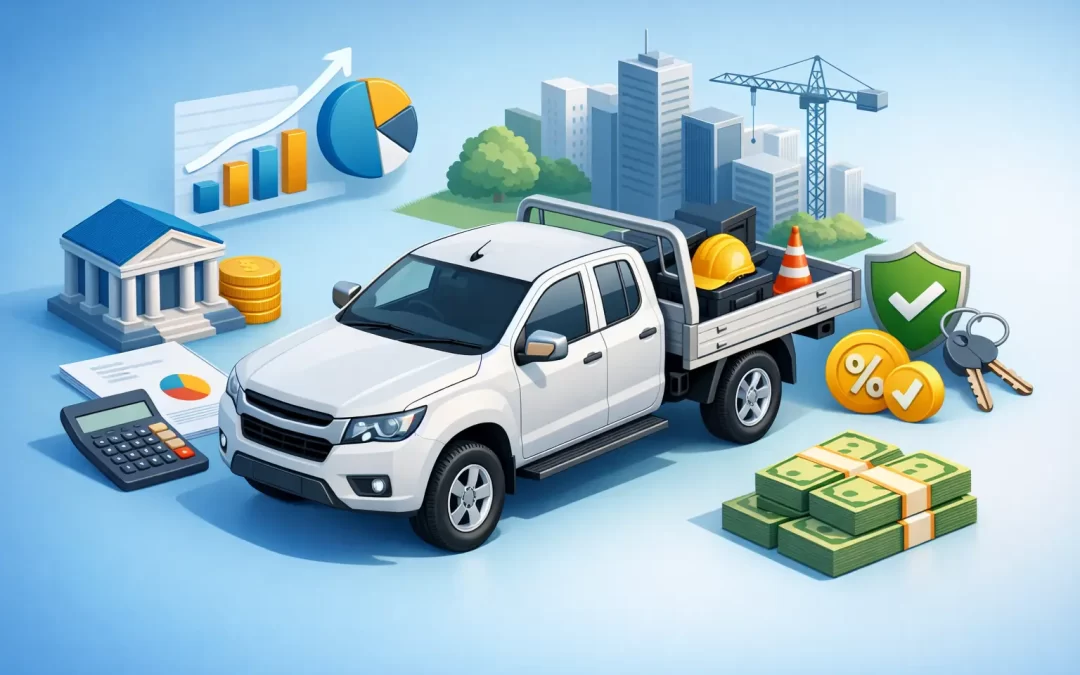
A work ute often starts as a practical purchase and quickly becomes a revenue tool. If it is carrying tools, towing gear, getting your team to site or helping you service clients faster, the way you finance it matters just as much as the vehicle itself. The right commercial loan for a work ute can help protect cash flow, keep repayments manageable and make the purchase fit the way you actually run your business.
For many Australian borrowers, the challenge is not whether finance exists. It is choosing a structure that suits their income, tax position, trading history and credit profile. That is where good guidance can save time and expensive trial and error.
When a commercial loan for a work ute makes sense
If your ute is being bought mainly for business use, a consumer car loan is not always the best fit. Commercial vehicle finance is generally designed for business borrowers, sole traders and self-employed applicants who need the asset for work purposes. That usually means the lender will look not only at the vehicle, but also at the strength and structure of the business behind the application.
A commercial loan can make sense when preserving working capital is important. Rather than paying a large lump sum upfront, you spread the cost over time while keeping funds available for stock, wages, equipment or unexpected expenses. That trade-off can be especially useful for growing businesses where cash flow flexibility matters more than owning the ute outright on day one.
It also makes sense when the finance structure may offer accounting or tax advantages, depending on your circumstances. That is not universal and it depends on how your business is set up, how the vehicle will be used and what advice you receive from your accountant. The finance product should support the business, not complicate it.
The main loan structures to consider
Not every work ute loan is built the same, and the best option depends on how simple or strategic you need the arrangement to be.
Chattel mortgage
A chattel mortgage is one of the most common options for business-use vehicles. Your business owns the ute from the start, while the lender takes a mortgage over the asset as security. This option often suits borrowers who want fixed repayments and clear ownership, particularly if the vehicle is primarily for business use.
For many self-employed borrowers and established small businesses, this structure is attractive because it is familiar, practical and relatively straightforward. It can also work well if you want to finance a new or used ute without overcomplicating the paperwork.
Finance lease
With a finance lease, the lender buys the ute and leases it to your business for an agreed term. At the end of the lease, you may have options around upgrading, paying a residual or refinancing, depending on the agreement. This can suit businesses that like to replace vehicles regularly and keep pace with operational demands.
The flip side is that a lease is not always the simplest option for every borrower. If your priority is immediate ownership and long-term retention of the vehicle, another structure may be more suitable.
Hire purchase and other commercial options
Some borrowers may also consider hire purchase or similar commercial asset finance products, depending on lender availability and the business setup. These can still be useful in the right situation, especially where repayment flexibility or a specific ownership pathway is needed.
The key point is that the cheapest-looking rate is not always the best outcome. Loan term, fees, balloon payment, asset age rules and approval conditions can all change the real cost and usability of the finance.
What lenders look at before approving a work ute loan
Lenders are usually assessing two things at once – the asset and the borrower. The ute needs to meet the lender’s policy around age, condition, value and intended use. At the same time, the applicant needs to show a reasonable capacity to service the debt.
If you are applying as a sole trader or self-employed borrower, lenders may review business income, bank statements, ABN history and sometimes BAS or tax returns. If you are buying through a company or trust, they may want additional business documents and details about directors or guarantors.
Credit history also plays a role, but it is not always a simple pass-or-fail exercise. Some lenders are more flexible than others, especially where the issues are older, explained properly or balanced by stronger current income and conduct. Borrowers with previous credit problems often assume they have no path forward, when in reality they may just need a lender with the right policy fit.
Deposit size can also affect approval. A larger deposit may reduce lender risk, improve borrowing terms or make an older vehicle easier to finance. That said, plenty of borrowers still secure finance without a large upfront contribution, provided the overall application is strong.
Choosing a ute loan that fits your cash flow
A work ute should help your business move, not squeeze it. That is why repayment structure matters.
A shorter term generally means higher repayments but less interest over time. A longer term can reduce monthly pressure, although it may increase the total amount paid across the life of the loan. Neither option is automatically better. If your income is stable and you want to minimise long-term cost, a shorter term may be attractive. If you need breathing room while managing other business expenses, a longer term may be the smarter choice.
Some borrowers also consider a balloon payment. This can lower regular repayments by leaving a lump sum to the end of the term. It can help with cash flow, especially in businesses with strong expected future income or planned asset turnover. But it also creates a future obligation, so it should be chosen carefully rather than simply used to make the monthly figure look smaller.
New ute versus used ute finance
Both can be financed, but the lender’s appetite may differ. New utes often attract broader lender interest because they present less asset risk and usually hold value more predictably in the early years. Used utes can still be financed competitively, although age, kilometres and condition become more important.
If you are buying second-hand, it helps to know the lender’s asset limits early. Some lenders are comfortable with older commercial vehicles, while others have tighter rules. This is one of the areas where broker support can save time, because there is no point applying with a lender whose policy does not fit the vehicle from the outset.
Broker support can make the process easier
Applying for a commercial loan for a work ute can look simple online, but many borrowers find the real challenge is matching their circumstances to the right lender and loan structure. That is particularly true if your income is not straightforward, you need a quick turnaround, or your credit file needs context rather than a computer says no response.
A broker can help assess the likely fit before you apply, which may reduce unnecessary credit enquiries and improve efficiency. Instead of comparing rates in isolation, the focus shifts to the full picture – approval odds, suitable structure, document requirements and realistic repayment options.
For borrowers who want a practical path rather than generic finance advertising, that support can make a real difference. Auto Link Finance works with a broad lender panel and helps clients navigate those choices with a more tailored approach.
How to improve your chances of approval
The strongest applications are usually the clearest ones. If your income is consistent, your business activity is easy to verify and the vehicle details are complete, the assessment is generally smoother.
It helps to have your ABN details, identification, business financials or recent bank statements ready if required, along with the ute invoice or dealer quote. If there have been credit issues in the past, be upfront. Lenders are often more comfortable with a well-explained situation than with missing pieces or surprises during assessment.
It is also worth being realistic about budget. Borrowing at the edge of what looks possible on paper can create pressure later, especially in businesses with seasonal variation. A better finance outcome is one that still feels manageable when work slows down or costs rise.
The right loan is the one that supports the job
A ute is not just another vehicle when your livelihood depends on it. The finance behind it should match the way you earn, spend and plan ahead, whether that means simple fixed repayments, a tax-effective structure or a solution that works around a more complex credit history.
If the loan fits properly, your ute gets on the road faster and your business keeps moving with less strain. That is usually the smartest place to start.
That work ute you need this month, the caravan you have been planning trips around, or the excavator your business cannot really delay any longer – asset finance is often the difference between waiting and moving ahead. For many Australian borrowers, it is not just about getting approved. It is about choosing a structure that suits the asset, your income, your tax position and your longer-term plans.
Asset finance is a broad term for loans and finance products used to purchase tangible assets such as cars, motorbikes, boats, jet skis, caravans, trucks and business equipment. Instead of paying the full purchase price upfront, you spread the cost over time through regular repayments. The asset itself usually helps secure the finance, which can make these products more accessible and, in some cases, more cost-effective than unsecured borrowing.
What asset finance actually covers
One reason borrowers get confused is that asset finance is not a single product. It is a category. Within that category, there are several different finance structures, and the right one depends on what you are buying and how you will use it.
For personal borrowers, the most familiar option is a secured car loan or a similar loan for a motorbike, boat or caravan. The lender advances the funds, you repay over an agreed term, and once the loan is paid out, the asset is yours outright if it was not already in your name.
For business borrowers and self-employed applicants, the picture gets more specific. A chattel mortgage may suit a business purchasing a vehicle or equipment for work use. A finance lease can be useful where flexibility at the end of term matters. Hire purchase still comes up in some circumstances where staged ownership arrangements are preferred. Equipment loans can also be tailored around machinery, tools or specialised commercial assets.
The point is simple: two borrowers can buy the same vehicle and still need completely different finance structures.
Why asset finance appeals to both personal and business borrowers
The biggest advantage is cash flow. Paying cash for a vehicle or piece of equipment can put pressure on savings, working capital or your emergency buffer. Asset finance lets you preserve liquidity while still getting access to something you need now.
That matters for households and businesses alike. A family may want to avoid emptying savings on a newer car. A sole trader might need a replacement van quickly so work does not stop. A growing business may be able to take on more jobs if it can fund machinery over time rather than fund it all at once.
There is also a practical approval benefit. Because the finance is tied to a specific asset, lenders often assess the deal differently from a general-purpose unsecured loan. That does not guarantee approval, and rates can vary depending on your credit profile, but it can open up options that are better aligned to the purpose of the borrowing.
The main asset finance options to know
Secured loans
A secured loan is one of the most common asset finance structures for consumer vehicles. The asset acts as security for the lender, which may help with rates compared with unsecured borrowing. Terms, deposit requirements and balloon options vary depending on the lender and the borrower.
This can work well for cars, motorbikes, boats and caravans where straightforward ownership is the goal. It is usually easy to understand, but borrowers still need to look closely at fees, loan term and total repayment cost.
Chattel mortgage
For self-employed borrowers and businesses, a chattel mortgage is often a strong fit when the asset is mainly for business use. The borrower owns the asset from the start, while the lender takes a mortgage over it as security.
This structure can offer tax and GST advantages in the right circumstances, but it depends on your business setup and accountant advice. It is popular for commercial vehicles, trucks and equipment because it combines ownership with a business-focused lending structure.
Finance lease
With a finance lease, the lender buys the asset and leases it to the business for an agreed period. At the end of the lease, there may be options to upgrade, continue leasing or pay out a residual depending on the arrangement.
This can suit businesses that like to refresh assets regularly or want a different treatment from direct ownership. It is not always the simplest option, but in the right scenario it can be practical and efficient.
Hire purchase
Hire purchase allows the borrower to use the asset while paying it off over time, with ownership generally transferring after the final payment. Some borrowers like the certainty of the structure, especially for commercial purchases.
It is less about which option is most popular and more about which one fits your trading position, use of the asset and end goal.
How lenders assess an asset finance application
Most lenders look at the same broad themes, even if their policies differ. They want to know what asset you are buying, how much you need to borrow, whether the repayments look affordable and how strong your credit profile is.
If you are employed, income verification is usually fairly direct. If you are self-employed, lenders may look at business financials, BAS, bank statements or other supporting documents depending on the product and the lender. The age and type of asset also matter. Some lenders are flexible on older vehicles or specialised equipment, while others are more restrictive.
Credit history is another factor, but not always a deal-breaker. Borrowers with past credit issues often assume there is no point applying. In reality, it depends on the nature of the issue, how recent it was, whether it has been resolved and the strength of the rest of the application. That is where broker guidance can save time, because there is no value in sending a borrower toward a lender whose policy clearly does not fit.
Choosing the right asset finance structure
The cheapest advertised rate is not always the best answer. Good asset finance should suit the purpose of the purchase and your real-world budget.
Start with the asset itself. Is it for personal use, business use, or both? A family SUV used mainly for school runs has different lending considerations from a truck purchased for deliveries. Then think about ownership. Do you want to own the asset from day one, or does a lease-style arrangement make more sense?
Repayment style matters too. Some borrowers prefer a shorter term to minimise interest. Others want lower monthly repayments to protect cash flow. A balloon payment can reduce regular instalments, but it leaves a lump sum at the end, so it only works if there is a clear exit plan.
This is also where specialist guidance helps. A broker can look beyond one lender’s credit box and compare structures, not just rates. That can be particularly useful for borrowers who are self-employed, buying commercial equipment, or managing a less-than-perfect credit history.
Common mistakes borrowers make with asset finance
One of the biggest mistakes is focusing only on the asset price and not the total finance cost. A lower monthly repayment can look attractive until you realise the term is longer and the total interest bill is much higher.
Another is choosing the wrong structure for the way the asset will be used. That can create issues around tax treatment, ownership expectations or end-of-term costs. Business borrowers especially need to think carefully about whether a chattel mortgage, lease or hire purchase best suits their operations.
Borrowers also run into trouble when they apply too broadly without a strategy. Multiple applications in a short period can complicate the process. A more targeted approach, based on lender policy and your actual profile, is usually smarter.
Where broker support makes a difference
Asset finance can look simple from the outside, but once you compare structures, lender rules, asset types and credit profiles, it gets more nuanced quickly. A broker helps by narrowing the field, identifying realistic options and matching the application to lenders that fit the scenario.
That is especially valuable when time matters. If you need a work vehicle on the road, equipment in place for a job, or a tailored solution after a previous credit issue, practical guidance can reduce unnecessary back-and-forth. Auto Link Finance works with a broad lender network to help borrowers find finance options that fit their goals rather than forcing every application into the same mould.
The right asset finance arrangement should feel workable from the first repayment to the final one. If the structure fits your asset, your income and your plans, the purchase stops being a financial strain and starts doing the job it was meant to do.
Buying a work vehicle or piece of equipment is rarely just about the purchase price. For many Australian business owners, the real question is how the finance structure affects cash flow, GST, deductions and the total cost of ownership over time. That is where chattel mortgage tax benefits become especially relevant.
A chattel mortgage is a common asset finance option for businesses and self-employed borrowers buying vehicles or equipment mainly for business use. The lender provides funds to buy the asset, you own it from the start, and the asset acts as security for the loan. From a tax point of view, that ownership position is often what makes the structure attractive.
Why chattel mortgage tax benefits matter
The tax treatment of an asset can change the practical cost of financing it. Two loans with similar rates can produce very different outcomes once you factor in GST timing, deductible interest and depreciation. For a sole trader replacing a ute, or a company financing multiple commercial vehicles, those differences can be significant.
With a chattel mortgage, eligible businesses may be able to claim the GST on the purchase price in their next Business Activity Statement, rather than spreading it across repayments. They may also be able to claim interest charges and depreciation, depending on how the asset is used and how their accountant treats the purchase. This can be useful if preserving working capital is a priority.
That said, tax benefits are not automatic. They depend on business use, registration for GST, the type of asset, turnover, the accounting treatment and current ATO rules. The structure can be very effective, but only when it fits the borrower’s circumstances.
What a chattel mortgage usually allows you to claim
GST on the purchase price
One of the best-known chattel mortgage tax benefits is the potential upfront GST claim. If your business is registered for GST and the asset is used for business purposes, you may be able to claim the GST included in the purchase price of the vehicle or equipment. In many cases, that claim is made through your BAS after settlement.
This can improve short-term cash flow because you are not waiting years to recover that GST through repayments. For businesses managing seasonal income or buying several assets at once, the timing advantage can make a real difference.
There are limits and rules here, especially for passenger vehicles and private-use portions. If the asset is not used 100 per cent for business, only the business-use share may be claimable.
Interest on repayments
Because a chattel mortgage is used to acquire a business asset, the interest component of the loan is generally tax deductible to the extent the asset is used to earn assessable income. This is separate from the principal portion, which is not usually deductible because it is repayment of the borrowed amount.
That distinction matters. Many borrowers assume the whole repayment is deductible, but that is not how it usually works. The deductible part is generally the interest, while the asset itself may be claimed through depreciation rules.
Depreciation of the asset
As the business owner, you own the asset from day one under a chattel mortgage. That means you may be able to depreciate it over its effective life, or claim it under temporary or simplified business depreciation rules if you are eligible.
Depending on the tax year and your business profile, that may lead to faster deductions than some other structures. It can also give you more certainty in planning because the tax treatment is tied to ownership of the asset rather than a use-only arrangement.
Balloon payment flexibility
A chattel mortgage can include a balloon payment at the end of the term. This is not a tax deduction in itself, but it can affect affordability and budgeting. Lower monthly repayments may free up cash for other operating costs, while still allowing you to finance the asset you need now.
The trade-off is that a larger residual amount remains payable at the end. That can suit businesses that expect stronger future cash flow, but it needs to be planned for properly.
When the tax benefits are strongest
The strongest chattel mortgage tax benefits tend to appear when the asset is used mostly or entirely for business, the borrower is GST-registered, and the business has a clear need to preserve cash flow while still acquiring the asset outright.
For example, a trades business buying a new ute for daily site work may value the upfront GST claim, the ability to deduct interest and the option to depreciate the vehicle. A transport operator financing a truck may see similar advantages, especially where the asset directly supports income generation. The same can apply to equipment purchases where ownership is important from the outset.
By contrast, if the asset will have substantial private use, the tax outcome becomes less straightforward. Claims may need to be reduced to reflect actual business use, and the expected benefit may not be as strong as it first appears.
Chattel mortgage tax benefits compared with other finance options
Not every finance product delivers the same tax outcome. That is why choosing the right structure matters just as much as finding a competitive rate.
With a standard consumer-style car loan, the tax treatment may be less aligned to business ownership and GST recovery. With a finance lease, the business generally pays to use the asset rather than owning it upfront, and the deduction treatment often centres more on lease rentals than depreciation by the borrower. Hire purchase can also have different accounting and tax implications depending on how it is structured.
A chattel mortgage often appeals to borrowers who want clear ownership, potential GST efficiency and deductions tied to interest and depreciation. But the right option depends on your ABN status, the asset type, expected usage and how your accountant prefers the purchase to be treated.
Common mistakes borrowers make
One of the biggest mistakes is focusing only on the repayment figure. A lower monthly repayment can look attractive, but if the loan structure is wrong for your tax position, you may miss out on benefits that would have improved your overall result.
Another mistake is assuming every business vehicle qualifies for the same treatment. Passenger cars can be subject to specific limits, and private use needs to be accounted for honestly. Overclaiming can create problems later.
Some borrowers also choose a balloon payment without a realistic end-of-term plan. That can work well, but only if it suits your replacement cycle, resale expectations or future cash flow.
How to make the most of a chattel mortgage
Start with the asset itself. Is it genuinely for business use, and if so, what percentage? That answer affects almost every tax outcome. From there, consider whether your business is registered for GST, how quickly you need the asset, and whether lower monthly repayments would help your cash flow.
Then look at the finance structure, not just the rate. Loan term, balloon size, fees and lender flexibility all matter. A finance broker with experience in vehicle and equipment lending can help narrow down lenders that suit your circumstances rather than pushing a one-size-fits-all loan.
Just as importantly, speak with your accountant before settlement if tax outcomes are a key reason for choosing the product. A broker can help structure the finance appropriately, but your accountant should confirm how deductions and GST claims apply to your specific business.
For borrowers who want guidance through that process, working with an experienced broker can save time and reduce guesswork. Auto Link Finance helps business owners and self-employed borrowers compare asset finance options based on the full picture, including how the structure may support their commercial and tax goals.
Is a chattel mortgage the right fit?
A chattel mortgage is often a strong fit for businesses buying cars, utes, vans, trucks or equipment for work and wanting ownership from the start. It can be particularly useful when GST timing matters and when interest and depreciation deductions may improve the after-tax cost of the purchase.
Still, it is not always the best answer. If the asset has mixed personal and business use, if cash flow is tight at the end of the term, or if another structure better suits your accounting treatment, the better option may be something else. Good finance advice should reflect that reality rather than forcing the product to fit.
The most useful tax benefit is the one that genuinely supports your business, not the one that looks best in a headline. If you are weighing up a vehicle or equipment purchase, the smartest next step is to line up the finance structure with the way you actually operate, so the numbers work just as hard as the asset will.
If you use a vehicle or piece of equipment to earn income, the wrong finance structure can cost you more than the sticker price. That is why a lot of borrowers ask, what is a finance lease, and whether it is a better fit than a standard loan.
A finance lease is a business asset finance option where the lender buys the asset and leases it to your business for an agreed term. You make regular lease payments for the use of that asset, rather than owning it outright from day one. At the end of the term, there is usually a residual amount still owing, and your business may have options such as paying that amount, refinancing it, or upgrading to a newer asset.
For many Australian businesses and self-employed operators, a finance lease can be a practical way to access a car, ute, truck or equipment without tying up working capital. But like any finance product, whether it suits you depends on how the asset will be used, your cash flow, and what you want to happen at the end of the term.
What is a finance lease and how does it work?
At its core, a finance lease separates use from ownership.
The finance company purchases the asset you have chosen. Your business then leases that asset for a fixed period, usually with regular monthly repayments. Those repayments are based on the amount financed, the lease term, the interest rate and the residual value set at the end of the agreement.
During the lease, your business gets the benefit of using the asset while the financier retains ownership. That can matter for accounting, tax treatment and end-of-term flexibility.
A simple example makes it clearer. Say you need a work vehicle for your business. Instead of paying cash or taking out a loan to buy it in your own name or business name, the lender purchases the vehicle and leases it to you. You use it for the agreed term and make scheduled payments. Once the term ends, you may be able to pay out the residual, refinance it, or replace the vehicle with a newer one under a fresh lease.
That structure often appeals to businesses that want to preserve cash flow and keep their options open.
Why borrowers choose a finance lease
The biggest reason is flexibility around cash flow.
Rather than paying the full cost upfront, you spread the expense over time. Because there is usually a residual value at the end, repayments during the lease term can be lower than a fully amortised loan. For businesses managing fuel, wages, stock or seasonal income, that can make budgeting easier.
A finance lease can also help if you prefer to update assets regularly. That is common with vehicles and equipment that either depreciate quickly or need to stay reliable for day-to-day operations. Instead of holding on to an ageing asset, some businesses prefer to move into a newer model at the end of each term.
There can also be tax advantages, depending on your circumstances. In many business-use scenarios, lease payments may be treated differently from loan repayments, and GST treatment can also vary. The right structure depends on your business setup and how the asset is used, which is why tailored advice matters.
What assets can be financed through a lease?
Finance leases are commonly used for business vehicles and income-producing equipment.
That could include cars, utes, vans, trucks, trailers and plant or machinery. They are particularly relevant when the asset is essential to operations and expected to generate value over time. A sole trader upgrading a delivery van, a trades business replacing a ute fleet, or a company financing specialist equipment may all consider a finance lease.
For primarily personal-use assets, other finance structures may be more suitable. A finance lease is generally designed for business purposes, so the intended use of the asset is a major factor.
Finance lease vs loan: what is the difference?
This is where many borrowers get stuck, because both options let you access the asset now and pay over time.
With a standard business loan or secured car loan, you generally own the asset from the beginning, even though the lender may hold security over it until the finance is repaid. Your repayments reduce both principal and interest over the term, and once the loan is paid out, the asset is yours.
With a finance lease, the financier owns the asset during the lease term and your business pays for the right to use it. That can change how repayments are structured and what happens at the end.
If ownership is your priority from day one, a loan or chattel mortgage may be a better fit. If managing monthly costs and preserving capital matter more, a finance lease may be worth considering.
Neither option is automatically better. It depends on how long you plan to keep the asset, how important lower upfront costs are, and whether your accountant sees tax advantages in one structure over another.
What happens at the end of a finance lease?
The end of term is one of the most important parts of the agreement, yet it is often overlooked.
Most finance leases include a residual value. This is the amount estimated to remain at the end of the lease term. It is not paid off through your regular repayments, which is one reason lease instalments can be lower.
When the term ends, there are usually a few possible paths. Your business may pay the residual and take ownership if the agreement allows, refinance the residual over a new term, trade or upgrade the asset, or return it and move into a replacement arrangement.
This is where planning matters. Lower monthly repayments can look attractive, but you still need a clear strategy for the residual. If you are not prepared for that final amount, the lease may feel less affordable than it first appeared.
Costs and trade-offs to think about
A finance lease can be useful, but it is not a shortcut around the real cost of finance.
You still need to consider interest charges, fees, the residual amount and the total amount paid over the term. In some cases, a lease may improve monthly affordability while costing more overall than another structure. In other cases, the flexibility and tax treatment may make it the better commercial decision.
There is also the question of usage. If the asset will stay in your business for a very long time, a structure that leads more directly to ownership may make more sense. If you expect to replace it every few years, leasing can align better with that cycle.
Credit profile also plays a role. Approval terms, rates and available structures vary from lender to lender. Borrowers with straightforward applications may have several options, while those with past credit issues may benefit from a broker who can assess which lenders are likely to be realistic.
Who is a finance lease best suited to?
A finance lease is often best suited to businesses and self-employed borrowers who use the asset mainly for income-producing purposes and want to protect day-to-day cash flow.
It can suit operators who prefer predictable repayments and like the idea of upgrading assets at regular intervals. It can also suit businesses that want to keep capital available for stock, staffing, marketing or other operating needs rather than putting a large amount into a depreciating asset upfront.
It may be less suitable if you want immediate ownership, if the asset is mainly for personal use, or if you are planning to keep the asset for many years and would rather avoid a residual structure.
Why structure matters more than rate alone
A lot of borrowers focus only on getting the lowest rate, but asset finance is not that simple.
The structure you choose affects repayments, tax outcomes, ownership, flexibility and what happens later. A lower rate on the wrong product can still leave you worse off. The better question is whether the finance fits the way you earn, spend and use the asset.
That is why experienced guidance can make a real difference. A broker can compare lenders, explain the trade-offs in plain English and help you weigh a finance lease against alternatives like a chattel mortgage, hire purchase or secured loan. At Auto Link Finance, that is often where the value sits – not just sourcing a lender, but helping borrowers choose a structure that works in the real world.
Questions to ask before choosing a finance lease
Before signing anything, be clear on a few practical issues. Ask how the residual is calculated, what your end-of-term options are, whether there are usage or condition requirements, and how the lease will affect your tax position. You should also understand all fees, not just the advertised repayment figure.
If you are self-employed or running a small business, it is also worth checking how the lender assesses income and what documents will be needed. The smoother the application, the faster you can move from enquiry to settlement.
A finance lease is not complicated once it is explained properly. It is simply one way to fund a business asset without purchasing it outright at the start. The smart move is making sure the structure matches your plans for the asset, not just your plans for this month’s budget.
If you are weighing up vehicle or equipment finance, the best next step is to look at your full picture – the asset, your cash flow, your credit position and how long you expect to keep it. The right answer is rarely the most generic one.
A bobcat that wins you bigger jobs, a coffee machine that lifts daily takings, or a new diagnostic tool that cuts labour time – the right asset can grow a business quickly. The challenge is paying for it without draining working capital. That is where equipment finance for small business becomes less about borrowing money and more about protecting cash flow while giving your business room to move.
For many Australian business owners, the question is not whether the equipment is needed. It is whether the repayments, tax treatment and loan structure make sense for the way the business operates. A good finance solution should support growth, not create pressure in the quieter months.
What equipment finance for small business actually covers
Equipment finance for small business is used to fund business assets that help generate income or improve operations. That can include machinery, trailers, commercial kitchen gear, medical devices, construction equipment, farming equipment, office fit-outs, printing machines, technology hardware and specialist tools.
Some lenders are comfortable with a broad range of assets, while others are more selective. Age, condition, resale value and how specialised the equipment is can all affect what is available. A near-new excavator is generally easier to finance than highly customised equipment with a limited resale market.
This is one reason business owners often benefit from broker support. The right lender for one type of asset may not be the right lender for another, even if the loan amount is similar.
Why small businesses use finance instead of paying upfront
Paying cash sounds simple, but it is not always the strongest business decision. When a large upfront purchase ties up funds, it can leave less room for wages, stock, marketing, repairs or unexpected costs. Finance spreads that cost over time, which can make planning easier and preserve liquidity.
There is also the timing factor. If a piece of equipment can help you take on more work now, waiting until enough cash is saved may cost the business more in missed revenue than the interest on the finance.
That said, finance is not automatically the better option. If the equipment is low cost, the business has strong reserves and there is no value in spreading repayments, buying outright may be perfectly reasonable. It depends on your cash position, tax strategy and how quickly the asset is expected to produce returns.
Common finance options for business equipment
The best structure depends on the asset, your business setup and what you want at the end of the term.
A chattel mortgage is a common option where the business owns the equipment from the start, while the lender takes a mortgage over the asset as security. This structure is often attractive for businesses that want ownership and a clear repayment term. It may also offer tax advantages depending on your circumstances and accounting treatment.
Finance lease
With a finance lease, the lender purchases the equipment and leases it to the business for an agreed period. This can suit businesses that want lower upfront costs or flexibility around upgrading equipment. At the end of the lease, options may include paying out the residual, refinancing it or returning the asset, depending on the agreement.
Commercial hire purchase allows the business to hire the equipment while making repayments over time, with ownership generally transferring at the end once the final payment is made. This can work well for businesses that want a straightforward path to ownership without a large initial outlay.
Equipment loan
Some lenders simply offer an equipment loan secured against the asset. The structure may look similar to a chattel mortgage from a practical point of view, but the naming and terms can vary between lenders. What matters is not the label alone, but the rate, fees, flexibility and total cost.
How lenders assess applications
Lenders want to know two things: whether the business can service the debt, and whether the asset is suitable security. That means approval is usually based on a mix of business strength and asset quality.
Turnover, trading history, bank statements, BAS, tax returns and business financials may all come into play. For self-employed applicants, the level of paperwork required often depends on the lender and the size of the deal. Some low-doc pathways exist, but they are not right for every borrower and may come with different pricing or conditions.
Credit history matters as well, but it is not always the full story. A previous default or rough trading period does not automatically rule out approval. If the business is now stable, the asset has good value and the reasons for past credit issues are explainable, there may still be workable options.
What affects your interest rate and terms
No single factor sets the rate. Lenders price deals based on risk, and risk is shaped by a combination of details.
The age and type of equipment matter. So does the loan amount, the size of your deposit, the business trading history, your credit profile and whether the asset holds value well. Newer, standard assets usually attract stronger pricing than older or highly specialised equipment.
The term matters too. Stretching repayments over a longer period can reduce monthly pressure, but it may increase the total amount paid over the life of the loan. A shorter term often costs less overall, although it places more strain on cash flow. Neither is universally better. The right term is the one your business can manage comfortably while still leaving breathing room.
Choosing a structure that matches your cash flow
This is where many business owners either save money or lock themselves into a setup that feels wrong six months later. A repayment that looks affordable on paper can still create pressure if your income is seasonal, contract-based or uneven from month to month.
If your revenue peaks at certain times of year, a lender that offers flexibility around repayment frequency may be worth considering. Weekly, fortnightly or monthly repayments can each suit different industries. Some businesses also prefer to contribute a deposit to reduce the financed amount, while others keep cash in the business and finance more of the purchase price.
There is no prize for the most aggressive loan structure. The best result is often a practical one – finance that helps you secure the asset, maintain healthy cash reserves and keep operating confidently.
Preparing before you apply
A cleaner application usually means fewer delays. Before applying, it helps to be clear on the equipment you want, the supplier quote, how it will be used in the business and what you can realistically afford in repayments.
Make sure your business records are up to date. Lenders notice inconsistencies between applications, statements and reported income. If there are credit issues in your history, be ready to explain them honestly and briefly. A late payment during a shutdown period is different from ongoing unmanaged debt, and context matters.
It also helps to think beyond the sticker price. Installation, delivery, training, insurance and maintenance can all affect the true cost of the purchase.
Why broker support can make the process easier
Business owners are usually short on time, and lender policies are rarely as simple as they look from the outside. One lender may like established tradies buying standard plant equipment. Another may be more open to start-ups with strong industry experience. Another may be better suited to clients with impaired credit but solid current servicing.
That is where a broker can add real value. Instead of sending applications blindly and hoping for the best, you can work through which structure, lender appetite and approval pathway are more likely to suit your circumstances. For borrowers who want speed, flexibility and realistic guidance, that support can remove a lot of guesswork.
At Auto Link Finance, that approach is built around tailored lending options rather than one-size-fits-all finance. The goal is to match the asset and the borrower with a structure that makes commercial sense, not just chase an approval.
When equipment finance is the right move
Equipment finance tends to make the most sense when the asset will either generate income, improve efficiency or replace unreliable equipment that is already costing the business time and money. If the new asset helps you take on more jobs, reduce downtime or increase output, finance can be a practical growth tool rather than a cost burden.
But timing still matters. If your current cash flow is already under strain, the smartest move may be to adjust the purchase, reduce the budget or choose a different structure. Good finance should support the business you are building, not push it too hard.
The right equipment can change what a small business is capable of. The right finance structure makes sure that opportunity feels manageable from day one.
If you are buying a work ute, van, truck or company car, the best loan structure for business vehicle finance is not always the one with the lowest advertised rate. The right option depends on how you use the vehicle, whether you want to own it straight away, how your cash flow works, and what tax treatment suits your business setup.
That is where many borrowers get stuck. They know the asset they need, but not whether a chattel mortgage, finance lease or hire purchase will leave them in a stronger position six or twelve months down the track. A good structure should support the way your business operates, not create pressure with repayments, tax timing or end-of-term surprises.
What makes the best loan structure for business vehicle finance?
The best structure usually comes down to four practical questions. Do you want ownership at the start? Do you want to preserve working capital? Is the vehicle used mainly for business purposes? And do you want fixed repayments that are easy to budget for?
For many Australian businesses, a chattel mortgage is the front-runner because the business owns the vehicle from the beginning while the lender takes a mortgage over the asset as security. That can suit sole traders, tradies, small companies and established operators who want clarity around ownership and structured repayments.
But it is not the automatic winner in every case. A finance lease may make more sense if protecting cash flow is your top priority and you are comfortable with not owning the vehicle at the start. Hire purchase can also suit businesses that want a clear path to ownership with predictable repayments. The best answer is usually found in the details of your turnover, tax position, asset type and intended usage.
Chattel mortgage – often the strongest option for business use
A chattel mortgage is commonly one of the most effective ways to finance a business vehicle in Australia. Your business purchases the vehicle, and the lender registers a security interest over it. You make regular repayments over the agreed term, and once the loan is paid out, the security is removed.
This structure is popular because it is straightforward. You get use of the vehicle immediately, the repayment schedule is usually fixed, and there is often flexibility around the deposit, term and balloon payment. If your business is GST-registered and the vehicle is used for business, there may also be tax advantages, depending on your accountant’s advice.
The trade-off is that ownership comes with responsibility from day one. You need to be comfortable taking the asset onto the books, and if you add a balloon to reduce monthly repayments, you need a plan for that amount at the end of the term. A lower repayment now can help cash flow, but it should not become a problem later.
Finance lease – useful when cash flow matters most
Under a finance lease, the lender buys the vehicle and leases it to your business for an agreed period. Your business makes regular lease payments for the right to use the vehicle. At the end of the term, there is usually an option to pay out the residual, refinance it, trade the vehicle, or upgrade, depending on the arrangement.
This can work well for businesses that replace vehicles regularly or want to avoid tying up capital in ownership straight away. If your fleet changes often, or you prefer a structure built around usage rather than immediate ownership, leasing can be a sensible fit.
The downside is that some borrowers assume a lease is simpler than it really is. End-of-term options matter, residual values matter, and the cost comparison against ownership needs to be looked at properly. A lease can be excellent for flexibility, but only if the numbers and end-of-term strategy line up with your business plans.
Hire purchase – a middle ground some businesses still prefer
Hire purchase is less talked about than it used to be, but it still suits some borrowers. The lender effectively buys the vehicle on your behalf, and your business hires it while making repayments. Once the final payment is made, ownership transfers to you.
For business owners who like a clear, disciplined path to ownership, that can feel comfortable. Repayments are generally fixed, budgeting is easier, and there is no ambiguity about the vehicle eventually becoming yours.
Even so, hire purchase is not always as flexible as a chattel mortgage. Depending on the lender and your circumstances, there may be fewer options around tailoring the structure. That does not make it a poor choice – it simply means it should be compared carefully rather than chosen by habit.
Which structure suits different types of borrowers?
A sole trader using a ute mainly for work often leans towards a chattel mortgage because it combines ownership, simple budgeting and a familiar asset-finance structure. A growing business with several vehicles and a strong focus on preserving capital may prefer leasing, particularly if it plans to rotate vehicles every few years.
A company director buying a passenger vehicle for mixed business and personal use may need a more careful review, because tax treatment, GST position and fringe benefits implications can affect the best choice. A transport operator financing trucks may prioritise longer terms and repayment flexibility, while a mobile service business might care most about keeping monthly commitments manageable.
This is why there is no single best loan structure for business vehicle purchases across every scenario. The strongest structure is the one that matches how the vehicle earns income, how often you replace assets, and how your business handles cash flow.
The key trade-offs to weigh up before you apply
Ownership versus flexibility is the first major trade-off. If owning the vehicle immediately matters, a chattel mortgage often stands out. If you are more focused on lower upfront pressure and future upgrade options, leasing may be worth stronger consideration.
The second trade-off is repayment size versus end-of-term cost. A balloon or residual can reduce monthly repayments, which helps some businesses manage working capital. But those lower repayments come with a larger amount later. That works well when planned for and poorly when ignored.
The third is simplicity versus optimisation. Some borrowers just want a clean, easy-to-understand structure. Others want to fine-tune tax timing, GST treatment and cash flow outcomes. Neither approach is wrong, but your finance should fit your level of complexity.
How to choose the best loan structure for business vehicle needs
Start with how the vehicle will actually be used. If it is primarily a business asset and you want to keep it long term, ownership-based structures deserve close attention. Then look at your cash flow over the next 12 to 24 months, not just this month. A structure that looks affordable now but creates strain later is rarely the right answer.
Next, consider whether you are likely to upgrade the vehicle before the finance term ends. If yes, flexibility becomes more important. If no, a structure built around eventual ownership may be more efficient.
Finally, get advice that reflects your full situation rather than a generic loan comparison. This is especially important if you are self-employed, have irregular income, need commercial vehicle finance, or have had past credit issues. A broker with access to a broad lender panel can often identify options that a single lender will not present. That is one reason many borrowers speak with Auto Link Finance when they want tailored guidance rather than a one-size-fits-all answer.
Common mistakes that cost businesses money
One of the biggest mistakes is choosing based on rate alone. A lower rate can look attractive, but if the structure does not suit your tax position, replacement cycle or monthly cash flow, the cheapest quote may not be the best outcome.
Another is underestimating the impact of balloon or residual amounts. These features can be useful tools, but they should be part of a plan, not a surprise waiting at the end of the term.
Businesses also run into trouble when they apply without preparing the basics. Clear ABN details, financials where required, proof of income and realistic asset information can make the process smoother and improve your chances of approval.
The best finance structure is the one that helps your business use the vehicle productively, repay the loan comfortably and move forward with confidence. If your finance feels clear, manageable and tailored to the way you work, you are usually on the right track.
Websites store cookies to enhance functionality and personalise your experience. You can manage your preferences, but blocking some cookies may impact site performance and services.
Essential cookies enable basic functions and are necessary for the proper function of the website.
Name
Description
Duration
Cookie Preferences
This cookie is used to store the user's cookie consent preferences.
30 days
Statistics cookies collect information anonymously. This information helps us understand how visitors use our website.
Google Analytics is a powerful tool that tracks and analyzes website traffic for informed marketing decisions.
Contains information related to marketing campaigns of the user. These are shared with Google AdWords / Google Ads when the Google Ads and Google Analytics accounts are linked together.
90 days
_gat
Used to monitor number of Google Analytics server requests when using Google Tag Manager
1 minute
_gid
ID used to identify users for 24 hours after last activity
24 hours
_ga_
ID used to identify users
2 years
_gali
Used by Google Analytics to determine which links on a page are being clicked
30 seconds
_ga
ID used to identify users
2 years
__utmx
Used to determine whether a user is included in an A / B or Multivariate test.
18 months
__utmv
Contains custom information set by the web developer via the _setCustomVar method in Google Analytics. This cookie is updated every time new data is sent to the Google Analytics server.
2 years after last activity
__utmz
Contains information about the traffic source or campaign that directed user to the website. The cookie is set when the GA.js javascript is loaded and updated when data is sent to the Google Anaytics server
6 months after last activity
__utmc
Used only with old Urchin versions of Google Analytics and not with GA.js. Was used to distinguish between new sessions and visits at the end of a session.
End of session (browser)
__utmb
Used to distinguish new sessions and visits. This cookie is set when the GA.js javascript library is loaded and there is no existing __utmb cookie. The cookie is updated every time data is sent to the Google Analytics server.
30 minutes after last activity
__utmt
Used to monitor number of Google Analytics server requests
10 minutes
__utma
ID used to identify users and sessions
2 years after last activity
Marketing cookies are used to follow visitors to websites. The intention is to show ads that are relevant and engaging to the individual user.
Facebook Pixel is a web analytics service that tracks and reports website traffic.